
Sales Roleplay: The Complete 2026 Guide To Transforming Sales Performance With AI-Powered Practice

What Is Sales Roleplay and Why It Matters in 2026
Sales roleplay is a proven training methodology where sales professionals simulate real-world customer interactions to develop skills, test strategies, and build confidence. In 2026, this practice has evolved from awkward boardroom exercises to sophisticated AI-driven simulations that mirror actual sales scenarios with remarkable accuracy.
For sales leaders Chief Revenue Officers, Sales Managers, and enablement professionals the question is no longer whether to implement sales roleplay, but how to leverage modern technology to maximize its impact. Traditional roleplay sessions often fall short due to scheduling conflicts, inconsistent feedback, and limited scalability. Today's AI-powered platforms solve these challenges while delivering measurable improvements in close rates, ramp time, and quota attainment.
The business case for structured sales roleplay training is compelling. Above-average coaching lifts performance 6-8%, and organizations that invest in quality training see dramatic returns. According to sales training generates $4.53 return per dollar invested (353% ROI), making it one of the highest-leverage investments a sales organization can make.
The Modern Sales Challenges Driving Roleplay Adoption
B2B sales teams in Technology, Healthcare, and Financial Services face increasingly complex challenges. Buyers are more informed, procurement processes are more rigorous, and competition intensifies daily. Sales professionals must master multiple competencies simultaneously: cold calling, objection handling, discovery questioning, and consultative selling.
Research shows that 42% of salespeople say prospecting hardest, high-performers average 16 touches per prospect. This statistic underscores the critical need for deliberate practice in prospecting skills. Without structured roleplay opportunities, sales reps learn through costly trial-and-error with actual prospects, damaging pipeline quality and extending ramp times.
Common pain points include:
- Inconsistent onboarding: New hires take 6-12 months to reach full productivity
- Knowledge gaps: Reps struggle with objection handling and discovery questions
- Coaching bandwidth: Managers lack time to provide personalized feedback
- Remote teams: Distributed workforces make traditional roleplay sessions impractical
- Measurement challenges: Difficulty tracking skill development and training ROI
These challenges explain why forward-thinking sales organizations are adopting AI-powered sales roleplay solutions that provide on-demand practice, objective feedback, and measurable skill progression.
How AI-Powered Sales Roleplay Transforms Training
Modern sales roleplay platforms leverage artificial intelligence to create realistic buyer personas, analyze conversation patterns, and deliver personalized coaching at scale. This represents a fundamental shift from periodic group exercises to continuous, individualized skill development.
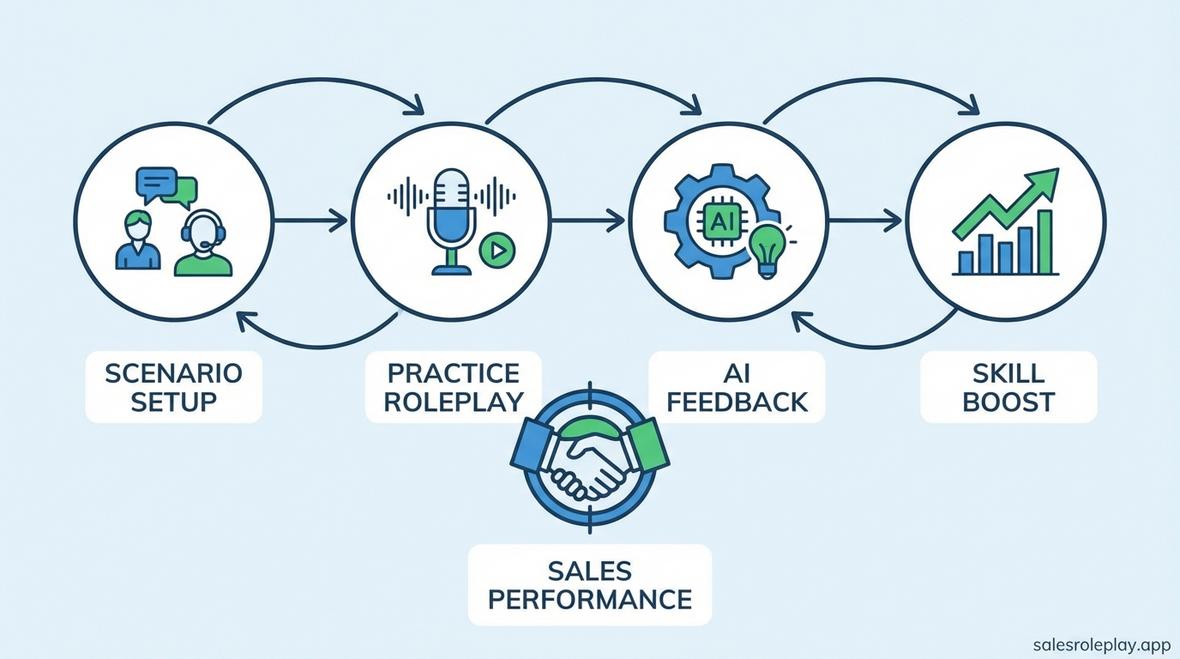
The AI-driven cycle illustrated above demonstrates the continuous improvement model: scenario setup, practice roleplay, AI feedback, and skill boost creating a perpetual learning loop that drives measurable sales performance gains.
Key Advantages of AI-Powered Roleplay
24/7 Availability: Sales reps can practice anytime, anywhere, eliminating scheduling conflicts and enabling micro-learning sessions between calls. This accessibility dramatically increases practice frequency, the single biggest predictor of skill mastery.
Objective Feedback: AI systems analyze dozens of variables tone, pacing, filler words, objection handling, question quality providing consistent, bias-free assessments. Unlike human managers whose feedback varies based on mood or workload, AI delivers standardized evaluation every time.
Scalable Personalization: Platforms can generate thousands of unique scenarios tailored to individual rep weaknesses, industry verticals, and buyer personas. A healthcare sales rep faces different challenges than a B2B SaaS seller, and AI roleplay adapts accordingly.
Safe Practice Environment: Reps can experiment with new techniques, fail safely, and iterate without risking real revenue opportunities. This psychological safety accelerates learning by reducing fear of judgment.
Data-Driven Insights: Sales leaders gain dashboard visibility into team-wide skill gaps, training effectiveness, and individual progress. This intelligence informs coaching priorities and reveals which methodologies deliver the best results.
Implementing an Effective Sales Roleplay Program
Successful sales roleplay implementation requires more than technology adoption. Organizations must integrate practice into daily workflows, align scenarios with real challenges, and create accountability mechanisms that drive consistent participation.
Scenario Design Best Practices
Mirror Real Interactions: The most effective scenarios replicate actual buyer conversations your team encounters. Analyze call recordings, CRM notes, and lost deals to identify common objections, questions, and sticking points. These insights should inform scenario creation.
For example, if your cold calling reps consistently struggle with gatekeeper navigation, design scenarios featuring protective executive assistants with various resistance patterns. If discovery calls often derail when discussing budget, create discovery call scenarios where buyers deflect pricing questions.
Progressive Difficulty Levels: Structure scenarios from foundational to advanced. New hires start with basic qualification conversations, while experienced reps tackle complex multi-stakeholder negotiations. This scaffolded approach builds confidence while preventing overwhelm.
Industry-Specific Context: Generic scenarios lack the authenticity needed for skill transfer. Pharmaceutical reps need scenarios addressing regulatory concerns and formulary access. Financial services teams require compliance-aware conversations. Technology sellers must navigate technical evaluations and security reviews.
Integration Into Daily Workflow
Sales roleplay fails when treated as a quarterly event. Instead, embed practice into existing routines:
- Pre-call preparation: Require reps to complete a scenario matching their next meeting type before important calls
- Morning huddles: Start team meetings with a 5-minute group scenario addressing current pipeline challenges
- Onboarding checkpoints: Gate progression through onboarding milestones with scenario-based assessments
- Performance improvement plans: Assign targeted scenarios to reps missing quota, focusing on specific skill deficits
- Manager coaching sessions: Use scenario performance data to structure one-on-ones around observable behaviors
Organizations achieving the highest training ROI typically require 3-5 practice sessions per week, averaging 10-15 minutes each. This cadence maintains skill sharpness without overwhelming schedules.
Measuring Sales Roleplay Effectiveness and ROI
What gets measured gets managed. To justify continued investment and optimize program design, track metrics across three categories: activity, skill development, and business outcomes.
Activity Metrics
- Participation rate (percentage of team completing weekly scenarios)
- Practice frequency (average sessions per rep per week)
- Scenario completion time (identifying engagement vs. rushing through)
- Self-directed vs. assigned practice ratio (indicating intrinsic motivation)
Skill Development Metrics
- AI confidence scores tracking improvement over time
- Objection handling success rate in scenarios
- Discovery question quality ratings
- Talk-to-listen ratio optimization
- Filler word reduction percentages
- Call structure adherence (following proven frameworks)
Business Outcome Metrics
- Time to first deal for new hires
- Average ramp time to full quota productivity
- Win rates by roleplay participation level
- Average deal size correlation with practice frequency
- Pipeline velocity improvements
- Customer satisfaction scores (roleplay improving conversation quality)
Leading sales organizations establish baseline measurements before implementation, then track quarterly trends. A typical high-performing program shows 20-30% reduction in ramp time, 15-25% improvement in win rates, and 10-15% increase in quota attainment within six months.
Overcoming Common Implementation Challenges
Despite clear benefits, many sales roleplay initiatives struggle with adoption. Understanding and proactively addressing common obstacles increases success probability.
Rep Resistance and Engagement
Sales professionals often view roleplay as awkward, time-wasting theater. This perception stems from poorly designed traditional programs featuring unrealistic scenarios and cringe-worthy peer-to-peer exercises.
Solutions:
- Frame roleplay as competitive advantage, not remedial training
- Share data connecting practice frequency to quota attainment
- Celebrate top performers who credit roleplay for deal wins
- Gamify participation with leaderboards and achievement badges
- Ensure scenarios reflect actual buyer conversations, not contrived situations
Manager Buy-In and Participation
Frontline sales managers make or break enablement initiatives. Without their active endorsement, reps deprioritize practice in favor of 'real work.'
Solutions:
- Include roleplay discussion in forecast calls and pipeline reviews
- Provide managers with dashboard access showing team skill progression
- Require managers to complete scenarios alongside their teams
- Tie manager compensation partially to team participation metrics
- Showcase managers whose teams demonstrate highest engagement and results
Technology Adoption and Platform Selection
Not all sales roleplay platforms deliver equal value. Key selection criteria include:
- AI sophistication: Does the platform understand context and provide actionable feedback beyond keyword detection?
- Scenario library: Are industry-specific, role-specific scenarios available out-of-box?
- Customization capabilities: Can you easily create scenarios matching your unique sales motion?
- Integration ecosystem: Does it connect with your CRM, LMS, and conversation intelligence tools?
- Mobile accessibility: Can reps practice from smartphones during downtime?
- Analytics depth: Do reporting capabilities support both individual coaching and program optimization?
Platforms like SalesRoleplay.app address these requirements with AI-powered scenarios, industry-specific content libraries, and comprehensive analytics designed specifically for B2B sales teams.
Industry-Specific Sales Roleplay Applications
While core selling skills transcend industries, effective roleplay must account for sector-specific nuances.
Technology and SaaS Sales
Tech sales roleplay scenarios should emphasize:
- Technical discovery questions that uncover architecture and integration requirements
- ROI calculation conversations with economic buyers
- Competitive differentiation without negative selling
- Security and compliance objection handling
- Multi-threading strategies for complex buying committees
Technology sales teams benefit particularly from scenarios featuring technical gatekeepers, procurement professionals, and C-level executives with different priorities.
Healthcare and Medical Device Sales
Healthcare sales roleplay must navigate:
- Clinical evidence discussions with physician buyers
- Regulatory and compliance considerations
- Hospital committee presentation skills
- Reimbursement and formulary positioning
- Patient outcome storytelling
Medical device reps face longer sales cycles and clinical scrutiny, making specialized roleplay scenarios critical for success.
Financial Services Sales
Financial services roleplay addresses:
- Trust-building in highly regulated conversations
- Complex product explanation without jargon
- Risk and compliance adherence
- Fiduciary responsibility communication
- Objection handling around fees and market volatility
Given regulatory constraints, financial services teams require scenarios that balance persuasion with compliance, making AI feedback particularly valuable for identifying potential violations.
The Future of Sales Roleplay: Emerging Trends for 2026 and Beyond
Sales roleplay technology continues evolving rapidly. Forward-looking organizations should monitor these emerging capabilities:
Emotional Intelligence Analysis: Next-generation AI detects buyer emotional states frustration, enthusiasm, skepticism and coaches reps on appropriate responses. This mirrors real-world selling where reading the room often matters more than product knowledge.
Video-Based Roleplay: While voice-only practice builds foundational skills, video scenarios add body language, facial expressions, and virtual meeting dynamics. This becomes critical as remote selling dominates B2B commerce.
Real-Time Coaching: Rather than post-scenario feedback, emerging platforms provide in-conversation suggestions flagging weak questions, suggesting stronger objection responses, and recommending next-best actions as scenarios unfold.
Adaptive Learning Paths: AI systems identify individual skill gaps and automatically prescribe personalized practice sequences, similar to how fitness apps create customized workout plans. This eliminates one-size-fits-all training approaches.
Integration with Conversation Intelligence: Platforms increasingly connect with tools like Gong and Chorus, using actual call performance to suggest specific scenarios addressing real weaknesses identified in customer conversations.
Building a Comprehensive Sales Roleplay Program
Transforming sales performance through roleplay requires strategic program design extending beyond technology deployment.
Leadership Commitment
Successful programs start with executive sponsorship. When CROs publicly endorse practice, participate themselves, and tie compensation to skill development, organizations see 3-4x higher engagement rates.
Certification Pathways
Create formal competency certifications tied to roleplay performance. For example, reps must achieve 85%+ scores across 10 objection handling scenarios before advancing from SDR to Account Executive. This establishes objective promotion criteria while motivating practice.
Continuous Content Refresh
Markets change, competitors evolve, and buyer priorities shift. Quarterly scenario reviews ensure practice remains relevant. Involve top performers in content creation their insights into what actually works make scenarios more authentic.
Peer Learning Communities
While AI provides objective feedback, peer discussion adds context and creativity. Establish monthly forums where reps share scenario strategies, discuss challenging interactions, and learn from each other's approaches.
Maximizing Training ROI Through Sales Roleplay
The business case for sales roleplay centers on accelerated skill development and improved revenue outcomes. To maximize return on investment:
Focus on High-Impact Skills: Not all competencies equally affect revenue. Prioritize roleplay scenarios addressing your biggest conversion bottlenecks typically discovery questioning, objection handling, and closing techniques.
Align With Revenue Milestones: Map scenarios to critical pipeline stages. Reps working early-stage opportunities practice qualification and discovery. Those in late-stage deals rehearse negotiation and closing. This ensures practice directly supports active deals.
Measure Leading Indicators: Track scenario performance as predictive metrics for revenue outcomes. Teams that consistently score 80%+ on discovery scenarios typically show 20-30% higher win rates within 90 days.
Iterate Based on Results: Monthly program reviews should analyze which scenarios correlate with improved performance and which need refinement. This data-driven optimization compounds effectiveness over time.
Choosing the Right Sales Roleplay Platform
Platform selection significantly impacts program success. Evaluate vendors across these dimensions:
Scenario Quality and Variety: Does the platform offer pre-built scenarios matching your industry, sales motion, and buyer personas? Can you easily customize or create new scenarios?
AI Feedback Sophistication: Basic platforms offer generic tips. Advanced systems provide specific, actionable coaching—'You interrupted the buyer at the 2:15 mark when they were revealing budget authority' versus 'Improve listening skills.'
Analytics and Reporting: Look for individual rep dashboards, team-level trends, skill progression tracking, and integration with existing performance management systems.
User Experience: If the platform feels clunky, reps won't use it. Prioritize intuitive interfaces, mobile accessibility, and frictionless practice initiation.
Scalability and Support: Can the platform grow with your organization? What training and ongoing support does the vendor provide?
Organizations implementing comprehensive AI-powered roleplay programs typically see measurable improvements within 60-90 days, with full ROI realization in 6-12 months as ramped reps reach quota productivity faster.
Frequently Asked Questions About Sales Roleplay
How often should sales reps practice roleplay scenarios?
High-performing sales teams typically practice 3-5 times per week, with sessions lasting 10-15 minutes. This frequency maintains skill sharpness without overwhelming schedules. Daily micro-practice yields better results than monthly marathon sessions.
What's the difference between AI roleplay and traditional peer roleplay?
AI roleplay offers 24/7 availability, consistent objective feedback, unlimited scenario variety, and scalability across large teams. Traditional peer roleplay provides authentic human interaction and creative thinking but suffers from scheduling challenges, inconsistent quality, and limited manager bandwidth.
How do you measure sales roleplay effectiveness?
Track three metric categories: activity (participation rates, session frequency), skill development (AI scores, objection handling success), and business outcomes (ramp time, win rates, quota attainment). Correlate practice frequency with revenue performance to demonstrate ROI.
Can experienced sales reps benefit from roleplay or is it just for new hires?
Even top performers benefit from continuous practice. Markets evolve, new competitors emerge, and skills atrophy without reinforcement. Elite athletes practice fundamentals daily sales professionals should adopt the same mindset. Advanced scenarios challenging experienced reps prevent complacency and drive continuous improvement.
What industries benefit most from sales roleplay?
Any B2B sales environment with complex offerings, long sales cycles, or consultative selling benefits significantly. Technology, healthcare, financial services, and professional services see particularly strong results due to high deal values and intricate buyer conversations. However, even transactional sales improve with structured practice around objection handling and closing techniques.
Conclusion
Sales roleplay has evolved from awkward conference room exercises into a sophisticated, AI-powered performance accelerator. For sales leaders responsible for team development and revenue growth, modern roleplay platforms offer unprecedented opportunities to reduce ramp time, improve win rates, and scale coaching effectiveness.
The data is compelling: organizations investing in structured practice see 20-30% faster time-to-productivity, 15-25% higher win rates, and 353% ROI on training investments. As buyer expectations increase and competitive pressures intensify, the question isn't whether to implement sales roleplay—it's how quickly you can deploy it to gain competitive advantage.
Start by assessing your current training gaps, selecting a platform aligned with your sales motion, and building accountability mechanisms that drive consistent participation. The teams that master deliberate practice will dominate their markets in 2026 and beyond.
Ready to Transform Your Sales Training?
See how Salesroleplay can help you transform your sales training.