
Sales Call Recording And Analysis Software: Complete 2026 Guide To Transforming Revenue Performance

Understanding Sales Call Recording and Analysis Software
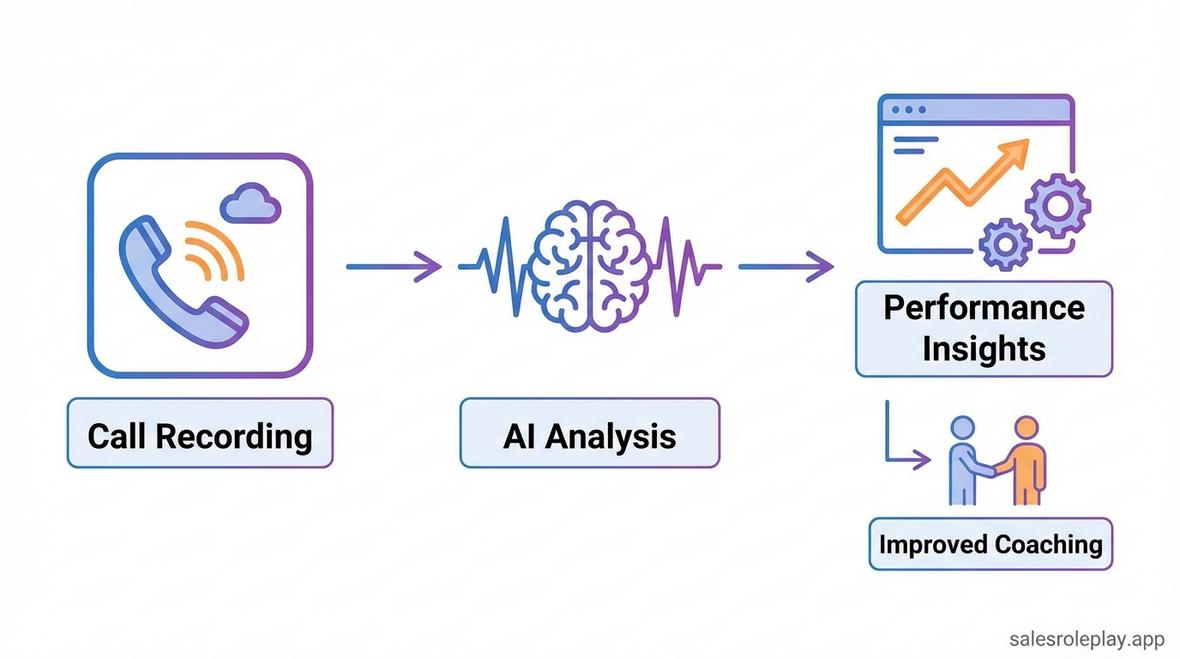
Sales call recording and analysis software has become an essential component of modern revenue operations. These platforms capture, transcribe, and analyze sales conversations to extract actionable insights that drive performance improvements. For sales leaders managing B2B teams, this technology transforms subjective coaching into data-driven development.
The fundamental purpose of sales call recording and analysis software extends beyond simple documentation. These systems leverage artificial intelligence to identify patterns in successful conversations, highlight objection handling techniques, and pinpoint moments where deals are won or lost. According to Forrester B2B revenue team benchmarks, organizations using AI analytics achieve win rates up to 35% compared to the industry average of 22%, demonstrating the measurable impact of call insights and coaching.
Modern sales call recording and analysis software typically includes conversation intelligence capabilities that automatically surface key moments, track competitor mentions, and measure talk-to-listen ratios. This functionality enables sales managers to scale their coaching efforts across entire teams without manually reviewing hours of recordings.
Core Components of Modern Platforms
Today's leading sales call recording and analysis software platforms integrate several critical features. Automatic call transcription converts spoken conversations into searchable text, while sentiment analysis detects emotional cues that indicate buyer engagement or concern. Keyword tracking monitors specific phrases related to pricing, competitors, or decision criteria.
Advanced platforms offer custom scorecards that align with your organization's sales methodology, whether you follow MEDDPICC, SPIN Selling, or Challenger Sales. These scorecards automatically evaluate calls against best practices, providing consistent feedback across your team.
Business Impact and ROI Considerations
Implementing sales call recording and analysis software generates measurable returns across multiple performance dimensions. Organizations typically observe improvements in win rates, deal velocity, and rep ramp time within the first quarter of adoption.
The most immediate impact appears in coaching efficiency. Sales managers traditionally spend 5-10 hours weekly reviewing calls manually. With intelligent analysis, this time reduces by 60-70%, allowing managers to focus on strategic coaching conversations rather than administrative listening. This efficiency enables more frequent, targeted coaching interactions that directly address specific skill gaps.
Revenue impact materializes through improved conversion rates at each funnel stage. When reps receive consistent feedback on discovery call quality, objection handling, and closing techniques, conversion rates typically improve by 15-25% within six months. For a team generating $10 million in annual revenue, this translates to $1.5-2.5 million in additional closed business.
Onboarding Acceleration
New hire productivity represents another significant ROI driver. Traditional onboarding requires 3-6 months before reps achieve quota productivity. Sales call recording and analysis software accelerates this timeline by providing new reps with a library of successful calls to study and immediate feedback on their early conversations.
Organizations using these platforms for sales onboarding report 30-40% reductions in time-to-first-deal and 20-30% improvements in first-year quota attainment. For companies with high growth trajectories requiring frequent hiring, this acceleration delivers substantial competitive advantage.
Key Features and Evaluation Criteria
Selecting the right sales call recording and analysis software requires careful evaluation across several dimensions. Not all platforms offer equivalent capabilities, and misalignment between your needs and platform strengths can limit adoption and value realization.
Integration Ecosystem
The most effective sales call recording and analysis software integrates seamlessly with your existing technology stack. Look for native integrations with your CRM (Salesforce, HubSpot), communication platforms (Zoom, Microsoft Teams, Google Meet), and sales engagement tools (Outreach, SalesLoft). Fragmented systems create friction that reduces adoption and limits the flow of insights into your daily workflows.
API availability enables custom integrations for specialized tools in your stack. Organizations with unique requirements should prioritize platforms offering robust API documentation and developer support.
AI Analysis Depth
The sophistication of artificial intelligence varies dramatically across sales call recording and analysis software providers. Entry-level platforms offer basic transcription and keyword tracking. Advanced systems provide multi-dimensional analysis including topic detection, question analysis, monologue alerts, and predictive deal scoring based on conversation patterns.
Evaluate AI capabilities by requesting demo analyses of your actual calls. This real-world testing reveals whether the platform accurately identifies the nuances relevant to your industry and sales process. Platforms trained on diverse datasets typically perform better across various industries than those optimized for specific verticals.
Coaching Workflow Features
Effective sales call recording and analysis software streamlines the coaching workflow from insight discovery to skill development. Look for platforms offering playlist creation for curating example calls, commenting functionality for asynchronous feedback, and coaching session scheduling integrated with calendar systems.
The best platforms include sales coaching progression tracking, allowing managers to document improvement over time and identify reps requiring additional support. This longitudinal view prevents coaching conversations from feeling repetitive and demonstrates measurable progress to representatives.
Implementation Best Practices
Successful deployment of sales call recording and analysis software requires thoughtful change management. Technology alone doesn't transform performance; adoption combined with process changes drives results.
Establishing Governance
Begin implementation by defining clear policies around call recording, storage, and usage. Legal and compliance teams should review recording consent requirements for your jurisdictions. Some regions require two-party consent, while others allow single-party recording. Your platform should support compliant recording notifications and opt-out mechanisms.
Establish guidelines for which calls get recorded. Many organizations exclude internal calls and focus exclusively on external prospect and customer conversations. Define retention policies aligned with compliance requirements and storage cost considerations.
Building a Coaching Culture
The transition to data-driven coaching can feel uncomfortable for managers accustomed to subjective evaluation. Invest in manager training that demonstrates how sales call recording and analysis software enhances rather than replaces human judgment. Position the technology as a tool that identifies coaching opportunities, while the manager's expertise determines the development approach.
Create a psychologically safe environment where call reviews focus on growth rather than criticism. Frame discussions around 'what could make this even better' rather than 'what went wrong.' This positive approach increases receptiveness and accelerates skill development.
Implement regular coaching cadences supported by the platform's insights. Weekly 30-minute one-on-ones focused on 2-3 specific calls prove more effective than monthly marathon sessions covering dozens of conversations.
Advanced Use Cases Beyond Call Review
While individual call coaching represents the primary use case, sophisticated organizations leverage sales call recording and analysis software for strategic initiatives that extend beyond individual development.
Competitive Intelligence
Sales call recording and analysis software automatically tracks competitor mentions across all conversations, providing real-time intelligence on competitive positioning. By analyzing how prospects describe competitor offerings and which objections arise most frequently, product and marketing teams can refine messaging and feature prioritization.
Some platforms offer competitive battle card generation based on actual conversations, ensuring your positioning guidance reflects real-world buying scenarios rather than theoretical advantages. This grounded approach to competitive intelligence improves win rates in contested deals.
Content Gap Identification
Analyzing thousands of sales conversations reveals patterns in prospect questions and information needs. When the same questions appear repeatedly, it signals content gaps in your enablement library. Sales call recording and analysis software can automatically generate reports on the most frequently asked questions, enabling marketing to create targeted resources that accelerate deal progression.
This data-driven approach to content creation ensures investments focus on materials that directly address prospect needs rather than assumptions about what might be helpful.
Sales Methodology Reinforcement
Organizations investing in formal sales methodologies like MEDDPICC training or Solution Selling can use sales call recording and analysis software to measure methodology adoption. Custom scorecards aligned with methodology requirements automatically evaluate whether reps execute the prescribed approach.
This objective measurement transforms abstract training concepts into concrete, measurable behaviors. Managers can identify which methodology components the team executes well and which require additional reinforcement.
Integration with AI Roleplay Training
The most forward-thinking sales organizations combine sales call recording and analysis software with AI-powered practice platforms. This integration creates a closed-loop learning system where real call insights inform practice scenarios, and practice improves real conversation outcomes.
After reviewing a call where a rep struggled with a specific objection, managers can immediately assign a targeted AI roleplay scenario focused on that objection type. The rep practices the skill in a safe environment before their next real conversation, accelerating skill development.
This approach proves particularly effective for objection handling training and discovery call skill development. Rather than waiting weeks between opportunities to practice specific skills in real calls, reps can iterate daily through AI practice, compressing the learning timeline.
Personalized Learning Paths
Sales call recording and analysis software identifies individual skill gaps through conversation analysis. AI roleplay platforms then deliver personalized practice scenarios targeting those specific gaps. This precision approach proves far more effective than generic training programs that assume all reps need identical development.
For example, if call analysis reveals that a rep consistently fails to ask follow-up questions during discovery, the system can automatically assign scenarios specifically designed to develop questioning depth. This targeted development accelerates improvement compared to broad-based training.
Privacy and Compliance Considerations
Sales call recording and analysis software handles sensitive business conversations, making privacy and compliance critical selection criteria. Organizations in regulated industries face additional requirements around data handling and storage.
Data Sovereignty and Storage
Understand where your call recordings and transcripts are stored. Many platforms use cloud storage in specific geographic regions. If you operate in jurisdictions with data localization requirements (such as GDPR in Europe), verify that your platform offers compliant storage options.
Review data retention policies and deletion capabilities. Your organization may need to purge recordings after specific timeframes or upon customer request. Ensure your platform supports these requirements without manual intervention.
Access Controls
Implement role-based access controls that limit who can access call recordings. Not every team member needs access to all conversations. Sales call recording and analysis software should support granular permissions allowing managers to access their team's calls while restricting access to other teams.
Consider implementing approval workflows for accessing calls involving specific accounts or prospect personas. This additional governance layer protects sensitive competitive situations and strategic accounts.
Measuring Program Success
Establishing clear success metrics ensures your investment in sales call recording and analysis software delivers measurable value. Track both leading indicators (adoption and usage) and lagging indicators (performance outcomes).
Adoption Metrics
Monitor the percentage of calls recorded and analyzed. Low recording rates indicate technical issues or process gaps requiring attention. Track which team members actively use insights for coaching conversations and which managers remain disengaged.
Measure the frequency of coaching interactions supported by call analysis. Successful programs typically generate 2-4 coaching touchpoints per rep weekly, compared to the traditional monthly or quarterly review cadence.
Performance Metrics
Track conversion rates at each funnel stage before and after implementation. Improvement in specific stages often correlates with targeted coaching around those conversation types. For example, focused coaching on discovery call techniques should improve qualification rates and reduce mid-funnel attrition.
Monitor average deal size and sales cycle length. Improved conversation quality often increases deal size as reps more effectively communicate value, while better qualification shortens cycles by focusing effort on genuine opportunities.
Future Trends and Evolution
Sales call recording and analysis software continues evolving rapidly as artificial intelligence capabilities advance. Several emerging trends will shape the next generation of these platforms.
Real-Time Guidance
Next-generation platforms offer real-time conversation guidance, analyzing calls as they happen and surfacing relevant information or suggested responses. This live assistance helps reps navigate unexpected objections or questions without appearing unprepared.
Real-time alerts can notify reps when they're talking too much, using filler words excessively, or missing opportunities to ask questions. This immediate feedback accelerates behavior change compared to post-call review alone.
Predictive Analytics
Advanced analytics will increasingly predict deal outcomes based on conversation patterns. By analyzing thousands of calls, platforms can identify early warning signs that deals are at risk or signals indicating high likelihood of close. This predictive capability enables proactive intervention rather than reactive problem-solving.
Sales leaders will leverage these predictions to optimize resource allocation, directing senior sellers toward high-value opportunities showing positive signals while providing additional support to at-risk deals.
Industry-Specific Applications
While sales call recording and analysis software provides value across industries, certain sectors benefit from specialized capabilities tailored to their unique requirements.
Healthcare and Pharmaceutical
Organizations in pharmaceutical sales require compliance-focused features ensuring conversations adhere to regulatory requirements. Platforms serving this sector offer compliance scorecards that automatically flag potentially problematic statements and track required disclosures.
Medical device companies leverage call analysis to ensure reps effectively communicate clinical evidence and technical specifications without overstating capabilities or making unsubstantiated claims.
Financial Services
Financial services firms selling insurance, investments, or lending products face stringent compliance requirements around disclosure and suitability. Sales call recording and analysis software designed for financial services includes features that verify required disclosures occurred and flag conversations requiring compliance review.
These specialized platforms often integrate with compliance management systems, automatically routing flagged calls to appropriate review queues.
Frequently Asked Questions
What does sales call recording and analysis software typically cost?
Pricing varies significantly based on features, user count, and storage requirements. Entry-level platforms start around $30-50 per user monthly for basic recording and transcription. Mid-tier solutions with AI analysis range from $75-150 per user monthly. Enterprise platforms with advanced analytics, custom integrations, and dedicated support cost $150-300+ per user monthly. Most providers offer volume discounts for larger teams.
How long does implementation typically take?
Basic implementation connecting to video conferencing and CRM systems usually requires 1-2 weeks. More complex deployments involving custom integrations, extensive user training, and change management initiatives may extend to 4-8 weeks. The critical path typically involves technical integration (1-2 weeks), manager training (1-2 weeks), and initial pilot with select team members (2-4 weeks) before full rollout.
Do I need consent to record sales calls?
Recording requirements vary by jurisdiction. In the United States, some states require two-party consent while others allow single-party recording. International regulations differ significantly, with GDPR in Europe imposing strict consent requirements. Quality sales call recording and analysis software includes built-in consent notifications and tracking to ensure compliance. Consult legal counsel to understand requirements for your specific jurisdictions and industries.
How do I address rep concerns about being monitored?
Transparency and purpose clarity address most privacy concerns. Communicate that call recording exists to support development, not punitive evaluation. Emphasize that managers review calls to identify coaching opportunities and recognize excellent performance. Involve reps in defining how insights will be used and give them access to their own call analyses. When positioned as a development tool rather than surveillance, most reps embrace the technology once they experience the targeted coaching it enables.
Can smaller teams benefit from this technology?
Absolutely. While enterprise organizations often implement sales call recording and analysis software first, small and mid-sized teams gain proportionally greater value. Smaller teams typically have limited management resources, making coaching efficiency gains more impactful. Many platforms offer scaled pricing for smaller teams, and the competitive advantages from improved performance often prove more significant for growing organizations competing against larger competitors.
Conclusion
Sales call recording and analysis software has evolved from a nice-to-have convenience to an essential component of modern revenue operations. Organizations leveraging these platforms to drive data-driven coaching, accelerate onboarding, and refine sales processes consistently outperform competitors relying on traditional subjective evaluation methods. As artificial intelligence capabilities continue advancing, the gap between AI-enabled and traditional teams will only widen. Sales leaders seeking sustainable competitive advantage should prioritize implementing robust call recording and analysis capabilities, ensuring proper change management and integration with existing processes. The question is no longer whether to adopt this technology, but how quickly you can implement it effectively to capture the measurable performance improvements available to forward-thinking organizations.
Ready to Transform Your Sales Training?
See how Salesroleplay can help you transform your sales training.