
How To Train Sales Reps: A Comprehensive 2026 Guide To Building High-Performing Sales Teams

Training sales reps effectively is the cornerstone of building a high-performing revenue organization. In 2026, the landscape of sales training has evolved dramatically, with 87% of B2B sales organizations running at least one AI workflow and prioritizing digital selling skills. For sales leaders from Chief Revenue Officers to Sales Managers understanding how to train sales reps using modern methodologies is essential to improving close rates, reducing ramp time, and driving consistent revenue growth.
This comprehensive guide explores proven strategies, emerging technologies, and practical frameworks to transform your sales training program and equip your team with the skills needed to excel in today's competitive B2B environment.
Why Effective Sales Training Matters in 2026
The business case for investing in sales training has never been stronger. According to Lepaya's State of Skills 2026 report, there has been a 27% year-over-year increase in commercial training investment across 196 companies, highlighting how organizations are prioritizing human skills development even amid AI adoption.
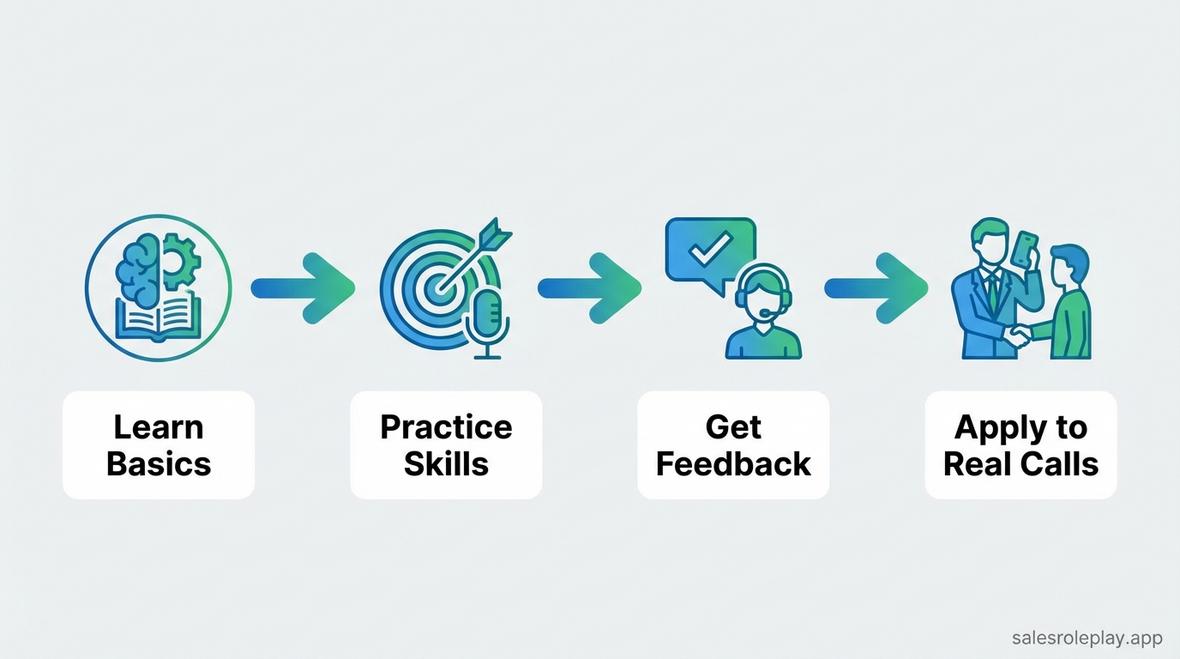
Effective sales training delivers measurable business outcomes: reduced time-to-productivity for new hires, higher win rates, improved customer retention, and increased average deal size. Yet many organizations struggle with traditional training approaches that fail to create lasting behavioral change. The challenge lies not in the volume of training content, but in how sales reps practice, receive feedback, and apply new skills in real selling situations.
Core Competencies Every Sales Rep Needs to Master
Before designing your training program, it's essential to identify the fundamental competencies that drive sales success. When considering how to train sales reps, focus on these critical skill areas:
Discovery and Qualification
Effective discovery separates top performers from average reps. Sales professionals must learn to ask probing questions, uncover pain points, identify decision-makers, and qualify opportunities using frameworks like MEDDIC or BANT. Mastering discovery questions enables reps to understand customer needs deeply and position solutions effectively.
Objection Handling
Every sales conversation involves objections whether about price, timing, competition, or perceived value. Training sales reps to handle objections with confidence requires structured practice scenarios. AI-powered coaching provides real-time role-playing, skill assessments, and personalized feedback, improving engagement and retention for sales reps in objection handling and discovery.
Cold Calling and Prospecting
Despite the rise of digital channels, cold calling remains a vital skill for B2B sales teams. Reps need to develop opening scripts, handle gatekeepers, create value propositions quickly, and secure next steps. Structured cold calling training combined with regular practice dramatically improves connect and conversion rates.
Presentation and Demonstration Skills
Whether conducting virtual demos or in-person presentations, sales reps must articulate value clearly, tailor messaging to different stakeholders, and navigate technical questions. Training should include product knowledge, storytelling techniques, and handling technical objections.
Negotiation and Closing
Closing deals requires understanding buyer psychology, managing procurement processes, negotiating terms effectively, and creating urgency without desperation. Sales reps benefit from practicing various closing scenarios and learning to recognize buying signals.
Modern Sales Training Methodologies That Drive Results
Understanding how to train sales reps effectively requires selecting the right methodologies for your organization and selling environment.
AI-Powered Roleplay Training
Traditional roleplay often fails because it lacks consistency, scalability, and psychological safety. AI-powered roleplay platforms like SalesRoleplay.app enable reps to practice unlimited scenarios with virtual buyers who respond realistically to different approaches. This technology provides immediate feedback, scores performance objectively, and allows reps to iterate privately before facing real prospects.
AI roleplay training addresses the fundamental challenge of practice frequency. While traditional manager-led roleplays might occur monthly, AI enables daily practice sessions, accelerating skill development and building muscle memory for common sales situations.
Structured Onboarding Programs
New hire onboarding sets the foundation for long-term success. Effective sales onboarding programs combine product knowledge, industry context, competitive positioning, sales process training, and skill-building exercises. The goal is to reduce time-to-first-deal and time-to-full-productivity while maintaining quality standards.
Microlearning and Just-in-Time Training
Sales reps have limited time for training. Microlearning delivers focused content in short sessions (5-15 minutes) that reps can consume between calls or meetings. Just-in-time training provides specific guidance immediately before important situations for example, reviewing objection handling techniques before a challenging negotiation call.
Peer Learning and Call Reviews
Learning from colleagues' successes and challenges accelerates development. Structured call review sessions where teams analyze recorded calls (both wins and losses) create shared learning experiences. Virtual ride-alongs allow managers to observe reps in real selling situations and provide targeted coaching.
Certification and Skills Validation
Establishing certification requirements for different competencies ensures consistent skill levels across your team. Reps should demonstrate proficiency through assessments, roleplay evaluations, and real-world performance metrics before advancing to complex selling situations or larger accounts.
Building Your Sales Training Program: Step-by-Step Framework
When developing a comprehensive approach to how to train sales reps, follow this systematic framework:
Step 1: Conduct Skills Assessment
Begin by evaluating current capabilities across your team. Identify skill gaps through manager observations, call recordings, win/loss analysis, and self-assessments. This baseline measurement enables you to prioritize training investments and measure improvement over time.
Step 2: Define Competency Models
Create clear competency models that outline the specific skills, behaviors, and knowledge required for success at each role level (SDR, Account Executive, Account Manager, etc.). Document what 'good' looks like for each competency with specific behavioral indicators.
Step 3: Design Learning Pathways
Develop structured learning pathways that guide reps from foundational skills to advanced techniques. Sequence content logically for example, teaching discovery before objection handling, or product knowledge before demo skills. Create distinct pathways for different roles and experience levels.
Step 4: Implement Practice Mechanisms
Knowledge alone doesn't change behavior; deliberate practice does. Implement multiple practice mechanisms including AI roleplay sessions, peer practice partnerships, manager-led roleplays, and real-world application exercises. The most effective training programs allocate at least 70% of time to practice versus passive learning.
Step 5: Establish Coaching Cadence
Consistent coaching reinforces training and accelerates skill development. Establish regular one-on-one coaching sessions (weekly or bi-weekly) where managers review performance data, provide feedback, and practice specific skills. Sales managers should dedicate at least 50% of their time to coaching activities.
Step 6: Measure and Optimize
Track both leading indicators (training completion rates, practice frequency, assessment scores) and lagging indicators (quota attainment, win rates, average deal size, sales cycle length). Use data to identify what's working and continuously refine your program.
Industry-Specific Training Considerations
Effective sales training must account for industry-specific requirements and buyer expectations.
Technology and SaaS Sales
Technology sales require deep product knowledge, technical fluency, and the ability to articulate ROI. Training programs should emphasize solution selling, multi-threading across organizations, and navigating complex buying committees. Technology sales teams benefit from scenario-based training that mirrors their actual sales cycles.
Healthcare and Medical Devices
Healthcare sales demands clinical knowledge, regulatory compliance awareness, and relationship-building with medical professionals. Training must address evidence-based selling, navigating hospital procurement processes, and communicating value to both clinical and financial decision-makers.
Financial Services
Financial services sales requires regulatory compliance, trust-building, and consultative approaches. Financial services training should incorporate compliance requirements, needs-based selling, and long-term relationship management strategies.
Leveraging Technology to Scale Sales Training
Modern sales organizations need technology platforms that enable scalable, consistent, and measurable training.
AI Sales Training Platforms
AI-powered platforms transform how to train sales reps by providing on-demand practice environments, personalized feedback, and objective performance measurement. These platforms use natural language processing to analyze conversations, identify skill gaps, and recommend targeted development activities.
AI sales roleplay solutions create realistic buyer personas that adapt to different approaches, enabling reps to experience various scenarios without risk. The technology tracks improvement over time and provides managers with visibility into team development.
Conversation Intelligence Tools
Conversation intelligence platforms analyze actual sales calls to identify patterns, highlight best practices, and surface coaching opportunities. These tools provide quantitative insights into talk-time ratios, question frequency, keyword usage, and other behavioral indicators that correlate with success.
Learning Management Systems
A centralized learning management system (LMS) organizes training content, tracks completion, manages certifications, and provides reporting on training engagement. Modern LMS platforms integrate with CRM systems to connect training activities with business outcomes.
Virtual Training Environments
Remote and hybrid work models require virtual training capabilities. Video-based learning, virtual workshops, and digital collaboration tools enable distributed teams to access consistent training regardless of location. Remote sales training strategies should incorporate both synchronous and asynchronous elements to accommodate different learning preferences and time zones.
Common Sales Training Mistakes to Avoid
Even well-intentioned training programs can fail due to common pitfalls:
- One-and-Done Training: Single training events without reinforcement rarely create lasting change. Effective training requires spaced repetition and ongoing practice.
- Theory Without Practice: Information transfer alone doesn't build skills. Reps need structured practice opportunities with feedback to internalize new behaviors.
- Generic Content: Training that doesn't reflect your specific products, buyers, and sales process feels irrelevant to reps. Customize content to your environment.
- Lack of Manager Involvement: When managers don't reinforce training concepts during coaching sessions, reps receive mixed signals about priorities.
- No Performance Measurement: Without tracking business impact, you can't identify effective training investments or justify budget allocation.
- Ignoring Learning Preferences: Different reps learn through different modalities. Offer varied formats including visual, auditory, and kinesthetic learning opportunities.
Measuring Sales Training Effectiveness and ROI
Demonstrating training ROI requires connecting learning activities to business outcomes. Track these key metrics:
Leading Indicators
- Training completion rates
- Assessment scores and certification pass rates
- Practice frequency (roleplay sessions completed)
- Skills proficiency ratings
- Coaching session frequency
Lagging Indicators
- Time to first deal (for new hires)
- Ramp time to full productivity
- Quota attainment percentage
- Win rate improvements
- Average deal size
- Sales cycle length
- Customer retention and expansion rates
Calculate training ROI by comparing the incremental revenue generated by improved performance against training program costs. For example, if training reduces ramp time by 30 days and your average rep generates $50,000 in monthly revenue, the value per rep is $50,000 multiply by your team size to determine total impact.
Creating a Continuous Improvement Culture
The most effective sales organizations view training as an ongoing process rather than periodic events. Foster continuous improvement by:
- Encouraging daily micro-practice sessions
- Celebrating learning and skill development publicly
- Creating psychological safety where mistakes are learning opportunities
- Establishing peer mentorship programs
- Regularly updating training content based on market changes
- Soliciting feedback from reps on training effectiveness
- Recognizing and rewarding skill development achievements
Sales coaches and sales trainers play critical roles in sustaining this culture by modeling continuous learning and providing consistent support.
Future Trends in Sales Training
As we progress through 2026, several trends are reshaping how to train sales reps:
Hyper-Personalization: AI-driven platforms will create individualized learning paths based on each rep's skill gaps, learning pace, and performance data.
Immersive Technologies: Virtual and augmented reality will create increasingly realistic practice environments for complex selling situations.
Integration with Workflow: Training will be embedded directly into daily workflows, providing contextual guidance at the point of need rather than in separate learning sessions.
Predictive Analytics: Machine learning will identify which reps are at risk of underperformance and prescribe specific development interventions before problems escalate.
Skills-Based Hiring and Development: Organizations will focus on identifying and developing core competencies rather than relying solely on industry experience or educational credentials.
Frequently Asked Questions
How long should sales training take for new hires?
Comprehensive onboarding typically requires 60-90 days for new sales reps to become productive, though this varies by complexity of your product, sales cycle length, and market. Focus on progressive skill development with clear milestones rather than arbitrary time frames.
How often should ongoing training occur for experienced reps?
Top-performing organizations provide continuous learning opportunities rather than annual or quarterly training events. Implement weekly micro-training sessions (15-30 minutes), monthly skill-building workshops, and quarterly comprehensive training on major topics or new initiatives.
What is the best training method for sales teams?
The most effective approach combines multiple methodologies: AI-powered roleplay for scalable practice, manager coaching for personalized development, peer learning for shared experiences, and structured content for knowledge transfer. Blended learning approaches consistently outperform single-method programs.
How can I get busy sales reps to engage with training?
Make training relevant, convenient, and results-oriented. Use microlearning formats that fit into busy schedules, demonstrate clear connections between training and quota attainment, provide on-demand access to content, and celebrate reps who actively develop their skills. When reps see training directly impacting their success, engagement increases naturally.
Should sales training be mandatory or optional?
Core competency training and compliance-related content should be mandatory with clear expectations and accountability. Advanced skill development and specialized training can be optional but should be incentivized. The key is creating a culture where continuous learning is valued and supported.
Conclusion
Understanding how to train sales reps effectively is fundamental to building a high-performing revenue organization. The most successful programs combine proven methodologies with modern technology, provide consistent practice opportunities with feedback, and create cultures of continuous improvement. By investing in AI-powered training platforms, establishing structured onboarding, implementing regular coaching cadences, and measuring business impact, sales leaders can dramatically improve team performance, reduce ramp time, and drive sustainable revenue growth. The question is no longer whether to invest in sales training, but how to leverage the most effective approaches to develop your team's capabilities and competitive advantage in an increasingly sophisticated B2B marketplace.
Ready to Transform Your Sales Training?
See how Salesroleplay can help you transform your sales training.