
Cold Calling Training: The Complete 2026 Guide To Building Elite Sales Teams

Understanding Cold Calling Training in 2026
Cold calling training has evolved dramatically from the traditional script-reading exercises of the past. In 2026, sales leaders face an urgent challenge: building teams that can confidently navigate complex buyer conversations while maintaining authenticity and personalization. Modern cold calling training encompasses far more than memorizing opening lines it's about developing the conversational agility, emotional intelligence, and technical mastery that separate top performers from average reps.
For Chief Revenue Officers and Sales Managers in B2B organizations, the stakes have never been higher. With buyers increasingly resistant to unsolicited outreach and competition intensifying across Technology, Healthcare, and Financial Services sectors, your team's cold calling proficiency directly impacts pipeline velocity and revenue predictability. Forrester finds ROI of advanced sales training solutions averages 353%, reducing sales cycle by 28% through improved cold calling skills making strategic investment in training not just beneficial, but essential for competitive survival.
The fundamental challenge most sales organizations face isn't lack of effort it's the absence of scalable, effective training methodologies that actually translate to real-world performance improvement. Traditional role-play sessions often feel awkward and unproductive, while one-on-one coaching doesn't scale across growing teams. This is where AI-powered cold calling training platforms are transforming how organizations develop their sales talent.
Why Traditional Cold Calling Training Falls Short
Most sales leaders have experienced the frustration of investing in training programs that fail to deliver measurable results. Traditional cold calling training typically suffers from several critical limitations that prevent skills from transferring to actual sales conversations.
First, traditional role-play exercises lack psychological safety. Reps feel judged and self-conscious when practicing in front of peers or managers, leading to artificial performances rather than genuine skill development. This performance anxiety prevents the repetition necessary for true mastery sales professionals need dozens of practice conversations to internalize techniques, but most traditional programs provide only a handful of awkward sessions.
Second, feedback loops in conventional training are too slow and inconsistent. A manager might review a recorded call days after it occurred, providing delayed feedback when the rep has already moved on mentally. Different coaches offer conflicting advice, creating confusion rather than clarity. Without standardized evaluation criteria, reps never develop a clear understanding of what 'good' actually looks like.
Third, traditional approaches fail to accommodate different learning speeds and styles. Your top performers and struggling reps receive the same generic training, wasting everyone's time. High performers get bored while slower learners fall further behind, creating a widening performance gap across your team.
Finally, conventional cold calling training doesn't provide enough volume of practice. Research consistently shows that skill mastery requires deliberate practice not just a few role-plays during quarterly training sessions. Sales reps need continuous, on-demand access to practice scenarios that challenge them at their current skill level, something traditional methods simply cannot provide at scale.
The Hidden Cost of Inadequate Cold Calling Training
The consequences of poor cold calling training extend far beyond awkward conversations. When sales development reps lack confidence and competence in their outreach, your entire revenue engine suffers. Average ramp time stretches from 3 months to 6 months or longer, burning cash while new hires struggle to contribute. Close rates stagnate or decline as prospects experience generic, unprofessional outreach that damages your brand reputation.
Perhaps most damaging is the impact on team morale and retention. Sales professionals who feel unprepared and unsupported quickly become demoralized, leading to turnover rates that can exceed 35% annually in some organizations. The cost of constantly recruiting and training replacements creates a vicious cycle that prevents your team from ever reaching its potential.
Essential Components of an Effective Cold Calling Training Program
Building a world-class cold calling training program requires integrating multiple components that address both technical skills and psychological preparation. The most effective programs in 2026 combine structured curriculum with continuous practice opportunities and real-time feedback mechanisms.
Foundational Skills Development
Every effective cold calling training program must start with core competencies that form the foundation of successful outreach. These include voice modulation and tone control the ability to project confidence and enthusiasm without sounding artificial or overly aggressive. Reps need extensive practice managing their speaking pace, eliminating filler words, and using strategic pauses to create conversational rhythm.
Research methodology and preparation protocols constitute another critical foundation. Your reps must learn systematic approaches to researching prospects, identifying relevant pain points, and crafting personalized opening statements that demonstrate genuine understanding of the buyer's context. Cold calling scripts provide helpful structure, but reps need training on when and how to adapt them based on prospect responses.
Opening statement frameworks give reps proven patterns for starting conversations that earn permission to continue. Whether using permission-based openers, pattern interrupts, or value propositions, your team needs multiple approaches they can deploy based on prospect type and situation. The key is practicing these frameworks enough that they sound natural rather than scripted.
Advanced Conversational Techniques
Once foundational skills are established, cold calling training must progress to more sophisticated conversational dynamics. Objection handling represents perhaps the most critical advanced skill the ability to address prospect concerns without becoming defensive or pushy. Your reps need exposure to dozens of objection scenarios with practiced responses that acknowledge concerns while maintaining conversational momentum.
Active listening and questioning techniques separate good cold callers from great ones. Training must develop the discipline to ask open-ended questions, genuinely listen to responses, and adapt the conversation based on what prospects actually say rather than following a predetermined script. This requires practicing the mental flexibility to abandon your planned talk track when the conversation takes an unexpected turn.
Tonality and emotional intelligence deserve far more attention than most training programs provide. Reps must learn to read vocal cues that indicate interest, skepticism, or irritation, then adjust their approach accordingly. They need practice mirroring prospect communication styles to build rapport quickly matching speaking pace with fast talkers, adopting a more measured approach with analytical buyers.
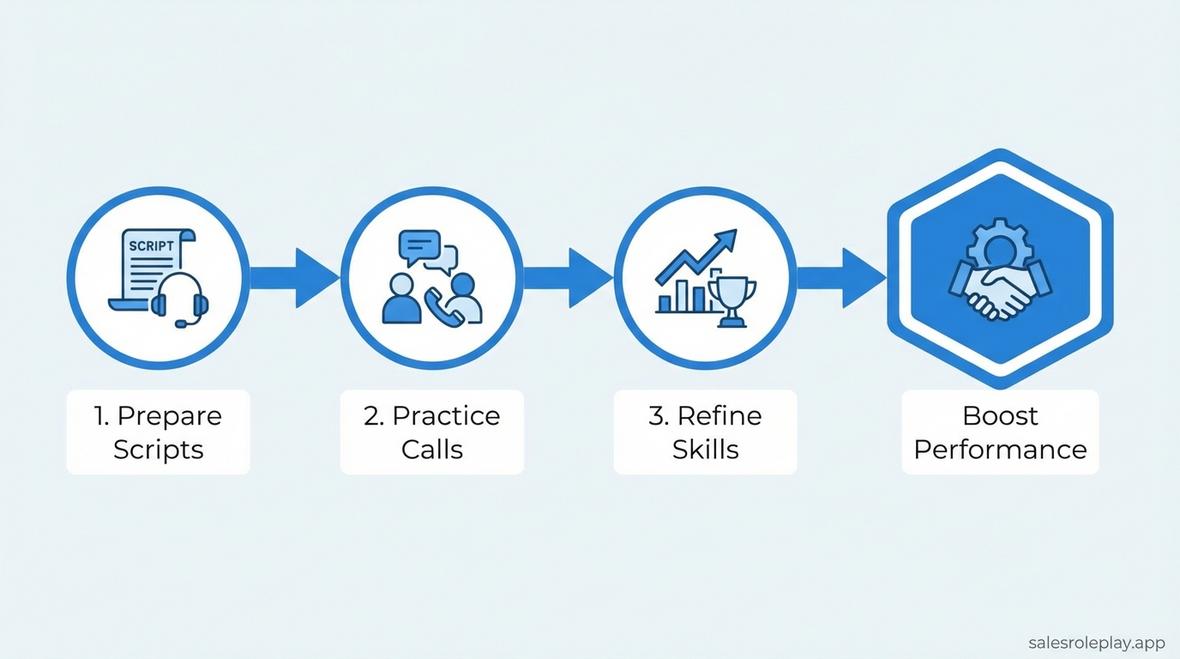
Scenario-Based Practice Systems
The most impactful cold calling training programs utilize extensive scenario-based practice that exposes reps to the full range of situations they'll encounter in real prospecting. This includes buyer personas across different seniority levels, industries, and personality types from the abrupt executive who has 30 seconds for your pitch to the friendly but non-committal mid-level manager who talks for ten minutes without committing to anything.
Effective scenario libraries also incorporate situational variables like calling into different organizational contexts (startups versus enterprises), timing considerations (end of quarter urgency versus beginning of fiscal year planning), and competitive dynamics (incumbent vendor relationships versus greenfield opportunities). The more realistic and varied the practice scenarios, the better prepared your reps will be for actual prospecting.
AI-powered roleplay platforms have revolutionized scenario-based training by providing unlimited practice opportunities with intelligent virtual prospects that respond realistically to rep inputs. Unlike human role-play partners who tire or become predictable, AI buyers can simulate hundreds of different personality types and objection patterns, giving reps the volume of practice necessary for true mastery.
Implementing AI-Powered Cold Calling Training
The integration of artificial intelligence into cold calling training represents the most significant advancement in sales development methodology in the past decade. AI-powered platforms address virtually every limitation of traditional training approaches while providing capabilities that were simply impossible before.
On-Demand Practice Availability
Modern sales professionals work in dynamic environments where scheduling group training sessions becomes increasingly challenging. AI-powered cold calling training provides 24/7 access to practice scenarios, allowing reps to sharpen their skills during whatever windows of time they have available early mornings before the workday begins, evenings after calls are finished, or brief breaks between meetings.
This on-demand accessibility fundamentally changes training adoption rates. Rather than forcing reps to attend scheduled sessions regardless of their readiness or motivation, AI platforms let individuals practice when they're mentally prepared to learn. New hires can accelerate their ramp by practicing multiple times daily, while experienced reps can refresh specific skills before important calls or campaigns.
Personalized Learning Paths
One-size-fits-all training wastes time for top performers while leaving struggling reps behind. AI-powered platforms analyze individual performance across multiple dimensions opening statement effectiveness, objection handling success rates, question quality, tonality consistency then automatically adjust scenario difficulty and focus areas based on each rep's specific needs.
A rep who consistently struggles with gatekeeper conversations receives more practice scenarios focused on that specific challenge, with gradually increasing difficulty as performance improves. Meanwhile, a rep who excels at opening statements but struggles with qualification questions gets different scenario emphasis. This personalization ensures every minute of training time directly addresses individual development needs rather than covering generic content that may or may not be relevant.
Real-Time Feedback and Performance Analytics
Perhaps the most transformative capability of AI-powered cold calling training is instant, objective feedback on every practice conversation. Advanced platforms analyze dozens of performance indicators in real-time speaking pace, filler word frequency, question-to-statement ratio, objection handling effectiveness, and value proposition clarity.
Reps receive immediate scores and specific improvement recommendations after each practice call, creating tight feedback loops that accelerate skill development. Unlike human coaches who might miss subtle issues or provide inconsistent feedback, AI analysis remains objective and comprehensive across every interaction. This consistency helps reps develop accurate mental models of what constitutes strong performance.
For sales leaders, aggregated analytics provide unprecedented visibility into team capabilities and training ROI. You can identify exactly which skills need reinforcement across your team, track improvement trajectories for individual reps, and correlate training activity with actual sales performance outcomes. This data-driven approach to sales training ROI enables continuous optimization of your development programs.
Building a Sustainable Cold Calling Practice Culture
Technology alone doesn't create lasting behavior change you need deliberate culture-building efforts that make continuous practice a core part of how your team operates. The most successful sales organizations treat cold calling skill development as an ongoing journey rather than a one-time training event.
Establishing Clear Practice Expectations
Top-performing teams build specific practice requirements into their workflow rather than treating it as optional. Leading sales organizations require new hires to complete a minimum number of AI roleplay sessions weekly during their first 90 days, gradually reducing the requirement as reps demonstrate proficiency. Some organizations implement 'practice before live calls' policies where reps must complete warm-up scenarios before making actual prospect calls each day.
The key is making expectations clear and non-negotiable while providing the tools and time necessary to meet them. Reps need protected time for skill development not just instructions to 'find time' amidst their other responsibilities. Forward-thinking sales leaders block 30-60 minutes weekly on team calendars specifically for training and practice activities.
Leveraging Gamification and Recognition
Human psychology responds powerfully to competition, achievement, and social recognition. Sales leaderboards that showcase top practice performers alongside quota attainment create positive peer pressure and motivation. Monthly recognition for 'most improved' or 'practice champion' awards reinforces the message that skill development matters.
Many AI training platforms incorporate game mechanics like achievement badges, skill level progression systems, and scenario completion streaks that tap into intrinsic motivation. These elements make practice feel less like obligatory training and more like an engaging challenge that reps want to conquer.
Integration with Manager Coaching Workflows
AI-powered training platforms don't replace human coaching they make it dramatically more effective. Managers gain detailed visibility into each rep's practice activity and performance trends, enabling highly targeted coaching conversations focused on specific improvement opportunities rather than generic advice.
Progressive organizations implement coaching workflows where managers review AI-generated performance reports before one-on-ones, then use actual practice call recordings as coaching artifacts. This evidence-based approach eliminates the 'he said, she said' dynamics that often plague subjective performance discussions. Reps can't dispute objective data showing they used filler words 47 times in a five-minute practice call or failed to ask qualifying questions in 80% of scenarios.
The combination of AI-powered practice platforms with structured human coaching creates a powerful development system where technology handles volume and consistency while humans provide strategic guidance, motivation, and contextual interpretation. Sales managers can focus their limited coaching time on high-value activities rather than basic skills instruction that AI can handle more efficiently.
Measuring Cold Calling Training Effectiveness
Rigorous measurement separates training programs that actually drive business results from those that merely create the appearance of development activity. The most sophisticated sales organizations track cold calling training effectiveness across multiple time horizons and metric categories.
Leading Indicators: Activity and Engagement Metrics
The first level of measurement focuses on training adoption and engagement. Are reps actually using the training resources you've provided? Leading metrics include practice session completion rates, average practice time per rep, and consistency of engagement over time. Declining practice activity often predicts performance issues weeks before they appear in quota attainment data.
Skill assessment scores from AI evaluations provide another critical leading indicator. You should track both absolute performance levels (current skill ratings) and improvement trajectories (rate of score increases over time). Reps whose scores plateau or decline need immediate coaching intervention, while those showing steady improvement are likely to translate those gains into better sales results.
Operational Metrics: Call Quality and Efficiency
The next measurement layer examines how training impacts actual prospecting activity. Key metrics include connection rates (percentage of dials that reach a decision-maker), conversation duration (average length of calls that don't immediately end), and advancement rates (percentage of calls that result in meetings scheduled or opportunities created).
Many organizations also track qualitative factors like gatekeeper navigation effectiveness, objection handling success rates in live calls, and prospect sentiment analysis from recorded conversations. These operational metrics reveal whether practice gains are transferring to real-world performance the ultimate test of training effectiveness.
Business Outcome Metrics: Revenue Impact
The final and most important measurement category connects training investment to actual business results. This includes pipeline velocity metrics (time from first contact to opportunity creation), conversion rates at each funnel stage, average deal size, and ultimately revenue per rep.
The most sophisticated approach involves cohort analysis comparing reps with different training exposure levels. Organizations that implement AI-powered cold calling training typically see 15-25% reductions in time-to-first-meeting for new hires and 10-20% improvements in qualified opportunity creation rates for the overall team within 90 days of implementation.
Industry-Specific Cold Calling Training Considerations
While core cold calling principles apply across sectors, effective training programs must account for industry-specific nuances that impact conversation dynamics and compliance requirements.
Technology and SaaS Sales
Cold calling in technology sales requires deep understanding of technical concepts and the ability to quickly establish credibility with sophisticated buyers. Training must emphasize discovery techniques that uncover technical requirements and integration challenges rather than focusing solely on business pain points. Reps need practice navigating conversations with multiple stakeholder types from technical evaluators focused on specifications to executive buyers concerned with strategic alignment.
Healthcare and Medical Devices
Cold calling in healthcare settings involves unique challenges including strict compliance requirements, complex purchasing processes, and busy practitioners with limited availability. Healthcare sales training must incorporate scenarios around navigating organizational hierarchies, scheduling conversations around clinical schedules, and communicating value in terms of patient outcomes and operational efficiency rather than pure cost savings.
Financial Services
Cold calling for financial services requires exceptional trust-building capabilities and regulatory awareness. Training must emphasize compliance with communications regulations, appropriate disclosure practices, and techniques for establishing credibility quickly with prospects who are naturally skeptical about unsolicited financial advice. Reps need extensive practice handling concerns about fiduciary responsibility and differentiating their services in a crowded marketplace.
The Future of Cold Calling Training: Emerging Trends in 2026
As we move deeper into 2026, several emerging trends are reshaping how progressive organizations approach cold calling development. Voice analysis technology is becoming increasingly sophisticated, with AI platforms now capable of detecting subtle emotional cues in prospect responses and coaching reps on empathetic communication in real-time.
Integration between training platforms and actual sales technology stacks is eliminating friction between practice and execution. Forward-thinking organizations are implementing systems where reps can practice calling scenarios directly within their CRM interface, with AI analysis automatically logging training activity and performance insights alongside actual prospecting data.
Virtual reality cold calling simulations are moving from experimental to mainstream, offering immersive practice environments that recreate the psychological intensity of real prospecting situations. While not yet widely adopted, VR training shows promise for accelerating confidence development and stress inoculation.
Perhaps most significantly, the boundaries between training and actual selling are blurring. Advanced AI systems now provide real-time coaching during live calls suggesting questions to ask, warning about problematic language patterns, and surfacing relevant objection handling frameworks instantly. This 'augmented selling' approach transforms every customer interaction into both a revenue opportunity and a learning experience.
Implementing Your Cold Calling Training Transformation
For sales leaders ready to revolutionize their team's cold calling capabilities, successful implementation follows a structured approach that minimizes disruption while maximizing adoption.
Begin with a honest assessment of your current state what specific cold calling skills are preventing your team from hitting targets? Use call recording analysis, manager feedback, and win/loss data to identify the highest-impact improvement opportunities. This diagnostic phase ensures your training investment focuses on gaps that actually matter to business outcomes.
Next, establish clear success metrics and baseline measurements before implementing new training approaches. You need objective data on current performance to prove ROI as improvements materialize. Key baseline metrics should include connection rates, conversation duration, meeting set rates, and time-to-first-opportunity for new hires.
Pilot your new training approach with a small group before full rollout. Select a cross-section of performance levels and implement your AI-powered training platform with this cohort for 60-90 days. Gather detailed feedback on user experience, track engagement metrics, and measure performance improvements. This pilot phase lets you refine implementation details and build internal champions who can advocate for broader adoption.
During full rollout, invest heavily in change management and leadership buy-in. Your training transformation will only succeed if front-line managers actively reinforce new expectations and integrate AI training data into their coaching workflows. Conduct manager training specifically focused on how to leverage platform insights and incorporate practice requirements into team rhythms.
For organizations ready to transform their cold calling training with AI-powered solutions, salesroleplay.app provides comprehensive platforms designed specifically for B2B sales teams. With features like unlimited practice scenarios, real-time performance feedback, and detailed analytics dashboards, modern training technology makes elite cold calling skills accessible to entire teams rather than just naturally gifted individuals.
Conclusion
Cold calling training in 2026 has evolved far beyond traditional role-play exercises and generic scripts. The most successful B2B sales organizations recognize that systematic skill development powered by AI technology that provides unlimited practice, instant feedback, and personalized learning paths represents a competitive advantage that directly impacts pipeline quality and revenue predictability. By implementing comprehensive training programs that combine foundational techniques with advanced conversational skills, creating cultures that prioritize continuous practice, and measuring effectiveness across multiple metric categories, sales leaders can transform cold calling from a dreaded activity into a reliable revenue driver. The combination of structured methodology and cutting-edge technology makes world-class cold calling performance achievable for entire teams, dramatically reducing ramp time while increasing close rates across all experience levels.
Frequently Asked Questions
How long does it take to see results from cold calling training?
Most organizations observe measurable improvements in connection rates and conversation quality within 2-3 weeks of implementing structured practice programs. Meaningful business outcomes like increased meeting set rates and pipeline contribution typically appear within 60-90 days as skills transfer to actual prospecting activities.
What's the ideal practice frequency for developing cold calling skills?
Research suggests that 3-5 focused practice sessions weekly produces optimal results for most sales professionals. Each session should last 15-30 minutes and focus on specific skill elements rather than attempting to practice everything simultaneously. Consistency matters more than volume daily 15-minute sessions outperform weekly 90-minute marathons.
Can experienced sales reps benefit from cold calling training?
Absolutely. Even veteran sellers develop unconscious habits and blind spots that limit their effectiveness. AI-powered training platforms help experienced reps identify specific improvement opportunities they've never noticed, refresh skills that have atrophied, and adapt to evolving buyer expectations. Many organizations see their top performers improve 10-15% after implementing structured practice programs.
How do you measure ROI of cold calling training investments?
Comprehensive ROI measurement compares training costs against improvements in key performance indicators including reduced ramp time for new hires, increased connection and conversion rates, higher average deal values, and improved quota attainment across the team. The most rigorous approach uses cohort analysis comparing trained versus untrained groups while controlling for other variables.
What technology is necessary for modern cold calling training?
While basic training can occur with just call recording tools and human coaches, modern best practices leverage AI-powered roleplay platforms that provide unlimited practice scenarios, real-time performance analysis, and detailed skill assessments. Integration with CRM systems and conversation intelligence platforms creates comprehensive development ecosystems that connect training activity with actual sales results.
Ready to Transform Your Sales Training?
See how Salesroleplay can help you transform your sales training.