
Cold Calling Practice AI: Master Sales Calls With Intelligent Training In 2026

Understanding Cold Calling Practice AI: The Future of Sales Training
Cold calling remains one of the most challenging yet essential skills in sales. In 2026, the landscape of sales training has been revolutionized by cold calling practice AI, which combines artificial intelligence with realistic role-play scenarios to help sales professionals master their craft. This technology enables reps to practice unlimited cold calling scenarios in a safe, judgment-free environment where they receive instant, actionable feedback.
Traditional cold calling training methods often involve shadowing experienced reps, listening to recorded calls, or practicing with colleagues who may not have time for repetitive sessions. These approaches are time-consuming, inconsistent, and don't scale effectively across growing sales teams. Cold calling practice AI solves these challenges by providing on-demand, personalized training that adapts to each rep's skill level and learning pace.
The shift toward AI-powered sales training represents a fundamental change in how organizations develop their sales talent. Instead of waiting for quarterly training sessions or relying on managers to provide feedback during their limited availability, sales reps can now access intelligent practice tools whenever they need them. This democratization of high-quality training is leveling the playing field and helping companies build stronger, more confident sales teams.
Why Cold Calling Still Matters in Modern Sales
Despite the rise of digital marketing channels and social selling, cold calling continues to be a critical component of successful B2B sales strategies. Understanding why cold calling remains relevant helps contextualize the importance of cold calling practice AI tools in building effective sales teams.
Cold calling allows sales professionals to directly reach decision-makers, bypass gatekeepers with strategic messaging, and create immediate conversations that email and social media cannot replicate. The personal touch of a well-executed cold call can differentiate your offering in crowded markets where prospects receive hundreds of digital messages daily.
According to research on cold calling effectiveness, sales reps who consistently practice their cold calling skills see significantly higher connect rates and conversion rates compared to those who approach calls without preparation. The key difference between successful and unsuccessful cold callers often comes down to preparation, confidence, and the ability to handle objections in real-time all skills that cold calling training programs help develop.
Furthermore, cold calling builds resilience and communication skills that transfer to other areas of sales. Reps who master cold calling develop stronger listening abilities, better questioning techniques, and improved emotional intelligence all competencies that elevate their overall sales performance.
How Cold Calling Practice AI Works: Technology Behind the Training
The technology powering cold calling practice AI platforms combines several advanced capabilities to create realistic, effective training experiences. Understanding these technological components helps sales leaders appreciate the value these tools bring to their organizations.
Conversational AI Buyers
At the heart of cold calling practice AI systems are sophisticated conversational AI models that simulate realistic buyer personas. These AI buyers are programmed with industry-specific knowledge, common objections, personality types, and decision-making behaviors that mirror real-world prospects.
Unlike static scripts or recorded responses, these AI buyers engage in dynamic conversations that adapt based on what the sales rep says. They can express skepticism, raise objections, show interest, or completely disengage just like real prospects. This variability ensures that reps experience the unpredictability of actual cold calling scenarios.
Real-Time Speech Analysis
Advanced cold calling practice AI platforms analyze multiple dimensions of speech during practice sessions, including pace, tone, filler word usage, clarity, and confidence levels. This analysis happens in real-time, allowing the system to provide immediate feedback after each practice call.
The AI evaluates not just what reps say, but how they say it. Research shows that vocal delivery often matters more than the actual words used in cold calling. Sales professionals who speak with appropriate pacing, enthusiasm, and confidence consistently outperform those with monotone or rushed delivery, regardless of their script quality.
Intelligent Feedback Systems
After each practice session, cold calling practice AI generates detailed feedback reports highlighting strengths and areas for improvement. These reports typically include:
- Objection handling effectiveness: How well the rep addressed prospect concerns
- Talk-to-listen ratio: Whether the rep dominated the conversation or engaged in dialogue
- Key message delivery: If critical value propositions were communicated clearly
- Opening effectiveness: How compelling the first 10 seconds of the call were
- Closing strength: Whether the rep successfully advanced the conversation
This granular feedback enables reps to identify specific behaviors to modify rather than receiving vague guidance like 'be more confident' or 'improve your pitch.'
Key Benefits of Using AI for Cold Calling Practice
Organizations that implement cold calling practice AI solutions experience multiple transformational benefits that directly impact sales performance and team development.
Unlimited Practice Opportunities
One of the most significant advantages of AI-powered training is the ability for sales reps to practice as many times as they want without consuming anyone else's time. Traditional role-playing requires scheduling time with managers or colleagues who have their own responsibilities and quotas to meet.
With cold calling practice AI, reps can log in at 6 AM before their shift, during lunch breaks, or after hours to practice specific scenarios they struggled with during actual calls. This flexibility dramatically increases the volume of practice reps complete, accelerating skill development.
Safe Learning Environment
Many sales professionals, especially new reps, experience significant anxiety around cold calling. This fear often prevents them from practicing with real prospects, creating a vicious cycle where lack of practice leads to poor performance, which reinforces the anxiety.
Cold calling practice AI creates a psychologically safe space where reps can make mistakes, try different approaches, and build confidence without risking real opportunities. The AI doesn't judge, get impatient, or report poor performance to managers it simply provides objective feedback and allows reps to try again.
Consistent Training Standards
When different managers or senior reps provide training, inconsistencies inevitably emerge. One manager might emphasize aggressive persistence while another preaches consultative questioning. These mixed messages confuse reps and dilute training effectiveness.
AI sales roleplay platforms ensure every rep receives training based on the same standards, methodologies, and best practices. This consistency creates a unified sales approach across the entire organization while still allowing for individual style and personality.
Scalable Onboarding
Rapidly growing sales teams face significant onboarding challenges. Hiring ten new reps simultaneously can overwhelm training resources and delay time-to-productivity. Cold calling practice AI enables organizations to onboard multiple reps concurrently without diluting training quality.
New hires can complete their sales onboarding at their own pace, revisiting challenging concepts and practicing specific scenarios until they demonstrate mastery. This self-directed learning accelerates ramp time while ensuring every rep meets competency standards before making actual prospect calls.
Data-Driven Performance Insights
Traditional training methods provide limited data about rep development. Managers might listen to a few recorded calls or observe occasional role-plays, but this sampling approach misses patterns and trends that emerge over time.
Cold calling practice AI platforms track comprehensive performance data across hundreds or thousands of practice sessions, revealing patterns that inform coaching priorities. Sales leaders can identify whether specific objections consistently challenge their team, whether certain reps struggle with particular buyer personas, or whether training on specific topics needs reinforcement.
Essential Cold Calling Scenarios to Practice with AI
Effective cold calling practice AI training should expose reps to a diverse range of scenarios that mirror the challenges they'll face in actual prospecting. Here are the critical scenario types that comprehensive training programs should include:
Gatekeeper Scenarios
Getting past executive assistants and receptionists represents one of the biggest challenges in cold calling. Cold calling practice AI should simulate various gatekeeper personalities from friendly and helpful to protective and dismissive teaching reps different strategies for respectfully navigating these conversations.
Effective training scenarios include gatekeepers who ask screening questions, demand to know the call's purpose, or outright refuse to transfer. Reps practice building rapport, creating curiosity, and positioning themselves as valuable rather than intrusive.
Decision-Maker First Contact
When reps successfully reach decision-makers, they typically have 10-30 seconds to earn continued attention before the prospect disengages. These critical opening moments determine whether a cold call becomes a conversation or a quick rejection.
AI-powered training should simulate different opening scenarios, including prospects who are busy, skeptical, mildly interested, or completely unaware of their problem. Reps practice tailoring their approach based on the prospect's initial reaction and energy level.
Common Objection Scenarios
Every industry and product category has predictable objections that prospects raise during cold calls. Objection handling training through AI roleplay enables reps to practice responding to these challenges until their responses become natural and confident.
Common objections to practice include:
- 'I'm not interested'
- 'We're already working with someone'
- 'Send me some information'
- 'I don't have time right now'
- 'That's too expensive'
- 'I need to talk to my team'
Effective cold calling practice AI doesn't just present these objections it evaluates how well reps acknowledge concerns, ask clarifying questions, and reframe value propositions without being pushy or defensive.
Industry-Specific Scenarios
Generic cold calling training often fails because it doesn't address the unique dynamics of specific industries. A B2B SaaS cold call differs significantly from a financial services or healthcare staffing prospecting call.
Advanced cold calling practice AI platforms offer industry-specific buyer personas that use appropriate terminology, raise relevant objections, and express concerns that align with that sector. This specificity ensures training transfers directly to real-world calling scenarios.
Best Practices for Cold Calling Practice with AI
Simply having access to cold calling practice AI tools doesn't guarantee improved performance. Sales leaders and reps should follow these best practices to maximize the value of AI-powered training:
Establish Consistent Practice Routines
The most successful sales professionals treat AI practice like athletes treat training as a non-negotiable part of their routine. Scheduling 15-30 minutes of cold calling practice AI sessions daily, preferably before making actual prospect calls, builds skills through repetition and consistency.
Organizations might consider implementing 'practice hours' where the entire team engages in AI training simultaneously, creating accountability and normalizing continuous skill development.
Focus on Specific Skills
Rather than attempting to improve everything simultaneously, effective practice sessions target specific competencies. One session might focus exclusively on opening statements, another on handling price objections, and another on closing for the next step.
This focused approach enables deeper skill development in specific areas rather than superficial improvement across many dimensions. Sales managers can assign specific training modules based on individual rep development needs identified through performance data.
Review and Reflect
The learning happens not just during the practice call but in the reflection afterward. Reps should carefully review the feedback provided by the cold calling practice AI, identify patterns in their performance, and consciously implement improvements in subsequent practice sessions.
Many high-performing reps maintain training journals where they document insights from practice sessions, specific phrases that worked well, and reminders about techniques to incorporate. This reflection process accelerates learning and ensures lessons from practice transfer to actual calls.
Progressive Difficulty
Effective training follows a progressive difficulty model, starting with relatively straightforward scenarios and gradually introducing more complex challenges. New reps might begin with interested prospects and fewer objections, then advance to skeptical prospects, multiple objections, and complex organizational dynamics.
This scaffolded approach builds confidence through early wins while ensuring reps develop the skills needed to handle increasingly difficult situations. Advanced cold calling practice AI platforms automatically adjust difficulty based on rep performance, ensuring appropriate challenge levels.
Integrate with Real Call Experience
The most effective development approach combines AI practice with real calling experience. Reps should use cold calling practice AI to prepare for actual calling sessions, then return to practice specific scenarios that challenged them during real calls.
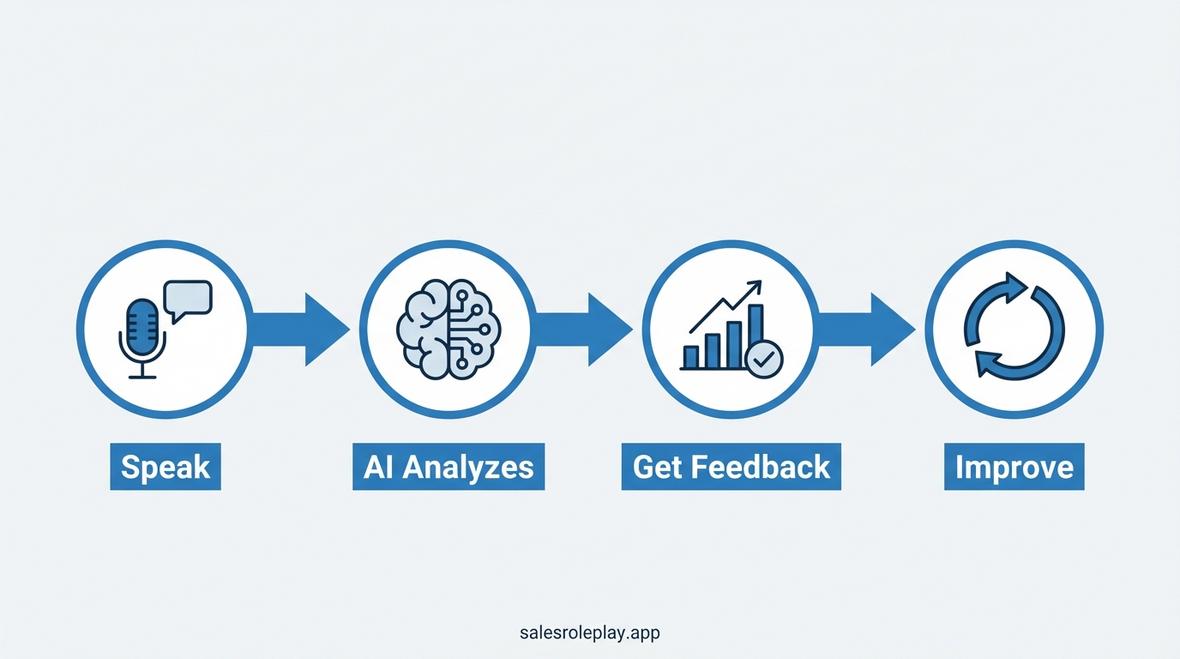
This iterative cycle practice, apply, reflect, practice again creates a continuous improvement loop that accelerates skill development far beyond what either practice alone or real calling alone can achieve.
Measuring ROI of Cold Calling Practice AI Investment
Sales leaders evaluating cold calling practice AI solutions need clear frameworks for assessing return on investment. While the technology clearly offers value, quantifying that value helps justify budget allocation and measure program effectiveness.
Key Metrics to Track
Organizations should monitor several metrics before and after implementing AI-powered cold calling training:
- Connect rate: Percentage of calls that reach decision-makers
- Conversation rate: Percentage of connected calls that become meaningful conversations
- Meeting booking rate: Percentage of conversations that result in scheduled meetings
- Ramp time: Time required for new reps to reach productivity benchmarks
- Activity volume: Number of calls reps make per day (confidence often increases activity)
- Retention rate: Percentage of reps who remain with the company (better training improves retention)
Comparing these metrics before and after implementation provides clear evidence of training impact. Many organizations see 20-40% improvements in connect and conversation rates within 90 days of implementing systematic AI practice programs.
Calculating Financial Impact
The financial ROI of cold calling practice AI can be calculated by estimating the incremental revenue generated through improved performance minus the cost of the training platform.
For example, if a 10-person sales team increases their meeting booking rate from 5% to 7% through better cold calling skills, and each additional meeting generates $5,000 in pipeline value, the incremental value quickly exceeds most platform costs. This calculation doesn't even account for faster ramp times, improved retention, or more consistent performance across the team.
Implementing Cold Calling Practice AI in Your Organization
Successfully deploying cold calling practice AI requires thoughtful planning and change management. Here's a framework for effective implementation:
Assess Current Training Gaps
Begin by honestly evaluating your current cold calling training approach. Where are the gaps? Do new reps receive sufficient practice before calling prospects? Do experienced reps have opportunities to refine their skills? Are managers overwhelmed providing one-on-one coaching?
Understanding current pain points helps you articulate the value proposition for AI-powered training and ensures you select a platform that addresses your specific needs.
Pilot with a Small Group
Rather than rolling out cold calling practice AI to your entire organization immediately, start with a pilot group of 5-10 reps. This approach allows you to identify implementation challenges, refine your rollout process, and build internal champions who can advocate for the program.
Select pilot participants who represent different skill levels and will provide honest feedback about their experience. Their insights will be invaluable for broader deployment.
Integrate with Existing Workflows
For maximum adoption, cold calling practice AI should fit seamlessly into existing workflows rather than adding significant administrative burden. Look for platforms that integrate with your CRM, sales enablement tools, and sales training platforms.
Consider when and where reps will access the training. Should it be part of daily pre-call preparation? A component of weekly team meetings? Available on mobile devices for practice during commutes? The easier you make access, the higher adoption will be.
Provide Manager Training
Sales managers play a critical role in driving adoption and translating practice insights into real-world performance improvements. Ensure managers understand how to interpret AI-generated performance data, incorporate it into coaching conversations, and hold reps accountable for consistent practice.
Managers should also model the behavior by occasionally participating in practice sessions themselves. This demonstrates that continuous learning applies to everyone and removes stigma around practice.
Celebrate Progress
Recognize and celebrate improvements that result from cold calling practice AI usage. Share success stories in team meetings, highlight reps who show significant skill development, and create friendly competitions around practice completion or performance improvements.
This positive reinforcement creates a culture where skill development is valued and practice is normalized rather than viewed as remedial training for struggling reps.
Choosing the Right Cold Calling Practice AI Platform
Not all cold calling practice AI solutions are created equal. Sales leaders should evaluate platforms based on several critical criteria:
Conversation Quality
The most important factor is how realistic and dynamic the AI conversations feel. Schedule demonstrations and have your reps actually practice with the AI buyer personas. Do they respond naturally? Can they handle unexpected responses? Do conversations feel authentic or robotic?
Poor conversation quality undermines the entire value proposition of AI practice, so this should be your primary evaluation criterion.
Feedback Specificity
Generic feedback like 'good job' or 'needs improvement' provides little actionable value. Effective cold calling practice AI platforms deliver specific, granular feedback that identifies exact moments when reps could have used different techniques, phrasing, or approaches.
Ask vendors to show you actual feedback reports and assess whether they would genuinely help a rep improve.
Scenario Customization
Your sales process, buyer personas, and value propositions are unique. The best platforms allow you to customize scenarios, train AI buyers with your specific talking points and objections, and align practice sessions with your actual sales methodology.
Off-the-shelf generic scenarios provide some value, but customized training that mirrors your real selling environment delivers exponentially greater impact.
Analytics and Reporting
Robust analytics enable sales leaders to identify trends, measure improvement, and make data-driven coaching decisions. Look for platforms that provide both individual performance dashboards and team-level analytics that reveal patterns across your organization.
The ability to track practice completion rates, skill development over time, and correlation between practice volume and real-world performance helps you continuously optimize your training program.
Platform Comparison
When evaluating different options, consider exploring comprehensive sales roleplay platforms that offer not just cold calling practice but broader sales training capabilities. Some organizations find value in platforms specializing exclusively in cold calling, while others prefer comprehensive solutions that address multiple sales competencies.
Advanced Cold Calling Techniques to Practice with AI
Once reps master basic cold calling fundamentals, cold calling practice AI enables them to develop advanced techniques that differentiate elite performers:
Pattern Interrupts
Most prospects have developed automatic responses to typical cold calls. Advanced sellers use pattern interrupts unexpected statements or questions that break these automatic patterns and create genuine engagement.
Examples include leading with a provocative question, admitting upfront that this is a cold call, or referencing a surprising industry statistic. Cold calling practice AI allows reps to experiment with different pattern interrupts and receive feedback on which approaches create the most engagement.
Permission-Based Openers
Rather than launching into a pitch, sophisticated cold callers ask permission to continue the conversation. This respectful approach often reduces resistance and positions the rep as considerate rather than intrusive.
Phrases like 'I know I'm catching you unexpectedly do you have 30 seconds for me to share why I called?' demonstrate respect for the prospect's time while creating curiosity. AI practice sessions help reps refine these permission-based approaches and handle various prospect responses.
Voice Modulation Mastery
Elite cold callers understand that how they say things matters as much as what they say. They strategically vary their pace, tone, volume, and energy to emphasize key points, convey confidence, and maintain engagement.
Advanced cold calling practice AI platforms analyze vocal delivery and provide specific feedback on these dimensions. Reps can practice emphasizing value propositions through tone, slowing down during important points for clarity, and projecting confidence through controlled speech patterns.
Multi-Thread Engagement
In complex B2B sales, reaching a single contact is rarely sufficient. Advanced cold callers identify and engage multiple stakeholders within target accounts, building coalitions that support their solution.
AI practice scenarios can simulate calling different personas within the same organization a technical evaluator, a financial decision-maker, an end-user, and an executive sponsor. This training helps reps tailor their approach to different stakeholders while maintaining message consistency.
Common Mistakes to Avoid with Cold Calling Practice AI
While cold calling practice AI offers tremendous value, organizations sometimes make implementation mistakes that limit effectiveness:
Treating It as a One-Time Event
Some organizations introduce AI practice as a one-week boot camp for new hires, then never encourage ongoing use. This approach misses the compound benefits of continuous practice and skill refinement.
Effective programs position cold calling practice AI as an ongoing development tool that all reps use regularly throughout their careers, not just during onboarding.
Not Connecting Practice to Real Results
When practice exists in isolation without connection to actual performance outcomes, reps struggle to see its value. Managers should explicitly connect improvements observed in practice sessions to successes in real calls.
For example, if a rep successfully handles a price objection in practice using a specific technique, and then uses that same technique successfully in a real call, the manager should highlight that connection and reinforce the value of practice.
Over-Relying on AI Without Human Coaching
While cold calling practice AI provides excellent automated feedback, it shouldn't completely replace human coaching. The most effective development programs combine AI practice with regular manager coaching that provides nuanced guidance, motivational support, and contextual advice.
Think of AI as a powerful tool that enhances and scales human coaching rather than replacing it entirely.
Ignoring the Data
The performance data generated by practice sessions offers valuable insights that many organizations fail to leverage. Sales leaders should regularly review aggregate data to identify team-wide skill gaps, evaluate whether certain scenarios need additional practice, and adjust training priorities based on evidence.
The Future of Cold Calling Practice AI
As artificial intelligence technology continues advancing, cold calling practice AI capabilities will become even more sophisticated and valuable. Several emerging trends will shape the future of this technology:
Hyper-Personalization
Future AI platforms will analyze individual rep performance patterns and automatically generate personalized practice plans that target specific development needs. Rather than following generic training paths, each rep will receive a customized learning journey optimized for their unique skill gaps and learning style.
Emotional Intelligence Training
Next-generation cold calling practice AI will incorporate emotional intelligence assessment, evaluating not just what reps say but how well they read prospect emotions and adapt their approach accordingly. This training will help reps develop empathy, active listening, and relationship-building skills that complement their technical cold calling competencies.
Multilingual Capabilities
As businesses become increasingly global, AI practice platforms will offer sophisticated multilingual training that goes beyond simple translation. These systems will understand cultural communication norms, help reps navigate cross-cultural conversations, and provide feedback on culturally appropriate approaches.
Predictive Performance Modeling
Advanced analytics will enable platforms to predict real-world performance based on practice session data. Organizations will be able to identify which reps are likely to struggle before they fail in actual calls, enabling proactive coaching interventions that prevent performance problems rather than reacting to them.
FAQs About Cold Calling Practice AI
How much does cold calling practice AI cost?
Pricing varies significantly based on features, customization, and team size. Most platforms charge per-user monthly fees ranging from $50-$200 per rep. Enterprise solutions with extensive customization and advanced analytics may cost more. Many vendors offer volume discounts for larger teams and free trials to evaluate the platform before committing.
How much time should reps spend practicing with AI?
Most sales organizations find that 15-30 minutes of daily practice delivers optimal results without overwhelming reps. New hires might practice more extensively during onboarding (1-2 hours daily for the first few weeks), while experienced reps might practice 2-3 times weekly to maintain and refine skills. The key is consistency rather than marathon practice sessions.
Will AI practice replace sales managers?
No. Cold calling practice AI augments rather than replaces human coaching. While AI excels at providing immediate, objective feedback on specific techniques, human managers provide strategic guidance, motivation, career development, and contextual coaching that AI cannot replicate. The best programs combine both approaches.
Can experienced reps benefit from AI practice?
Absolutely. Even seasoned sales professionals develop habits that limit effectiveness. Cold calling practice AI helps experienced reps identify blind spots, experiment with new techniques, and maintain sharp skills. Many top performers use AI practice to prepare for high-stakes calls or to practice handling objections from particularly challenging prospect types.
How does cold calling practice AI integrate with existing sales tools?
Leading platforms offer integrations with popular CRM systems, sales engagement platforms, and learning management systems. These integrations enable automatic data synchronization, allowing practice performance to inform coaching workflows and ensuring reps can access training within their existing technology ecosystem. When evaluating platforms, confirm that they integrate with your specific tech stack.
Conclusion
The emergence of cold calling practice AI represents a transformative opportunity for sales organizations committed to developing world-class prospecting skills. By providing unlimited, realistic practice opportunities with instant feedback, these platforms enable reps to build confidence and competence far faster than traditional training methods allow. The technology addresses longstanding challenges in sales development scalability, consistency, accessibility, and objectivity while creating safe learning environments where reps can experiment without risking real opportunities. As AI capabilities continue advancing, these platforms will become even more sophisticated, offering hyper-personalized learning paths and predictive performance insights. Organizations that embrace cold calling practice AI today position themselves to build stronger, more capable sales teams that consistently outperform competitors still relying on outdated training approaches. The question is no longer whether to adopt AI-powered practice, but how quickly you can implement it to gain competitive advantage.
Ready to Transform Your Sales Training?
See how Salesroleplay can help you transform your sales training.