
Cold Call Practice AI Free: Master Sales Conversations With Zero-Cost AI Training In 2026

Understanding Cold Call Practice AI Free: The Future of Sales Training
Sales professionals looking to sharpen their cold calling skills without breaking the budget now have unprecedented access to cold call practice AI free solutions. These intelligent training platforms replicate real-world calling scenarios, offering sales representatives the opportunity to practice objection handling, pitch refinement, and conversational flow in a risk-free environment. Unlike traditional role-play methods that require scheduling with managers or peers, AI-powered practice tools provide on-demand training that adapts to individual learning curves.
The concept of cold call practice AI free represents a significant shift in sales enablement strategy. Research from Forrester indicates that AI sales training reduces ramp time by 50%, with fastest-growing sales teams compressing SDR ramp time from 3-6 months to 45 days using AI-driven practice tools. This correlation with measurable lifts in connect rates and meeting conversions makes free AI practice solutions particularly attractive for sales leaders managing tight training budgets while pursuing aggressive revenue targets.
Free AI cold calling practice platforms typically leverage natural language processing to simulate buyer personas, analyze speech patterns, evaluate objection handling techniques, and provide instant feedback on tone, pacing, and messaging effectiveness. For B2B organizations in Technology, Healthcare, and Financial Services sectors, these tools address core challenges including effective cold calling techniques, discovery call mastery, and objection navigation without requiring expensive enterprise software investments.
Why Sales Leaders Embrace Free AI Cold Calling Practice Tools
Chief Revenue Officers and Sales Managers face constant pressure to improve close rates while reducing the time it takes for new representatives to become productive. Traditional training methods shadowing senior reps, weekly role-play sessions, or expensive workshops often fail to provide the repetition and personalized feedback necessary for skill mastery. This is where cold call practice AI free solutions deliver transformational value.
Free AI practice tools democratize access to high-quality training resources previously available only to enterprise organizations with substantial L&D budgets. Sales development representatives can now log in at any time, select industry-specific scenarios, and engage in realistic conversations with AI buyers that respond dynamically to their approach. This flexibility supports various learning styles and schedules, particularly valuable for remote sales teams spread across multiple time zones.
The scalability advantage cannot be overstated. A single sales manager overseeing fifteen SDRs cannot physically observe and provide detailed feedback on hundreds of practice calls weekly. AI practice platforms, however, can analyze every conversation, highlighting specific moments where a rep lost momentum, missed a buying signal, or failed to address a critical objection. This data-driven approach transforms coaching from subjective observation to objective performance analytics.
Measurable Business Impact of AI Practice
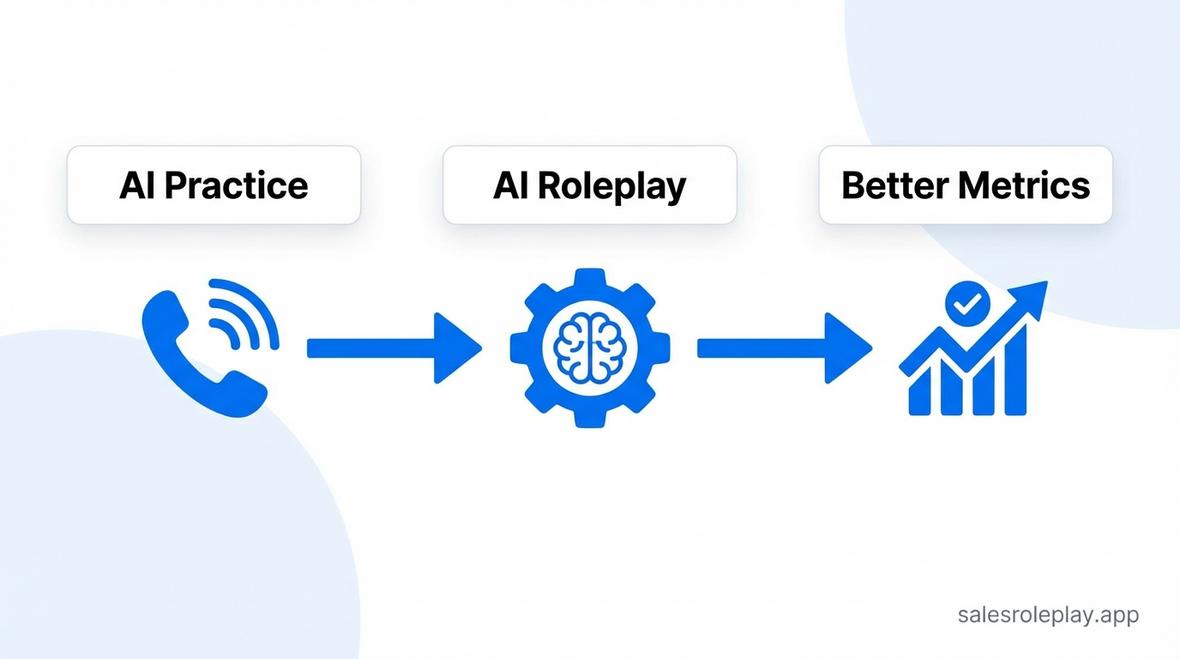
Organizations implementing cold call practice AI free solutions report quantifiable improvements across key sales metrics. Connect rates typically increase by 15-30% as representatives refine their opening statements and tonality through repeated practice. Meeting conversion rates improve similarly, with well-trained SDRs demonstrating greater confidence and objection-handling proficiency during live conversations.
The psychological benefits prove equally important. Sales representatives who practice regularly with AI tools report reduced call anxiety and increased confidence when engaging prospects. This confidence translates directly into higher activity levels reps making more dials, leaving more voicemails, and persisting through initial rejections because they've already navigated similar scenarios dozens of times in practice.
Core Features of Effective Cold Call Practice AI Free Platforms
Not all cold call practice AI free solutions deliver equal value. Sales leaders evaluating these platforms should prioritize several critical capabilities that distinguish effective training tools from basic chatbots. Understanding these features helps organizations select solutions that genuinely accelerate skill development rather than simply checking a 'training' box.
Realistic Buyer Personas and Industry Scenarios
The most effective free AI practice platforms offer diverse buyer personas reflecting various industries, seniority levels, and personality types. A technology sales rep should practice pitching to skeptical IT managers, budget-conscious CFOs, and innovation-focused CTOs. Healthcare sales professionals need scenarios involving compliance-minded hospital administrators and outcome-focused physicians. This scenario diversity ensures representatives encounter the full spectrum of challenges they'll face in actual prospecting.
Quality platforms allow customization of these scenarios based on specific product categories, price points, and sales cycles. Representatives selling enterprise software requiring six-month evaluations need different practice scenarios than those closing transactional deals in single conversations. Cold calling training modules should reflect these nuances to maximize transfer of skills from practice to production environments.
Intelligent Feedback and Performance Analysis
Instant, actionable feedback separates transformational AI practice tools from basic simulation software. After each practice call, representatives should receive detailed analysis covering multiple performance dimensions: opening effectiveness, questioning quality, objection handling, closing attempts, and overall conversational flow. The best cold call practice AI free platforms highlight specific moments where alternative approaches might have yielded better outcomes.
Advanced platforms track performance trends over time, identifying persistent weaknesses and recognizing improvement trajectories. This longitudinal data enables sales managers to provide targeted coaching interventions rather than generic feedback. When a manager can say, 'Your opening hook improved 40% over three weeks, but you're still struggling with pricing objections in the mid-call phase,' the representative receives specific direction for focused improvement efforts.
On-Demand Accessibility and Mobile Optimization
Effective practice requires convenience. Free AI cold calling practice tools must offer anytime access without scheduling friction. Representatives should be able to complete quick five-minute practice sessions between live calls or dedicate focused thirty-minute blocks for comprehensive scenario work. Mobile optimization extends this accessibility, allowing practice during commutes or while traveling.
The best platforms integrate seamlessly into existing workflows rather than requiring separate logins or complex navigation. Single sign-on capabilities, integration with CRM systems, and lightweight application design reduce adoption friction. When practice feels easier than avoiding it, utilization rates soar and skill development accelerates accordingly.
Getting Started with Cold Call Practice AI Free: Implementation Guide
Sales leaders ready to implement cold call practice AI free solutions face several strategic decisions that determine program success. Simply providing access to practice tools rarely generates meaningful behavior change successful implementations require thoughtful planning, clear expectations, and ongoing reinforcement mechanisms.
Establishing Clear Practice Expectations
Organizations should define specific practice requirements aligned with role responsibilities and skill development stages. New SDRs might complete ten practice scenarios weekly during their first month, focusing on mastering core messaging and objection responses. More experienced representatives might practice three complex scenarios weekly, refining advanced negotiation techniques or navigating multi-stakeholder conversations.
These expectations work best when tied to existing performance management systems. Including practice completion rates in weekly one-on-ones, recognizing top practicers during team meetings, and correlating practice volume with pipeline generation creates accountability and highlights the practice-performance connection. Sales onboarding programs should incorporate mandatory practice milestones before representatives engage in live prospecting activities.
Selecting Relevant Scenarios and Customization
Generic practice scenarios generate mediocre results. Sales teams achieve maximum benefit when practice closely mirrors their actual market reality. Organizations should work with platform providers to customize scenarios reflecting their specific buyer personas, common objections, competitive landscape, and value propositions. This customization investment pays dividends through accelerated skill transfer from practice to live conversations.
Scenario libraries should include progressive difficulty levels. Representatives master foundational skills through straightforward scenarios before advancing to complex situations involving multiple objections, budget concerns, or competitive displacement conversations. This scaffolded approach builds confidence systematically while preventing frustration from scenarios beyond current skill levels.
Integrating AI Practice with Human Coaching
While cold call practice AI free tools provide exceptional practice opportunities, they complement rather than replace human coaching relationships. The most effective programs combine AI practice for skill repetition with manager coaching for strategic guidance, motivation, and relationship development. Managers should regularly review representatives' AI practice performance data, identifying patterns that inform coaching conversations.
Specific integration approaches include using AI-identified weaknesses as coaching session agendas, having representatives practice scenarios immediately before manager role-plays to demonstrate improvement, and celebrating AI-measured progress during team meetings. This integration reinforces that practice matters and connects individual effort to organizational performance expectations. Sales leaders can explore sales coaching strategies that leverage AI insights for more effective development conversations.
Maximizing Value from Free AI Cold Calling Practice Platforms
Free solutions often include usage limitations or feature restrictions compared to premium alternatives. Sales organizations can maximize value from cold call practice AI free platforms through strategic utilization approaches that overcome these constraints while delivering meaningful skill development.
Focused Skill Development Approach
Rather than attempting comprehensive training across all sales skills simultaneously, organizations should prioritize specific competencies for intensive AI practice periods. A quarterly focus on objection handling, followed by discovery question quality, then closing techniques creates concentrated improvement in targeted areas. This focused approach works particularly well within free platform constraints that might limit monthly practice volume.
Representatives benefit from clear skill development roadmaps showing progression from foundational to advanced capabilities. Managers can create practice 'tracks' aligned with career stages new hire fundamentals, intermediate relationship building, advanced negotiation that leverage available free scenarios efficiently. Teams looking to specifically improve objection handling can concentrate practice sessions on those scenarios before rotating focus to other skill areas.
Peer Learning and Shared Practice Insights
Free AI practice platforms generate individual performance data, but organizations amplify value by facilitating peer learning around practice experiences. Weekly team sessions where representatives share challenging scenarios, discuss effective responses, or debate alternative approaches transform individual practice into collective skill development. This social learning dimension addresses isolation some representatives feel when practicing independently.
Sales leaders can establish practice leaderboards recognizing both volume and improvement metrics, creating healthy competition that drives engagement. Sharing top performer practice strategies—'Here's how Sarah consistently achieves 90%+ scores on pricing objection scenarios'—provides concrete models for skill development while building team culture around continuous improvement.
Supplementing AI Practice with Live Role-Play
While AI practice offers convenience and consistency, periodic live role-play sessions with managers or peers provide complementary benefits. Live practice develops adaptability to truly unpredictable responses, builds confidence performing under observation, and strengthens team relationships through shared vulnerability. Organizations should view AI and live practice as complementary rather than competitive approaches.
Effective integration might include AI practice for scenario familiarity and repetition (10-15 practice conversations weekly), with monthly live role-play sessions for performance demonstration and advanced feedback. This combination leverages AI efficiency while preserving human coaching relationships critical for motivation and cultural integration. Sales managers can reference advanced sales roleplay techniques to structure these live sessions effectively.
Comparing Free and Premium AI Cold Calling Practice Solutions
Understanding the differences between cold call practice AI free options and premium alternatives helps sales leaders make informed investment decisions aligned with organizational priorities and budget realities. While free solutions provide substantial value, premium platforms offer enhanced capabilities that may justify investment for certain organizations.
Feature Comparison Overview
Free AI practice platforms typically provide core functionality including basic scenario libraries, fundamental feedback mechanisms, and individual practice tracking. These capabilities suffice for small teams, pilot programs, or organizations with limited training budgets. Representatives gain valuable practice opportunities and basic performance insights without financial commitment.
Premium solutions expand capabilities significantly. Enhanced features often include unlimited practice sessions, extensive scenario customization, advanced analytics dashboards, team performance comparisons, integration with existing sales technology stacks, and dedicated customer success support. Organizations managing large sales teams, operating in complex industries, or pursuing aggressive growth targets often find these premium capabilities justify subscription costs through accelerated skill development and improved training ROI.
Scale and Customization Considerations
As sales organizations grow, limitations of free platforms become more constraining. Session caps, limited customization options, or basic reporting functionality that works adequately for five representatives becomes problematic at fifty. Premium platforms accommodate scale through enterprise features designed for large, distributed teams requiring consistent training standards across multiple regions or product lines.
Customization depth represents another key differentiator. Free platforms offer generic industry scenarios that provide foundational practice value. Premium solutions enable deep customization reflecting specific company messaging, unique value propositions, competitive positioning, and even individual customer scenarios. This customization significantly improves practice relevance and skill transfer to actual selling situations. Organizations can explore comprehensive AI sales roleplay capabilities available through premium platforms.
Decision Framework for Organizations
Sales leaders should evaluate several factors when deciding between free and premium AI practice solutions. Team size significantly influences this decision small teams under ten representatives often find free platforms sufficient, while organizations with 25+ sales professionals typically benefit from premium investments. Budget availability matters, though leaders should calculate potential ROI based on improved ramp time, increased close rates, and reduced turnover rather than viewing training solely as expense.
Complexity of sales processes also influences platform selection. Transactional sales with short cycles and straightforward value propositions may not require extensive customization available through premium solutions. Enterprise sales involving six to twelve-month cycles, multiple stakeholders, and complex technical evaluations benefit substantially from customized practice scenarios reflecting this complexity. Organizations can review case studies demonstrating ROI across various industries and sales models.
Overcoming Common Adoption Challenges with Free AI Practice
Despite clear benefits, organizations implementing cold call practice AI free solutions frequently encounter adoption challenges that undermine program effectiveness. Understanding these obstacles and proactive mitigation strategies ensures practice tools deliver intended skill development outcomes rather than becoming unused resources.
Addressing Engagement and Motivation Issues
Initial enthusiasm for AI practice tools often wanes after several weeks as competing priorities claim representative attention. Sales professionals naturally prioritize activities directly tied to quota attainment live prospecting, deal progression, customer meetings over practice that feels disconnected from immediate revenue generation. Overcoming this requires explicit connections between practice and performance.
Sales leaders should regularly share data demonstrating practice-performance correlations within their specific organizations. When representatives see that colleagues completing eight weekly practice sessions generate 40% more qualified meetings than those completing two sessions, motivation increases substantially. Public recognition of practice leaders and their corresponding pipeline results reinforces these connections. Additionally, embedding practice into existing routines—'complete one practice scenario before starting daily prospecting'—creates habit formation that sustains engagement beyond initial novelty.
Balancing Quality and Quantity
Some representatives approach AI practice mechanically, rushing through scenarios to check completion boxes without genuine engagement or learning. This 'gaming' behavior undermines practice value and creates misleading completion metrics. Organizations should emphasize quality over quantity, celebrating thoughtful practice and measured improvement rather than simply rewarding volume.
Implementing reflection requirements after practice sessions encourages deeper engagement. Representatives might complete brief self-assessments identifying what they learned, which techniques they'll apply in live calls, or which skills require additional practice. Managers reviewing these reflections gain insight into representative learning mindsets while reinforcing that practice purpose extends beyond completion metrics. Teams can reference practice guidance for seasoned sales professionals to maintain engagement among experienced representatives.
Technical Adoption Barriers
Some organizations encounter technical obstacles including platform access issues, integration challenges with existing systems, or user experience friction that discourages regular usage. Addressing these barriers requires proactive technical support, clear onboarding documentation, and ongoing troubleshooting assistance. Sales leaders should designate practice 'champions' within teams who receive advanced training and provide peer support for colleagues encountering difficulties.
Simplifying access through single sign-on integration, mobile application availability, and bookmarked quick-access links reduces friction that accumulates into avoidance. When practice requires three clicks from a representative's daily workflow rather than separate logins and navigation through complex menus, utilization increases dramatically. Organizations should continuously solicit user feedback identifying friction points and work with platform providers to address these issues.
Measuring Success: KPIs for AI Cold Calling Practice Programs
Effective measurement determines whether cold call practice AI free investments generate meaningful returns through improved sales performance. Sales leaders should track multiple metrics spanning practice engagement, skill development, and business outcomes to comprehensively evaluate program success.
Practice Engagement Metrics
Foundation metrics include practice completion rates, session frequency, and scenario diversity. Organizations should monitor what percentage of representatives meet minimum practice expectations, how frequently they engage with the platform, and whether they explore various scenario types or repeatedly practice identical situations. High completion rates without corresponding performance improvement suggest quality issues requiring investigation.
Time-based metrics provide additional engagement insights. Average session duration, repeat practice on challenging scenarios, and practice timing relative to live calling activities reveal how representatives integrate AI practice into their workflows. Representatives practicing immediately before prospecting blocks demonstrate stronger learning transfer than those practicing sporadically without connection to live application.
Skill Development Indicators
Performance scores within the AI platform itself indicate skill progression. Representatives should demonstrate measurable improvement across key competencies opening effectiveness, questioning quality, objection handling, closing attempts over time. Tracking these scores longitudinally reveals whether practice generates actual skill development or simply completion without learning.
Comparing AI-measured skills against manager assessments of live call performance validates whether platform scores predict real-world effectiveness. Strong correlation confirms the practice tool accurately simulates actual selling challenges. Weak correlation suggests scenario relevance issues or feedback mechanism problems requiring platform adjustment. Regular sales training metrics reviews ensure measurement systems remain aligned with organizational priorities.
Business Outcome Connections
Ultimate program success depends on improved business results including reduced ramp time, increased connect rates, higher meeting conversion percentages, and improved close rates. Organizations should track these metrics specifically for representatives actively using practice tools compared to control groups or historical benchmarks. Demonstrating that practiced representatives reach quota 30 days faster or generate 25% more pipeline validates training investments.
Advanced analyses might include cohort comparisons examining whether practice intensity correlates with performance differences. Do representatives completing ten weekly practice sessions outperform those completing three sessions, and by what magnitude? These insights inform optimal practice requirements and help quantify ROI for potential premium platform investments. Sales leaders can explore comprehensive sales training ROI methodologies for deeper financial analysis.
Future Trends in Cold Call Practice AI Free Technology
The cold call practice AI free landscape continues evolving rapidly as natural language processing, machine learning, and conversational AI technologies advance. Sales leaders should understand emerging trends that will shape next-generation practice platforms and influence future training strategies.
Hyper-Personalization and Adaptive Learning
Future AI practice platforms will deliver increasingly personalized experiences adapting to individual representative learning styles, skill levels, and development needs. Rather than generic scenario libraries, platforms will dynamically generate practice situations targeting specific weaknesses identified through previous performance data. Representatives struggling with pricing objections will automatically receive more scenarios focusing on that challenge, with difficulty calibrated to their current capability level.
Adaptive learning algorithms will optimize practice sequencing, determining ideal scenario progression for fastest skill development. Machine learning models analyzing thousands of representatives' learning patterns will identify most effective practice pathways for various skill development goals, automatically guiding individuals along optimal routes. This personalization dramatically improves practice efficiency and engagement through relevance and appropriate challenge levels.
Multimodal Interaction and Video Integration
While current platforms primarily focus on voice-based practice, emerging solutions incorporate video analysis examining body language, facial expressions, and non-verbal communication patterns. This multimodal approach addresses the full spectrum of selling communication, particularly valuable as video-based sales conversations become increasingly prevalent. Representatives will practice not just what they say but how they present themselves visually during sales interactions.
These platforms will provide feedback on eye contact patterns, facial expression congruence with messaging, hand gesture effectiveness, and background professionalism. As remote selling dominates many industries, these video communication skills become competitive differentiators requiring dedicated practice and feedback mechanisms. Organizations can prepare for these trends by exploring virtual selling strategies optimized for digital environments.
Integration with Sales Execution Platforms
Next-generation practice platforms will integrate seamlessly with CRM systems, conversation intelligence tools, and sales engagement platforms. This integration enables practice scenarios generated directly from actual lost opportunities—'Here's a prospect who objected about implementation complexity; practice that scenario before your next similar call.' Real-world situations become immediate practice opportunities, dramatically improving relevance and learning transfer.
Bidirectional data flow will allow practice performance insights to inform CRM coaching alerts and conversation intelligence recommendations. When AI practice tools identify persistent objection handling weaknesses, integrated systems will flag relevant upcoming calls for manager observation or trigger just-in-time training interventions. This ecosystem integration transforms practice from isolated activity into core component of comprehensive sales execution strategy.
Conclusion
The democratization of sales training through cold call practice AI free solutions represents a fundamental shift in how organizations develop sales talent. No longer constrained by budget limitations or geographic dispersion, sales teams can access sophisticated practice environments that compress skill development timelines while improving learning outcomes. For Sales Managers and Chief Revenue Officers focused on accelerating ramp time, improving close rates, and building competitive advantages through talent development, these platforms deliver measurable ROI without capital investment requirements.
Success requires more than simply providing platform access organizations must establish clear practice expectations, integrate AI tools with human coaching, measure meaningful outcomes, and continuously refine implementation approaches based on results. By treating AI practice as a strategic capability rather than a tactical tool, sales leaders position their teams for sustained performance improvement and competitive differentiation in increasingly challenging markets.
Ready to Transform Your Sales Training?
See how Salesroleplay can help you transform your sales training.