
Coaching Scenarios Role Playing: The Complete 2026 Guide To Transforming Sales Team Performance

Understanding Coaching Scenarios Role Playing in Modern Sales Training
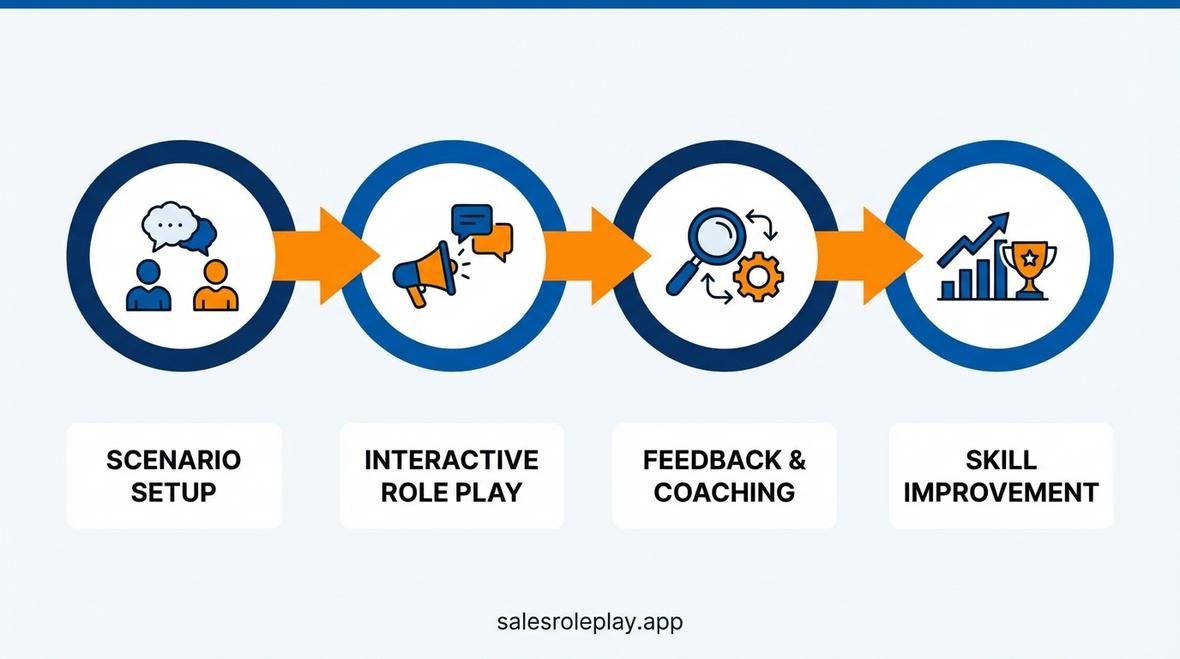
Coaching scenarios role playing has emerged as one of the most effective methods for developing high-performing sales teams in 2026. This structured approach to sales training allows sales professionals to practice real-world situations in a controlled environment, building confidence and competence before engaging with actual prospects. Unlike traditional lecture-based training, role playing creates active learning experiences that mirror the challenges sales reps face daily.
The evolution of coaching scenarios role playing has been significant. What once consisted of awkward, scripted exchanges between team members has transformed into sophisticated, AI-powered simulations that provide immediate feedback and measurable improvement. Modern sales managers now leverage technology to scale their coaching efforts while maintaining the personalized touch that drives real behavior change.
According to research on multiple roleplay encounters, progressive skill gains occur when participants engage in spaced practice sessions. The study demonstrates that skills improved over three spaced encounters, teaching leadership, professionalism, and empathy beyond what lectures alone could achieve. This finding validates the core premise of coaching scenarios role playing: repeated, deliberate practice in realistic situations creates lasting behavioral change.
The Strategic Benefits of Coaching Scenarios Role Playing
Organizations implementing coaching scenarios role playing experience measurable improvements across multiple performance metrics. These benefits extend far beyond simple skill development, impacting everything from employee engagement to revenue generation.
Accelerated Skill Development and Confidence Building
When sales professionals engage in coaching scenarios role playing, they develop muscle memory for critical conversations. This preparation reduces anxiety during actual sales calls, allowing reps to focus on listening and adapting rather than remembering what to say next. The sales coaching process becomes more efficient as managers can identify specific skill gaps and address them through targeted scenarios.
The psychological safety created by practice environments encourages experimentation. Sales reps can test different approaches, learn from failures, and refine their techniques without risking real deals. This iterative learning process accelerates competency development significantly compared to on-the-job learning alone.
Standardized Training Delivery at Scale
For organizations with distributed teams or rapid growth trajectories, coaching scenarios role playing provides consistency that manual training cannot match. Sales leaders can ensure every team member receives the same foundational training, regardless of location or manager availability. This standardization is particularly valuable for sales onboarding, where new hires must quickly absorb complex product knowledge and sales methodologies.
Tips from the SHRM management training guidelines emphasize advance planning of roles and scenarios, imitating actual situations, and engaging willing participants for better fit and engagement. These principles apply directly to sales coaching scenarios role playing, where realism and participant buy-in determine training effectiveness.
Measurable Performance Improvements and ROI
Unlike many training initiatives that struggle to demonstrate tangible results, coaching scenarios role playing produces quantifiable outcomes. Metrics such as conversion rates, average deal size, and sales cycle length typically show improvement within weeks of implementation. Organizations tracking these KPIs can calculate precise return on investment for their training programs.
The data-driven nature of modern coaching scenarios role playing platforms provides visibility into individual and team performance trends. Managers can identify top performers' techniques, codify them into training scenarios, and distribute these best practices across the entire organization. This continuous improvement cycle creates compounding benefits over time.
Essential Coaching Scenarios for Comprehensive Sales Training
Effective coaching scenarios role playing programs incorporate diverse situation types that reflect the full spectrum of sales interactions. The following scenarios represent core competencies that every sales professional must master.
Cold Calling and Initial Outreach Scenarios
The first impression often determines whether a conversation continues or ends abruptly. Coaching scenarios role playing for cold calling helps reps develop opening statements that capture attention, qualify prospects quickly, and secure next steps. These scenarios should include various prospect personas, from receptive decision-makers to skeptical gatekeepers.
Effective cold calling scenarios incorporate common objections like 'We're not interested,' 'Send me information,' and 'We're happy with our current solution.' Reps learn to navigate these responses without becoming defensive or losing confidence. The practice environment allows for experimentation with different tonality, pacing, and value propositions until the optimal approach emerges.
Discovery Call and Needs Analysis Scenarios
Discovery calls represent the foundation of consultative selling, yet many reps struggle to ask probing questions and truly understand prospect challenges. Coaching scenarios role playing for discovery calls teaches the delicate balance between gathering information and building rapport.
These scenarios should emphasize active listening, with feedback mechanisms that assess whether reps are talking too much or missing important buying signals. The best discovery scenarios include complex prospect situations with multiple stakeholders, competing priorities, and hidden pain points that require skillful questioning to uncover.
Objection Handling and Negotiation Scenarios
Price concerns, competitive comparisons, and timing objections appear in virtually every sales process. Coaching scenarios role playing dedicated to objection handling prepares reps to address these challenges confidently and effectively. Rather than viewing objections as roadblocks, trained reps learn to recognize them as buying signals that require additional information or reassurance.
Advanced negotiation scenarios introduce multiple decision-makers with conflicting priorities, budget constraints, and procurement processes. These complex situations develop strategic thinking and help reps maintain composure under pressure. The practice environment allows managers to observe how reps navigate difficult conversations and provide targeted coaching on specific techniques.
Closing and Contract Negotiation Scenarios
The ability to confidently ask for the business and navigate final negotiations separates top performers from average reps. Coaching scenarios role playing for closing situations builds the assertiveness and timing judgment necessary to advance deals without appearing pushy. These scenarios should include various closing techniques, from direct asks to trial closes that gauge prospect readiness.
Contract negotiation scenarios prepare reps for the detailed discussions that occur once a prospect commits to moving forward. Topics like payment terms, implementation timelines, and service level agreements require different skills than earlier sales conversations. Practice in these areas reduces delays in the final stages of the sales cycle.
Implementing Effective Coaching Scenarios Role Playing Programs
Successful implementation requires more than simply scheduling practice sessions. Organizations must approach coaching scenarios role playing strategically, with clear objectives, appropriate technology, and ongoing refinement based on results.
Designing Realistic and Relevant Scenarios
The effectiveness of coaching scenarios role playing depends entirely on scenario quality. Generic, unrealistic situations fail to engage participants or transfer to actual sales conversations. The research on role playing effectiveness indicates that trainees show high interest and involvement when scenarios mirror real-life situations closely, with entire groups rotating for broader participation.
Scenario development should involve top performers and managers who understand the specific challenges their team faces. The best scenarios incorporate actual objections, competitive situations, and prospect personas from the organization's market. This specificity ensures that practice time directly translates to improved field performance.
Creating Psychologically Safe Practice Environments
Many sales professionals initially resist coaching scenarios role playing due to fear of judgment or embarrassment. Leaders must establish cultures where practice is viewed as professional development rather than performance evaluation. According to educational research on active learning, role plays foster better instructor-participant relations and create relaxed environments for idea exchange, with instructors viewed positively.
This psychological safety extends to feedback delivery. Effective coaching focuses on specific, actionable improvements rather than general criticism. The goal is building confidence through incremental skill development, not highlighting deficiencies. When participants feel supported rather than judged, engagement and learning outcomes improve dramatically.
Leveraging Technology for Scalable Coaching
Traditional peer-to-peer role playing faces significant limitations: scheduling challenges, inconsistent feedback quality, and limited manager availability for observation. Modern AI-powered role playing platforms overcome these constraints by providing on-demand practice with intelligent virtual buyers who respond realistically to rep inputs.
These technology solutions enable reps to practice independently, receiving immediate feedback on specific behaviors like talk-time ratio, filler word usage, and objection handling effectiveness. Managers gain visibility into practice volume and skill development trends across their entire team, allowing them to allocate coaching time more strategically. The combination of self-directed practice and targeted manager coaching creates optimal skill development velocity.
Measuring Impact and Continuously Optimizing
Coaching scenarios role playing programs require ongoing measurement and refinement to maintain effectiveness. Organizations should track both activity metrics (practice frequency, scenario completion rates) and outcome metrics (conversion rates, quota attainment, ramp time for new hires). These data points reveal which scenarios deliver the greatest impact and which need revision.
Regular feedback from participants provides qualitative insights that complement quantitative data. Sales reps can identify scenarios that feel unrealistic or fail to address their actual challenges. This feedback loop ensures that the coaching scenarios role playing program evolves alongside the market and organizational priorities.
Advanced Techniques for Coaching Scenarios Role Playing
Once basic programs are established, organizations can implement advanced techniques that deepen the impact of coaching scenarios role playing.
Spaced Repetition and Progressive Complexity
Learning science demonstrates that spaced practice with increasing difficulty produces superior retention compared to massed practice. Coaching scenarios role playing programs should introduce foundational skills first, then layer complexity as competency develops. A rep might initially practice simple cold call openings, then progress to handling objections, and finally navigate multi-stakeholder conversations.
This progressive approach prevents overwhelm while ensuring continuous challenge. Reps experience regular wins that build confidence, while the increasing difficulty maintains engagement and drives ongoing skill development. The spacing between practice sessions allows for consolidation of learning before introducing new challenges.
Peer Learning and Collaborative Scenarios
While individual practice builds foundational skills, collaborative coaching scenarios role playing creates opportunities for peer learning and team cohesion. Scenarios involving multiple reps as different stakeholders in a complex deal simulate real enterprise sales situations. Participants observe different approaches, learn from each other's strengths, and develop the communication skills necessary for team selling.
Peer feedback, when properly structured, provides valuable perspectives that managers might miss. Sales reps often relate better to suggestions from colleagues who face identical challenges. Organizations can formalize peer learning through practice partners, team competitions, or scenario workshops that bring together reps from different regions or product lines.
Industry-Specific Coaching Scenarios
Generic sales training fails to address the unique challenges of different industries and buying processes. Coaching scenarios role playing programs achieve maximum impact when tailored to specific sectors like financial services, healthcare, or technology. These specialized scenarios incorporate industry terminology, regulatory considerations, and sector-specific objections that reps encounter in the field.
Organizations selling into multiple industries can develop scenario libraries that allow reps to practice situations relevant to their specific accounts. This targeted approach ensures that practice time directly supports pipeline development rather than covering situations reps may never encounter.
Overcoming Common Challenges in Coaching Scenarios Role Playing
Despite the clear benefits, organizations often encounter obstacles when implementing coaching scenarios role playing programs. Understanding these challenges and their solutions increases program success rates.
Addressing Participation Resistance
Some sales professionals, particularly experienced reps, may resist coaching scenarios role playing due to perceived lack of value or discomfort with practice. Leaders can overcome this resistance by clearly communicating program benefits, sharing success metrics from early adopters, and making participation expectations explicit. When top performers embrace coaching scenarios role playing and publicly share their positive experiences, cultural resistance typically diminishes.
Involving reps in scenario design also increases buy-in. When salespeople contribute ideas for realistic situations and objections, they develop ownership of the program. This collaborative approach transforms coaching scenarios role playing from something imposed by management into a tool that reps themselves requested and designed.
Maintaining Realism and Avoiding Scripted Responses
Ineffective coaching scenarios role playing can devolve into memorization exercises where reps recite scripts rather than developing genuine conversation skills. The solution lies in scenario variety and unpredictability. Each practice session should introduce variations in prospect responses, objections, and situations that require adaptive thinking rather than rote responses.
Feedback should emphasize principles and frameworks rather than specific word choices. For example, rather than prescribing exact language for handling price objections, effective coaching helps reps understand the psychology of value perception and practice multiple approaches for demonstrating ROI. This principle-based coaching develops flexible skills that transfer across diverse situations.
Balancing Practice Time with Selling Time
Sales leaders often struggle with allocating time for coaching scenarios role playing when reps face quota pressure and full pipelines. The key lies in demonstrating that practice time is an investment, not an expense. Organizations that track metrics typically find that regular practice sessions reduce wasted prospecting time, shorten sales cycles, and improve win rates enough to more than offset the hours spent in training.
Flexible, on-demand practice options also alleviate scheduling conflicts. When reps can practice for 15 minutes before an important call or during downtime between meetings, coaching scenarios role playing becomes integrated into daily workflows rather than competing with selling activities. This approach maximizes skill development while minimizing disruption to revenue-generating activities.
The Future of Coaching Scenarios Role Playing
As technology continues advancing, coaching scenarios role playing is evolving rapidly. Artificial intelligence now enables realistic simulations that adapt to rep responses in real-time, providing personalized challenge levels that optimize learning. Virtual reality creates immersive environments where reps practice reading body language and managing in-person sales conversations, despite working remotely.
The integration of coaching scenarios role playing with conversation intelligence platforms creates powerful feedback loops. Actual sales call recordings inform scenario development, ensuring practice situations reflect current market realities. Meanwhile, skills developed through role playing are validated or refined based on performance in real conversations. This closed-loop approach to skill development represents the future of sales training.
Organizations that embrace coaching scenarios role playing as a core competency rather than an occasional training activity will develop significant competitive advantages. In markets where products and pricing increasingly commoditize, the quality of sales conversations becomes the primary differentiator. Teams that consistently practice and refine their approach will outperform competitors who rely solely on natural talent or learn through costly trial-and-error with actual prospects.
Conclusion
Coaching scenarios role playing has transformed from an occasional training exercise into a strategic capability that directly impacts revenue performance. The combination of realistic practice situations, immediate feedback, and consistent skill development creates measurable improvements in conversion rates, deal velocity, and quota attainment. Organizations implementing comprehensive coaching scenarios role playing programs supported by appropriate technology and management commitment position themselves for sustained success in competitive markets. As sales complexity increases and buyer expectations rise, the ability to practice and perfect critical conversations before engaging prospects becomes not just advantageous, but essential for maintaining competitive positioning and achieving revenue targets in 2026 and beyond.
Ready to Transform Your Sales Training?
See how Salesroleplay can help you transform your sales training.