
Best AI Sales Roleplay Tools: Transform Your Sales Team Performance In 2026

Understanding the AI Sales Roleplay Landscape in 2026
The evolution of sales training has reached a pivotal moment. Traditional roleplay methods manager-led sessions, peer practice, and generic scripts are being rapidly replaced by intelligent, scalable AI-powered solutions. Sales leaders are under mounting pressure to accelerate ramp time, improve close rates, and maintain consistent training quality across distributed teams. According to Forrester research, AI roleplay cuts ramp time by 35% and improves close rates by 22% in B2B environments.
The best AI sales roleplay tools address core challenges that have plagued sales organizations for decades: inconsistent coaching, limited practice opportunities, lack of real-time feedback, and inability to scale training across growing teams. These platforms leverage conversational AI, natural language processing, and advanced analytics to create immersive practice environments where sales professionals can refine their skills without risking real deals.
For Chief Revenue Officers and Sales Managers in Technology, Healthcare, and Financial Services sectors, selecting the right AI roleplay platform isn't just about adopting new technology it's about fundamentally transforming how teams develop critical skills like cold calling, objection handling, and discovery call execution.
What Sales Leaders Are Really Looking For
When evaluating the best AI sales roleplay tools, decision-makers prioritize several critical factors that directly impact training ROI and team performance. The search intent combines both informational needs (understanding capabilities and differences between platforms) and transactional intent (selecting and implementing the right solution).
Key Evaluation Criteria for AI Roleplay Platforms
Sales leaders consistently focus on these dimensions when assessing AI sales training technology:
- Conversational Realism: Does the AI buyer persona respond authentically to various sales approaches, objections, and closing techniques?
- Feedback Quality: Are insights actionable, specific, and aligned with proven sales methodologies like MEDDPICC or Sandler?
- Integration Capabilities: Can the platform connect with existing CRM systems, learning management platforms, and sales enablement tools?
- Scalability: Will the solution support training needs as the team grows from 10 to 100+ representatives?
- Industry Customization: Can scenarios be tailored to specific verticals like pharmaceutical sales, financial services, or technology sales?
Organizations allocate significant resources to training research indicates that B2B companies invest between 2-5% of total sales revenue per representative on development programs. This substantial investment demands platforms that deliver measurable results, not just engaging technology.
Comprehensive Review: Best AI Sales Roleplay Tools
The competitive landscape for AI-powered sales training has matured significantly, with several platforms emerging as category leaders. Each solution offers distinct advantages depending on organizational size, industry focus, and specific training objectives.
SalesRoleplay.app: Enterprise-Grade AI Training Platform
SalesRoleplay.app has positioned itself as the comprehensive solution for organizations serious about transforming sales performance through intelligent practice. The platform combines sophisticated AI buyer personas with real-time feedback mechanisms and extensive customization capabilities.
Key Differentiators:
- Advanced AI Buyer Intelligence: The platform's AI personas adapt dynamically to representative responses, creating authentic objections and natural conversation flow that mirrors real buyer behavior
- Multi-Methodology Support: Built-in frameworks for MEDDPICC training, Sandler methodology, and consultative selling approaches
- Industry-Specific Scenarios: Pre-built training modules for B2B SaaS, healthcare, financial services, and 30+ additional verticals
- Virtual Ride-Along Capability: Unique feature allowing managers to observe and coach representatives during AI practice sessions through the virtual ride-along functionality
- Comprehensive Analytics: Detailed performance metrics tracking objection handling rates, talk-to-listen ratios, discovery question quality, and methodology adherence
The platform excels in serving mid-market and enterprise organizations that require white-label capabilities, extensive customization, and integration with existing sales technology stacks. Organizations leveraging SalesRoleplay.app report significant improvements in cold calling effectiveness and objection handling skills.
How Leading Platforms Compare
Beyond SalesRoleplay.app, several specialized platforms serve specific segments of the AI sales training market:
Hyperbound: Focuses primarily on SDR and BDR teams with emphasis on cold calling and initial outreach scenarios. The platform offers quick setup and streamlined user experience but lacks depth in complex B2B sales cycle training.
Second Nature: Specializes in high-volume sales environments, particularly call centers and inside sales teams. Strong in repetition-based skill development but limited customization for enterprise sales processes.
Quantified.ai: Emphasizes video-based practice with AI analysis of verbal and non-verbal communication. Particularly effective for presentation skills but less robust for conversational sales scenarios.
Each platform addresses specific organizational needs, but comprehensive solutions like SalesRoleplay.app provide the breadth and depth required for organizations seeking to transform entire sales organizations rather than optimize isolated skills.
Critical Success Factors for AI Roleplay Implementation
Selecting the best AI sales roleplay tools represents only the first step. Successful implementation requires strategic planning, change management, and ongoing optimization to maximize training ROI.
Driving Representative Adoption and Engagement
Technology adoption challenges plague many sales training initiatives. Representatives often view practice as 'extra work' rather than career development opportunity. Leading organizations overcome resistance through:
- Leadership Modeling: Sales managers and directors actively participate in AI roleplay sessions, demonstrating commitment to continuous improvement
- Gamification Elements: Leaderboards, achievement badges, and competitive challenges transform practice into engaging experiences
- Integration with Compensation: Progressive organizations tie roleplay completion and skill development metrics to performance reviews and advancement criteria
- Time Allocation: Explicit practice time scheduled during work hours, not positioned as after-hours activity
Organizations achieving the highest adoption rates treat AI roleplay as core sales infrastructure, not supplementary training. They integrate practice into sales onboarding programs, weekly team rituals, and pre-call preparation workflows.
Measuring Training Impact on Revenue Performance
The best AI sales roleplay tools provide extensive analytics, but organizations must establish clear measurement frameworks connecting training activities to business outcomes:
| Metric Category | Leading Indicators | Lagging Indicators |
|---|---|---|
| Activity Metrics | Practice sessions completed, scenarios attempted, time invested | Skill certification achievement rates |
| Skill Development | Objection handling improvement, discovery question quality, methodology adherence | Manager assessment scores, peer review ratings |
| Performance Outcomes | Conversation-to-meeting conversion, meeting-to-opportunity rates | Quota attainment, deal velocity, average contract value |
| Business Impact | Pipeline generation efficiency, forecast accuracy improvement | Revenue per representative, customer acquisition cost |
Sales leaders should establish baseline metrics before implementation and track improvement trajectories quarterly. According to Forrester, sales training investments of 2-5% of revenue should demonstrate measurable ROI within two quarters when properly implemented.
Industry-Specific Applications and Scenarios
The versatility of leading AI sales roleplay platforms enables customization across diverse industries, each with unique selling challenges and buyer dynamics.
Technology and Financial Services Applications
Technology sales representatives face extended sales cycles, complex stakeholder dynamics, and sophisticated buyer objections. The best AI sales roleplay tools for these sectors provide:
- Multi-Threading Scenarios: Practice navigating organizations with economic buyers, technical evaluators, and end-user champions
- Competitive Displacement: Handling objections when prospects have existing vendor relationships
- Value Quantification: Articulating ROI and building business cases for C-suite stakeholders
- Security and Compliance: Addressing technical concerns in regulated industries
Financial services organizations leverage AI roleplay for compliance training, ensuring representatives navigate regulatory requirements while maintaining consultative selling approaches. Scenarios include wealth management conversations, commercial lending negotiations, and insurance needs analysis.
Healthcare and Pharmaceutical Sales Training
Healthcare sales presents unique challenges requiring specialized training approaches. Representatives must balance clinical knowledge, relationship building, and value communication while navigating complex healthcare systems.
Leading platforms offer scenario libraries addressing:
- Healthcare Provider Engagement: Navigating limited appointment windows and clinical priorities
- Formulary Discussions: Pharmaceutical representatives practicing payer and pharmacy benefit manager conversations
- Clinical Evidence Communication: Translating research data into practical patient outcome discussions
- Medical Device Demonstrations: Handling technical questions and competitive comparisons
Organizations in medical device sales and pharmaceutical sectors report that AI roleplay significantly reduces time-to-competency for new representatives entering complex clinical environments.
Advanced Features That Separate Leading Platforms
As the AI sales training market matures, sophisticated capabilities increasingly differentiate premium solutions from basic offerings.
Conversation Intelligence and Call Analysis
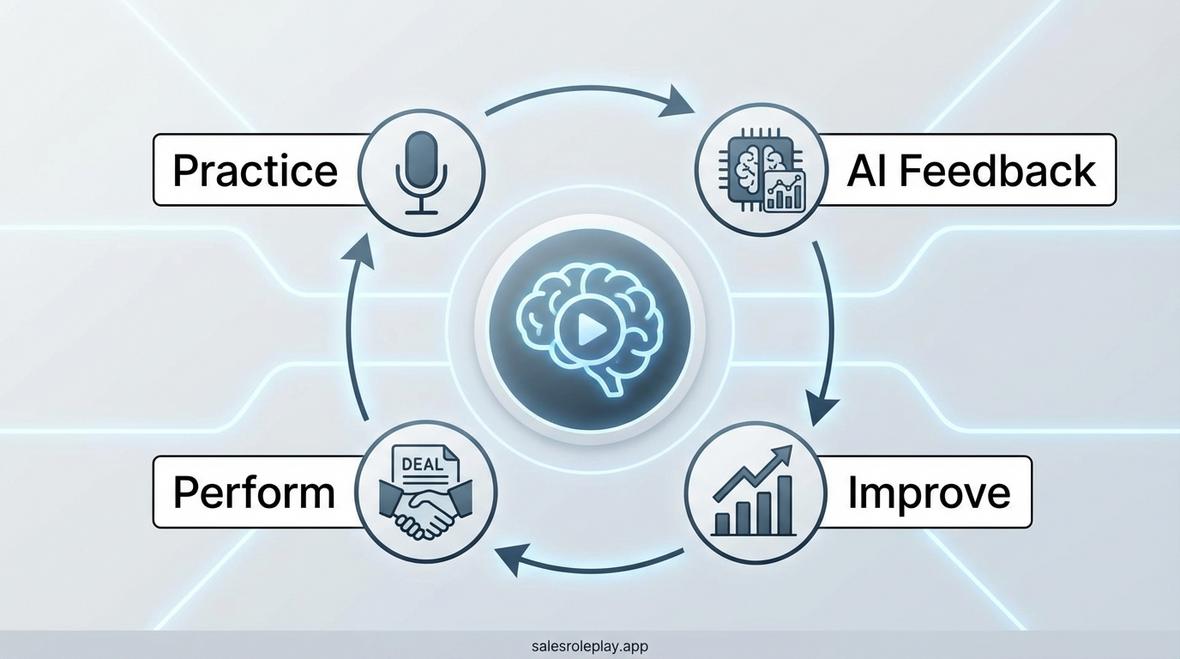
The most effective platforms integrate AI roleplay with conversation intelligence capabilities, creating closed-loop training systems. Representatives practice scenarios, receive immediate feedback, then apply learned skills in actual customer conversations. The platform analyzes real calls, identifying skill gaps that inform subsequent practice sessions.
This integration enables:
- Personalized Practice Recommendations: AI identifies specific scenarios based on individual performance gaps
- Before-and-After Comparison: Quantifiable skill improvement measurement through conversation analysis
- Manager Coaching Efficiency: Automated identification of coaching opportunities based on call patterns
Multilingual and Global Team Support
Organizations with international sales teams require platforms supporting multiple languages and cultural selling approaches. Leading solutions provide AI buyer personas that adapt to regional business customs, communication styles, and objection patterns specific to different markets.
White-Label and Partner Ecosystem
Sales training firms, consultancies, and enablement organizations increasingly seek white-label AI roleplay capabilities to enhance their service offerings. Premium platforms provide partner programs enabling customization, branding, and integration into existing training methodologies.
Building the Business Case: ROI and Investment Justification
Chief Revenue Officers and Sales Managers must justify AI sales training investments to executive leadership and finance teams. A compelling business case articulates both quantitative and qualitative returns.
Quantitative ROI Components
Financial justification should incorporate multiple value streams:
Reduced Ramp Time: If the average representative takes 6 months to reach full productivity and AI roleplay reduces this by 35%, organizations save substantial opportunity cost. For a team of 20 new hires with $500,000 annual quota each, this acceleration represents $1.75 million in additional revenue.
Improved Win Rates: A 22% improvement in close rates for representatives averaging 30 opportunities quarterly at $50,000 average contract value generates $3.3 million additional annual revenue per 10-person team.
Training Efficiency: Replacing in-person training sessions and manager time with AI-powered practice creates capacity for revenue-generating activities. Manager time savings alone often justify platform investments.
Reduced Turnover: Organizations with strong training programs experience 25-30% lower representative turnover, significantly reducing replacement costs averaging $100,000+ per sales role.
Strategic and Qualitative Benefits
Beyond direct financial returns, the best AI sales roleplay tools enable strategic advantages:
- Scalable Quality: Consistent training delivery regardless of manager skill levels or geographic distribution
- Competitive Intelligence: Systematic practice handling competitive objections improves displacement rates
- Knowledge Retention: Ongoing practice reinforces training investments, preventing skill decay
- Cultural Transformation: Organizations develop continuous improvement cultures where practice becomes routine
Your Platform Selection Framework
Organizations evaluating the best AI sales roleplay tools should employ a structured decision process balancing immediate needs with long-term strategic objectives.
Comprehensive Evaluation Checklist
Technology Capabilities:
- Conversational AI sophistication and natural language understanding
- Scenario customization flexibility and library breadth
- Integration APIs for CRM, LMS, and sales enablement platforms
- Mobile accessibility for distributed teams
- Security certifications and data privacy compliance
Training Effectiveness:
- Feedback quality, specificity, and actionability
- Methodology alignment with your sales process
- Industry-specific scenario availability
- Manager coaching tools and oversight capabilities
- Performance analytics and reporting depth
Organizational Fit:
- Pricing model alignment with budget and growth plans
- Implementation timeline and resource requirements
- Vendor support, training, and success resources
- Customer references from similar organizations
- Product roadmap and innovation commitment
Implementing Successful Pilot Programs
Rather than organization-wide deployments, progressive sales leaders initiate focused pilot programs:
Pilot Design: Select 10-20 representatives across experience levels, including both high performers and those requiring development. Run focused 60-90 day pilots with clear success metrics.
Measurement Criteria: Establish baseline performance metrics, track practice engagement, collect qualitative feedback, and measure skill development and performance outcomes.
Expansion Planning: Document lessons learned, refine implementation approach, and build organizational change management strategy before broader rollout.
The Future of AI-Powered Sales Training
The AI sales training landscape continues rapid evolution, with several emerging trends shaping the next generation of platforms.
Predictive Analytics and Prescriptive Training
Advanced platforms increasingly leverage predictive models that forecast individual representative performance trajectories and prescribe specific training interventions. Machine learning algorithms analyze practice patterns, conversation data, and performance outcomes to recommend personalized development paths.
Immersive Technologies and Virtual Reality
While current platforms focus on conversational skills, future iterations will incorporate augmented and virtual reality for comprehensive sales training experiences including body language, presentation delivery, and in-person negotiation scenarios.
AI Coaching Assistants and Real-Time Guidance
Emerging capabilities include real-time coaching during actual customer conversations, with AI assistants suggesting responses, identifying objections, and recommending next-best actions within live sales interactions.
Frequently Asked Questions
How long does it take to see results from AI sales roleplay implementation?
Organizations typically observe measurable skill improvements within 30-45 days of consistent practice. However, business impact metrics like improved win rates and shortened sales cycles generally manifest within 60-90 days. Representative engagement and practice frequency significantly influence timeline to results.
What level of time investment do representatives need for effective training?
Best practices suggest 30-45 minutes of AI roleplay practice weekly for skill maintenance, with 60-90 minutes weekly during onboarding or when developing new competencies. Organizations achieving highest returns integrate practice into existing workflows rather than treating it as additional activity.
Can AI roleplay replace live manager coaching?
AI roleplay complements rather than replaces human coaching. The technology provides scalable, consistent practice opportunities and foundational feedback, while managers focus on strategic coaching, deal-specific guidance, and career development. This combination delivers superior results compared to either approach alone.
How do platforms handle industry-specific terminology and scenarios?
Leading platforms like SalesRoleplay.app offer extensive customization capabilities, allowing organizations to input company-specific terminology, competitive intelligence, product positioning, and buyer objections. This ensures AI buyer personas respond authentically using industry language and addressing relevant concerns.
What integration capabilities should we prioritize?
Prioritize CRM integration for seamless workflow, learning management system connectivity for training record synchronization, and conversation intelligence platform integration for closed-loop training. Single sign-on and calendar integration improve adoption by reducing friction in representative experience.
How should we measure training ROI beyond basic usage metrics?
Establish multi-level measurement frameworks tracking activity metrics (practice completion), skill development (assessment scores, certification rates), performance outcomes (conversion rates, quota attainment), and business impact (revenue per representative, customer acquisition efficiency). Connect training investments directly to revenue performance through cohort analysis comparing trained versus untrained representatives.
Conclusion
Selecting the best AI sales roleplay tools represents a strategic decision that fundamentally impacts sales team performance, ramp time, and revenue outcomes. Leading platforms like SalesRoleplay.app combine sophisticated conversational AI, comprehensive scenario libraries, robust analytics, and seamless integrations to deliver measurable training ROI. Sales leaders should prioritize platforms offering industry customization, methodology alignment, and scalable deployment capabilities. With proper implementation, change management, and measurement frameworks, AI-powered sales roleplay transforms training from periodic events into continuous skill development engines. Organizations investing strategically in these technologies position themselves for sustained competitive advantage in increasingly complex B2B selling environments.
Ready to Transform Your Sales Training?
See how Salesroleplay can help you transform your sales training.