
AI Sales Roleplay Training: The Complete 2026 Guide To Transforming Sales Performance

Introduction
In the rapidly evolving landscape of sales enablement, AI sales roleplay training has emerged as a transformative solution for organizations seeking to accelerate rep performance and drive consistent revenue growth. Traditional roleplay sessions often limited by scheduling conflicts, inconsistent feedback, and lack of scalability are being replaced by intelligent, on-demand training platforms that provide personalized coaching at scale.
According to research from Forrester: State of Sales Enablement Report, organizations that invest in advanced sales training technologies see measurable improvements in sales cycle duration, rep productivity metrics, and overall platform adoption trends. This comprehensive guide explores how AI sales roleplay training is revolutionizing the way sales teams develop skills, practice objection handling, and master complex selling scenarios.
Whether you're a sales director looking to cut ramp time, a sales enablement leader seeking scalable solutions, or a sales trainer aiming to measure training ROI, this guide will provide actionable insights into implementing AI-powered roleplay training for your organization.
What Is AI Sales Roleplay Training?
AI sales roleplay training leverages artificial intelligence to simulate realistic sales conversations, enabling reps to practice their pitch, objection handling, discovery questions, and closing techniques in a risk-free environment. Unlike traditional roleplay with peers or managers, AI-powered platforms provide immediate, data-driven feedback on tone, pacing, word choice, and conversational flow.
These platforms use natural language processing (NLP) and machine learning algorithms to create dynamic buyer personas that respond contextually to rep inputs. The AI adapts to different industries, sales methodologies, and skill levels, providing personalized training experiences that scale across entire sales organizations.
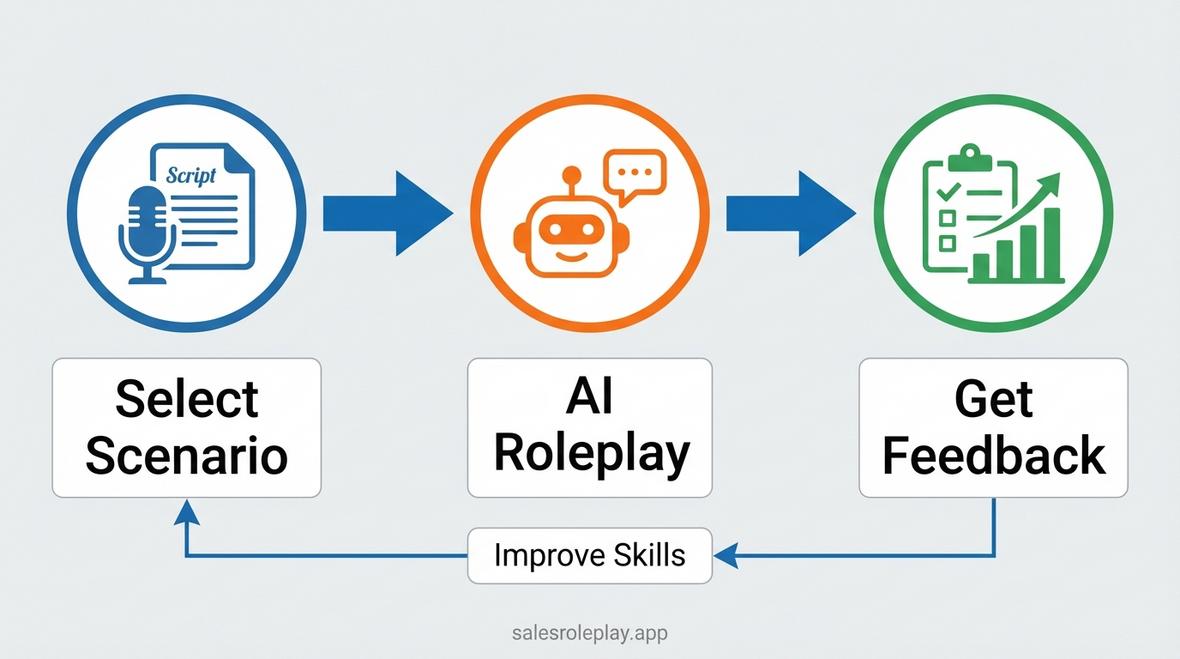
Core Components of AI Sales Roleplay Training
- Scenario Selection: Reps choose from pre-built or custom scenarios tailored to their industry, buyer persona, and sales stage
- AI Roleplay Session: Engage in realistic conversations with AI-powered buyers that simulate objections, questions, and buying signals
- Instant Feedback: Receive detailed analysis on communication effectiveness, objection handling, discovery quality, and overall performance
- Continuous Improvement Loop: Track progress over time and identify skill gaps requiring additional practice
Why Traditional Roleplay Falls Short
Traditional sales roleplay has long been a staple of sales training best practices, but it comes with significant limitations that hinder scalability and effectiveness.
Scheduling and Availability Constraints
Coordinating roleplay sessions between reps and managers requires significant time investment. Sales managers often lack bandwidth to conduct frequent practice sessions, leading to irregular training cadences. This inconsistency prevents reps from building muscle memory and mastering critical selling skills.
Inconsistent Feedback Quality
Human evaluators bring subjective biases and varying expertise levels to feedback sessions. One manager might focus heavily on tone while another prioritizes structure. This inconsistency makes it difficult for reps to understand which behaviors truly drive results.
Limited Scalability
As organizations grow, maintaining consistent training quality across distributed teams becomes increasingly challenging. Traditional roleplay simply cannot scale to provide every rep with the repetitions needed to achieve mastery.
Psychological Barriers
Many reps feel uncomfortable practicing in front of peers or managers, leading to artificial performances that don't reflect real-world behavior. This performance anxiety reduces the effectiveness of traditional roleplay as a skill-building tool.
The Transformative Benefits of AI Sales Roleplay Training
Organizations implementing AI sales roleplay training are experiencing measurable improvements across key performance indicators. Here's how intelligent practice platforms are transforming sales development.
Accelerated Ramp Time
New hires can practice on-demand, completing dozens of roleplay scenarios before making their first real call. This compressed learning curve enables reps to reach productivity benchmarks 30-50% faster than traditional onboarding approaches. Sales onboarding best practices now emphasize AI-powered practice as a core component of effective ramp programs.
Consistent, Data-Driven Coaching at Scale
AI provides standardized feedback based on objective performance metrics rather than subjective opinion. Every rep receives the same high-quality coaching regardless of manager availability or expertise. This consistency ensures that best practices spread uniformly across the organization.
Safe Practice Environment
Reps can make mistakes, experiment with different approaches, and build confidence without fear of judgment or real-world consequences. This psychological safety encourages authentic practice and faster skill development.
Personalized Learning Paths
AI platforms identify individual skill gaps and recommend targeted practice scenarios. Rather than generic training, reps receive personalized coaching that addresses their specific development needs, whether that's objection handling, discovery call techniques, or closing skills.
Measurable Training ROI
Unlike traditional training where impact is difficult to quantify, AI platforms provide detailed analytics on practice frequency, skill improvement, and correlation with revenue outcomes. This data-driven approach enables sales leaders to prove training ROI and optimize enablement investments.
Key Features of Effective AI Sales Roleplay Platforms
Not all AI sales roleplay solutions are created equal. When evaluating platforms, look for these essential capabilities that drive actual skill improvement and business results.
Realistic, Adaptive Buyer Personas
The most effective platforms feature AI buyer personas that respond contextually to rep inputs, simulate real objections, and adapt their communication style based on industry and role. These personas should reflect actual buyer behavior patterns rather than scripted responses.
Multi-Methodology Support
Top platforms support various sales methodologies including MEDDPICC, SPIN Selling, and Sandler Pain Funnel techniques. This flexibility allows organizations to reinforce their chosen selling framework through practice.
Intelligent Feedback Engine
Advanced AI analyzes dozens of performance dimensions including talk-to-listen ratio, filler word usage, question quality, objection handling effectiveness, and emotional intelligence indicators. The feedback should be specific, actionable, and prioritized by impact on outcomes.
Industry-Specific Scenarios
Generic practice scenarios produce generic skills. Look for platforms offering industry-tailored content for sectors like B2B SaaS, pharmaceutical sales, financial services, and manufacturing.
Integration with Existing Tech Stack
Effective platforms integrate with your CRM, conversation intelligence tools, and learning management systems. This connectivity ensures practice scenarios align with real pipeline opportunities and training completion data flows into existing reporting systems.
Mobile-First Accessibility
Reps need the flexibility to practice anytime, anywhere. Mobile-optimized platforms enable practice during commutes, between meetings, or from home offices, dramatically increasing practice frequency and skill retention.
Implementing AI Sales Roleplay Training: A Step-by-Step Guide
Successfully deploying AI sales roleplay training requires thoughtful planning and change management. Follow this framework to maximize adoption and impact.
Step 1: Define Clear Training Objectives
Start by identifying specific skill gaps and business outcomes you want to address. Are you trying to improve discovery call quality? Reduce objection handling losses? Accelerate new hire productivity? Clear objectives guide scenario development and success metrics.
Step 2: Select the Right Platform
Evaluate platforms based on your industry requirements, methodology alignment, integration needs, and budget constraints. Consider running pilot programs with multiple vendors before making a final selection. Platforms like salesroleplay.app offer flexible pricing and industry-specific scenarios tailored to your unique requirements.
Step 3: Build Your Scenario Library
Develop a comprehensive library of practice scenarios covering your most common sales situations. Include variations for different buyer personas, objections, and sales stages. Involve top performers in scenario creation to ensure authenticity.
Step 4: Launch a Pilot Program
Begin with a small cohort of enthusiastic early adopters. Gather feedback on scenario quality, platform usability, and perceived value. Use insights from the pilot to refine your approach before broader rollout.
Step 5: Drive Consistent Adoption
Integrate AI roleplay into existing workflows rather than treating it as an add-on activity. Make practice a required component of onboarding, quarterly skill development, and deal preparation. Recognize and reward reps who demonstrate consistent practice habits.
Step 6: Measure and Communicate Impact
Track leading indicators like practice frequency and skill scores alongside lagging indicators like conversion rates and deal velocity. Share success stories and quantifiable results to build organizational momentum around the program.
AI Sales Roleplay Training Use Cases Across Sales Roles
Different roles benefit from AI sales roleplay training in unique ways. Here's how various team members leverage intelligent practice platforms.
SDRs and BDRs
Sales development reps use AI roleplay to master cold calling techniques, perfect their opening statements, and practice common objections. The ability to run dozens of practice calls per week accelerates the development of conversational confidence and call control skills.
Account Executives
AEs leverage roleplay platforms to refine discovery skills, practice complex product demonstrations, and prepare for high-stakes negotiations. The ability to rehearse upcoming calls with AI versions of actual prospects significantly improves meeting outcomes.
Sales Managers
Managers use AI roleplay data to identify coaching opportunities, track skill development across their team, and ensure consistent execution of the sales methodology. The detailed analytics enable targeted interventions rather than generic coaching.
Sales Enablement Leaders
Enablement teams leverage AI platforms to scale training delivery, measure program effectiveness, and continuously optimize content based on performance data. The ability to deploy new scenarios globally in minutes transforms the speed of enablement initiatives.
Measuring the Effectiveness of AI Sales Roleplay Training
To justify continued investment in AI sales roleplay training, organizations must track both leading and lagging indicators of success.
Leading Indicators
- Practice Frequency: Number of roleplay sessions completed per rep per week
- Skill Score Improvement: Progression on key competencies over time
- Scenario Completion Rates: Percentage of assigned practice scenarios completed
- Time to Competency: Days required to achieve passing scores on critical scenarios
Lagging Indicators
- Ramp Time Reduction: Days to first deal and days to full productivity
- Conversion Rate Improvement: Changes in stage-to-stage conversion rates
- Deal Velocity: Reduction in average sales cycle length
- Win Rate Enhancement: Improvement in competitive win rates
- Revenue Per Rep: Increase in quota attainment and revenue productivity
Correlation Analysis
The most sophisticated organizations correlate practice behavior with revenue outcomes. For example, they might find that reps who complete five or more objection handling scenarios per week close deals 23% faster than those who practice less frequently. These insights inform practice requirements and coaching priorities.
Overcoming Common Implementation Challenges
While the benefits of AI sales roleplay training are substantial, organizations often encounter obstacles during implementation. Here's how to address the most common challenges.
Rep Resistance and Skepticism
Some reps view AI practice as unnecessary or artificial. Combat this by having top performers share their experiences, making practice a cultural norm, and demonstrating clear connections between practice and revenue outcomes. When reps see peers advancing their careers through consistent practice, adoption accelerates naturally.
Maintaining Content Relevance
Generic scenarios lose effectiveness quickly. Continuously update your scenario library based on evolving buyer objections, competitive dynamics, and product changes. Involve frontline reps in scenario development to ensure authenticity and relevance.
Integration with Existing Systems
Technical integration challenges can slow deployment. Work closely with your IT and RevOps teams to plan integrations early. Prioritize connections to your CRM and conversation intelligence platforms to maximize data flow and reporting capabilities.
Proving ROI to Stakeholders
Executives want to see clear returns on enablement investments. Build a comprehensive measurement framework from day one, tracking both leading and lagging indicators. Present regular business reviews showing correlation between practice behavior and revenue outcomes.
The Future of AI Sales Roleplay Training
The AI sales training landscape continues to evolve rapidly. Here are the emerging trends shaping the future of skill development.
Emotional Intelligence Analysis
Next-generation platforms will analyze vocal tone, speech patterns, and language choice to assess emotional intelligence competencies like empathy, active listening, and rapport building. This capability will help reps develop the soft skills that differentiate top performers.
Real-Time Video Analysis
Video-enabled roleplay platforms will analyze body language, facial expressions, and presentation skills during virtual selling scenarios. This visual feedback will help reps optimize their presence in video meetings, which have become the primary selling environment.
Predictive Coaching Recommendations
Machine learning algorithms will predict which specific practice scenarios will have the greatest impact on individual rep performance. Rather than prescriptive training paths, reps will receive personalized recommendations based on their unique skill profile and pipeline needs.
Scenario Customization with Voice Cloning
Advanced platforms will enable managers to clone the voices of actual buyers, creating hyper-realistic practice scenarios that mirror upcoming real-world conversations. This level of customization will further blur the line between practice and reality.
Best Practices for Maximizing AI Roleplay Training Impact
To extract maximum value from your AI sales roleplay training investment, implement these proven best practices.
Establish Consistent Practice Cadences
Skill development requires repetition. Set clear expectations that all reps complete a minimum number of practice scenarios weekly. Many high-performing organizations require 30 minutes of AI roleplay practice per week as a non-negotiable activity.
Use Roleplay for Deal Preparation
Encourage reps to practice upcoming calls by configuring AI scenarios that mirror actual upcoming meetings. This real-time application dramatically improves meeting outcomes and demonstrates immediate value to participants.
Create Social Learning Opportunities
While AI roleplay is an individual activity, create opportunities for reps to share their best performances, discuss feedback, and learn from each other's approaches. This social learning accelerates skill transfer across the team.
Integrate Manager Review Sessions
Have managers periodically review rep practice sessions and provide additional coaching. This combination of AI feedback and human coaching creates the optimal development environment.
Align Scenarios with Sales Methodology
Ensure practice scenarios reinforce your organization's chosen sales methodology. If you use MEDDPICC, scenarios should require reps to identify metrics, economic buyers, decision criteria, and other framework elements.
Frequently Asked Questions
How is AI sales roleplay different from traditional roleplay?
AI sales roleplay provides on-demand practice with consistent, objective feedback at scale. Unlike traditional roleplay limited by manager availability and subjective evaluation, AI platforms enable unlimited practice sessions with data-driven coaching that improves over time.
How long does it take to see results from AI roleplay training?
Most organizations see measurable improvements in skill scores within 2-3 weeks of consistent practice. Impact on revenue metrics like conversion rates and deal velocity typically becomes evident within 60-90 days as improved skills translate to better sales execution.
Can AI roleplay really prepare reps for complex B2B sales conversations?
Yes, when scenarios are properly designed to reflect real buyer behavior and objections. Advanced AI platforms simulate multi-threading, political dynamics, and nuanced objections that mirror actual enterprise selling environments. The key is ensuring scenario authenticity and continuous content updates.
How much practice time should reps dedicate to AI roleplay?
Research suggests 30-45 minutes of focused practice per week delivers optimal results without creating productivity drag. New hires may require more intensive practice during their first 30-60 days, while experienced reps benefit from focused practice on specific skill gaps or upcoming high-stakes calls.
What ROI can we expect from implementing AI sales roleplay training?
Organizations typically see 20-40% reductions in ramp time, 15-30% improvements in conversion rates, and 10-25% increases in quota attainment. Specific results depend on current skill levels, practice adoption rates, and quality of scenario content.
Conclusion
AI sales roleplay training represents a fundamental shift in how organizations develop sales talent. By providing scalable, consistent, and data-driven practice opportunities, these platforms enable reps to build mastery faster than ever before. The combination of realistic scenarios, instant feedback, and personalized coaching paths creates a practice environment that mirrors the best aspects of elite athletic training.
Organizations that embrace AI-powered practice as a core component of their enablement strategy will enjoy significant competitive advantages in talent development, time to productivity, and overall sales effectiveness. As platforms continue to evolve with enhanced emotional intelligence analysis, video coaching, and predictive recommendations, the gap between early adopters and laggards will only widen. The question is no longer whether to implement AI sales roleplay training, but how quickly you can deploy it to drive measurable business results.
Ready to Transform Your Sales Training?
See how Salesroleplay can help you transform your sales training.