
AI Sales Intelligence: Complete 2026 Guide To Transforming B2B Revenue Performance With Intelligent Technology

Understanding AI Sales Intelligence in 2026
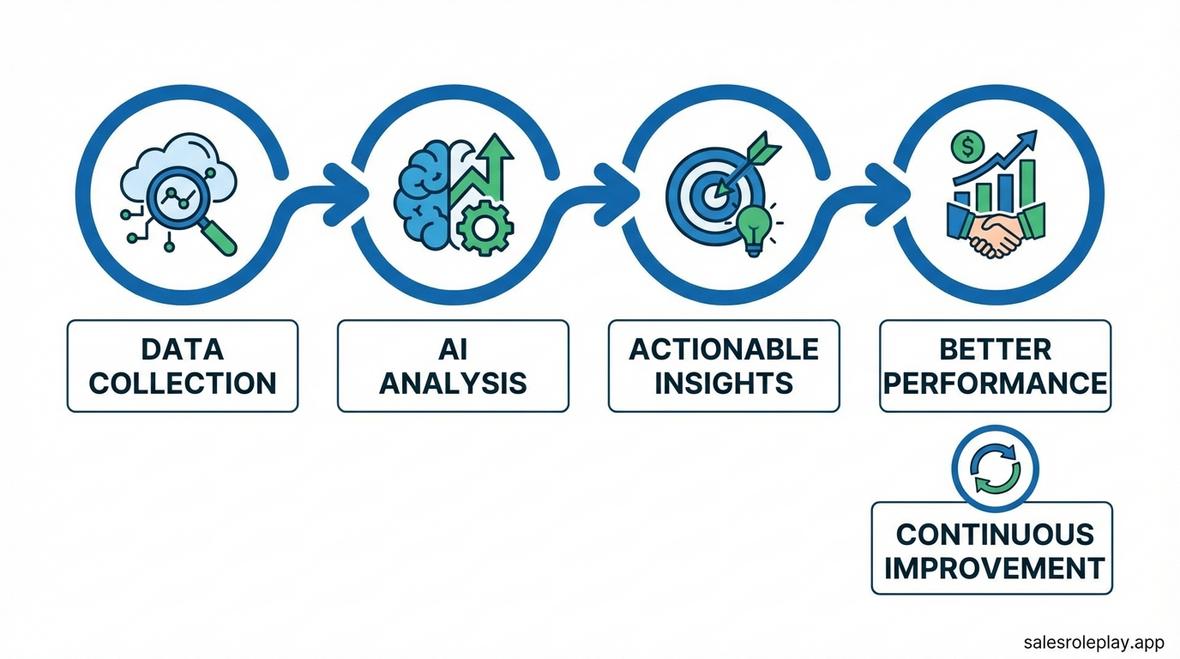
AI sales intelligence represents a fundamental shift in how B2B organizations approach revenue generation, team development, and customer engagement. As sales leaders face mounting pressure to improve close rates, reduce ramp time, and scale training initiatives, AI-powered solutions have emerged as the cornerstone of modern sales operations. AI sales intelligence platforms leverage machine learning, natural language processing, and predictive analytics to transform raw data into actionable insights that drive measurable performance improvements.
The competitive landscape in Technology, Healthcare, and Financial Services demands that Chief Revenue Officers and Sales Managers adopt innovative approaches to sales enablement. Traditional methods of cold calling, objection handling, and discovery call training no longer suffice when competitors are leveraging intelligent systems that provide real-time coaching, automated call scoring, and personalized learning paths. According to Accenture: AI-Driven Sales Transformation and Performance Metrics, organizations implementing AI sales intelligence report significant gains in sales productivity, quota attainment improvements, and measurable ROI from AI adoption.
Modern AI sales intelligence platforms integrate seamlessly with existing CRM systems, conversation intelligence tools, and sales enablement technology to create a comprehensive ecosystem that supports every stage of the sales cycle. From prospecting and qualification to negotiation and closing, these systems provide data-driven recommendations that help sales professionals make informed decisions and execute with precision.
Core Capabilities of AI Sales Intelligence Platforms
Intelligent Conversation Analysis and Call Scoring
AI sales intelligence systems excel at analyzing sales conversations across multiple channels, including phone calls, video meetings, and email correspondence. These platforms use advanced natural language processing to identify key moments in conversations, detect emotional cues, and evaluate adherence to proven sales methodologies. Automated call scoring provides objective assessments of sales rep performance, eliminating subjective bias and creating standardized evaluation criteria across entire teams.
The technology can identify specific behaviors correlated with successful outcomes, such as effective questioning techniques, proper objection handling, and strategic use of social proof. Sales leaders receive detailed analytics on conversation dynamics, including talk-to-listen ratios, interruption patterns, and the effectiveness of discovery questions. This granular visibility enables targeted coaching interventions that address specific skill gaps rather than generic training programs.
Predictive Analytics and Revenue Forecasting
AI sales intelligence platforms analyze historical deal data, customer engagement patterns, and market trends to generate accurate revenue forecasts. Machine learning algorithms identify leading indicators of deal success or failure, enabling sales managers to prioritize opportunities with the highest probability of closing. These systems can predict which accounts are most likely to churn, which prospects are ready to buy, and which sales tactics will be most effective for specific buyer personas.
The predictive capabilities extend to territory planning, quota setting, and resource allocation. By analyzing performance data across multiple dimensions, AI sales intelligence helps organizations optimize team structures, identify high-potential sales representatives for advancement, and allocate budget to initiatives with the greatest ROI potential. Research from Forrester TEI: Total Economic Impact of AI Sales Enablement demonstrates that organizations implementing AI-driven forecasting achieve more accurate pipeline predictions and improved financial planning outcomes.
Personalized Training and Adaptive Coaching Paths
Traditional one-size-fits-all training programs fail to address the diverse skill levels and learning styles within sales teams. AI sales intelligence platforms create individualized development paths based on each rep's performance data, learning preferences, and career goals. Intelligent coaching systems deliver microlearning modules, role-play scenarios, and skill assessments precisely when reps need them, maximizing knowledge retention and application.
The adaptive learning algorithms continuously adjust training content based on performance metrics, ensuring that sales professionals focus on areas requiring improvement while reinforcing existing strengths. This personalized approach accelerates ramp time for new hires, reduces the burden on sales managers, and creates a culture of continuous improvement. Organizations implementing AI-powered training report faster time-to-productivity, higher employee engagement, and better retention rates.
Implementing AI Sales Intelligence in Your Organization
Assessment and Readiness Evaluation
Successful AI sales intelligence implementation begins with a comprehensive assessment of your organization's current state, including existing technology infrastructure, data quality, team capabilities, and specific performance challenges. Sales leaders must identify the key metrics they want to improve, whether that's sales training ROI, close rates, average deal size, or sales cycle length. This clarity of purpose ensures that the AI solution addresses actual business needs rather than implementing technology for technology's sake.
Data readiness is particularly critical for AI sales intelligence success. These systems require clean, structured data from CRM systems, conversation intelligence platforms, and other sales tools. Organizations should audit their data quality, identify gaps, and establish governance processes before deploying AI solutions. Additionally, evaluating team readiness involves assessing sales reps' comfort with technology, willingness to adopt new tools, and current skill levels to ensure appropriate change management support.
Integration with Existing Sales Technology Stack
AI sales intelligence platforms must integrate seamlessly with your existing technology ecosystem to maximize value. This includes CRM systems like Salesforce or HubSpot, communication tools such as Zoom or Microsoft Teams, and meeting recording software. The integration enables automated data flow, eliminating manual data entry and ensuring that insights are available within the tools sales reps already use daily.
Consider the technical requirements for integration, including API availability, data security protocols, and compliance with industry regulations. Organizations in Healthcare and Financial Services face particularly stringent regulatory requirements regarding customer data handling and privacy. Choose AI sales intelligence vendors with proven track records in your industry and robust security certifications. The integration process should minimize disruption to ongoing sales activities while providing quick wins that demonstrate value to skeptical team members.
Change Management and User Adoption Strategies
Even the most sophisticated AI sales intelligence platform will fail without proper change management. Sales professionals are often skeptical of new technology, particularly systems that monitor and evaluate their performance. Leadership must clearly communicate the benefits of AI sales intelligence, emphasizing how it supports individual success rather than serving as a surveillance tool. Highlighting specific examples of how the technology helps reps close more deals, handle objections more effectively, and reduce administrative burden builds buy-in.
Pilot programs with early adopters and sales champions create momentum and generate success stories that encourage broader adoption. Provide comprehensive training on platform features, establish clear expectations for usage, and recognize team members who effectively leverage AI insights to improve performance. Regular feedback sessions allow you to address concerns, refine implementation approaches, and demonstrate responsiveness to user needs.
Key Use Cases and Applications for Sales Leaders
Accelerating New Hire Ramp Time
One of the most significant challenges facing sales organizations is the time required for new hires to become productive. Traditional onboarding programs can take six to twelve months before reps reach full productivity, creating significant opportunity costs. AI sales intelligence dramatically accelerates this timeline through intelligent onboarding programs that provide structured learning paths, realistic practice scenarios, and continuous performance feedback.
New sales representatives can practice discovery calls, objection handling, and closing techniques in a safe environment before engaging with actual prospects. The AI system provides immediate feedback on areas for improvement, tracks progress over time, and identifies when reps are ready for real customer interactions. This approach reduces the burden on sales managers and senior reps who would otherwise spend significant time coaching new hires, allowing them to focus on revenue-generating activities.
Improving Cold Calling and Prospecting Effectiveness
Cold calling remains a critical skill for many B2B sales organizations, yet most reps struggle with rejection, poor messaging, and inconsistent execution. AI sales intelligence provides comprehensive cold calling support, from analyzing successful call patterns to offering real-time coaching during live conversations. Sales professionals can practice their cold calling scripts with AI-powered simulation tools that respond realistically to different approaches, helping reps refine their messaging before making actual calls.
The technology identifies the optimal times to call specific prospects, suggests personalized talking points based on prospect research, and provides battle cards for handling common objections. Post-call analysis highlights what worked well and areas for improvement, creating a continuous learning loop that steadily improves performance. Organizations report significant improvements in connection rates, conversion to meetings, and overall pipeline generation after implementing AI-powered prospecting tools.
Mastering Objection Handling Across Sales Cycles
Objection handling separates average sales reps from top performers, yet many organizations struggle to provide adequate training in this critical skill. AI sales intelligence platforms offer comprehensive objection handling training through realistic role-play scenarios, analysis of successful objection responses, and personalized coaching based on individual performance data. The systems catalog common objections by industry, buyer persona, and sales stage, providing reps with proven responses and strategic frameworks.
During actual sales conversations, AI tools can provide real-time suggestions for addressing objections, drawing on successful patterns from top performers and best practices. This support is particularly valuable for newer reps who may not have encountered specific objections before. The technology also identifies patterns in objections across the pipeline, enabling sales leaders to address systemic issues in positioning, pricing, or product messaging that may be creating unnecessary friction.
Measuring ROI and Performance Impact
Key Performance Indicators for AI Sales Intelligence
Organizations must establish clear metrics to evaluate the impact of AI sales intelligence investments. Primary KPIs include improvements in quota attainment, increases in average deal size, reductions in sales cycle length, and improvements in win rates. Additional metrics focus on training efficiency, such as reduced ramp time for new hires, increased coaching effectiveness scores, and improved knowledge retention rates measured through assessments and practical application.
Leading indicators provide early signals of success, including increased practice session completion rates, improvements in call scoring metrics, and higher engagement with training content. Sales leaders should establish baseline measurements before implementing AI sales intelligence and track progress on a monthly basis to identify trends and make data-driven adjustments to their approach. Comparing performance across different teams, regions, or product lines reveals which groups are effectively leveraging the technology and which may need additional support.
Financial Impact and Cost-Benefit Analysis
The financial case for AI sales intelligence extends beyond direct revenue increases to include cost savings from improved efficiency, reduced turnover, and better resource allocation. Calculate the fully loaded cost of sales team underperformance, including missed revenue targets, wasted marketing spend on unqualified leads, and the opportunity cost of ineffective coaching time. Compare these costs to the investment required for AI sales intelligence, including software licensing, implementation services, and ongoing support.
Most organizations find that AI sales intelligence delivers positive ROI within the first year through a combination of revenue growth and cost savings. The technology enables sales managers to coach larger teams effectively, reducing the manager-to-rep ratio and associated overhead costs. Improved employee retention reduces recruiting and training expenses while maintaining institutional knowledge. Enhanced forecasting accuracy enables better inventory management, staffing decisions, and financial planning, creating value across the entire organization.
Industry-Specific Applications and Best Practices
Technology and SaaS Sales
Technology sales organizations face unique challenges, including complex product offerings, lengthy sales cycles, and sophisticated buyer committees. AI sales intelligence helps technology sales teams navigate these complexities by providing detailed insights into account engagement patterns, identifying key decision-makers, and recommending optimal outreach strategies. The technology can analyze technical discussions to ensure reps accurately represent product capabilities and identify opportunities to introduce relevant features or integrations.
For SaaS companies, AI sales intelligence supports the entire customer lifecycle, from initial acquisition through expansion and renewal. The systems identify upsell opportunities based on usage patterns, predict churn risk, and provide customer success teams with proactive intervention strategies. This comprehensive approach maximizes customer lifetime value and creates predictable, recurring revenue streams.
Healthcare and Life Sciences
Medical device sales and pharmaceutical representatives operate in highly regulated environments with complex stakeholder relationships and evidence-based selling requirements. AI sales intelligence platforms tailored for healthcare provide compliance-focused training, ensuring reps adhere to industry regulations while effectively communicating product value. The technology can analyze conversations with healthcare professionals to ensure appropriate clinical claims, proper disclosure of risks and benefits, and adherence to promotional guidelines.
These systems also support the unique selling cycles in healthcare, which often involve multiple stakeholders including physicians, administrators, procurement teams, and clinical staff. AI sales intelligence identifies key influencers within healthcare organizations, tracks engagement across the buying committee, and provides strategic guidance on navigating complex approval processes. The technology's ability to demonstrate clinical outcomes and economic value through data-driven presentations strengthens positioning with evidence-focused healthcare buyers.
Financial Services and Insurance
Financial services sales requires deep trust-building, comprehensive needs analysis, and sophisticated solution design. AI sales intelligence platforms support these requirements by analyzing client financial situations, identifying appropriate product recommendations, and ensuring compliance with regulatory requirements. The technology can simulate various financial scenarios, helping advisors demonstrate the long-term value of recommended strategies and build confidence in their expertise.
For insurance sales professionals, AI sales intelligence provides personalized training on complex product features, competitive positioning, and objection handling specific to insurance concerns. The systems analyze successful sales conversations to identify effective approaches for different customer segments, whether that's young families needing life insurance or business owners seeking comprehensive commercial coverage. This targeted support helps insurance agents build larger books of business while maintaining high customer satisfaction and retention rates.
Future Trends in AI Sales Intelligence
Advanced Voice Analysis and Emotional Intelligence
Next-generation AI sales intelligence platforms incorporate sophisticated voice analysis capabilities that detect emotional states, stress levels, and engagement signals in both sales reps and prospects. This emotional intelligence enables more nuanced coaching recommendations, such as adjusting tone, pace, or approach based on the prospect's emotional response. The technology can identify when prospects are confused, skeptical, or excited, prompting reps to address concerns, provide clarification, or accelerate toward a close.
These capabilities extend to analyzing video conversations, incorporating body language, facial expressions, and other non-verbal cues into performance assessments. As remote selling continues to dominate B2B sales, the ability to interpret these signals through video conferencing platforms becomes increasingly valuable. Sales professionals who master both verbal and non-verbal communication, supported by AI-powered feedback, will significantly outperform competitors relying solely on traditional training methods.
Integration with Generative AI and Content Creation
Generative AI is transforming how sales teams create personalized content, from customized proposals and presentations to follow-up emails and social media outreach. AI sales intelligence platforms are beginning to incorporate these capabilities, enabling reps to generate high-quality, personalized content at scale while maintaining brand consistency and messaging alignment. The technology can analyze successful content patterns and automatically generate similar materials optimized for specific prospects or industries.
This integration dramatically reduces the time sales reps spend on administrative tasks, allowing them to focus on high-value activities like relationship building and strategic account planning. The AI ensures that all generated content aligns with proven messaging frameworks, incorporates relevant case studies and social proof, and addresses the specific pain points and priorities of target buyers. As these capabilities mature, sales productivity will increase significantly while maintaining or improving message quality and relevance.
Selecting the Right AI Sales Intelligence Platform
Essential Evaluation Criteria
When evaluating AI sales intelligence platforms, sales leaders should consider several critical factors. First, assess the quality and comprehensiveness of the AI models, including their training data, accuracy rates, and ability to provide actionable insights rather than just descriptive analytics. Request demonstrations using your actual sales data and scenarios to evaluate real-world performance rather than idealized examples.
Second, evaluate the platform's integration capabilities with your existing technology stack. Seamless data flow between systems eliminates duplicate data entry, ensures consistency, and maximizes user adoption. Third, consider the vendor's industry expertise and track record with organizations similar to yours. Platforms with deep experience in your sector will provide more relevant training scenarios, benchmarking data, and best practices that accelerate value realization.
Finally, assess the vendor's commitment to ongoing innovation, product roadmap transparency, and customer success support. AI technology evolves rapidly, and you need a partner who will continuously enhance the platform rather than allowing it to become outdated. Strong customer success programs ensure that you maximize the value of your investment through proper implementation, ongoing optimization, and strategic guidance.
Implementation and Partnership Considerations
The implementation process significantly impacts AI sales intelligence success. Evaluate vendors based on their implementation methodology, typical timeline to value, and support resources provided during deployment. The best platforms offer structured onboarding programs, comprehensive training for administrators and end-users, and dedicated customer success managers who guide you through each phase of adoption.
Consider whether the vendor provides industry-specific content, pre-built training scenarios, and best practice frameworks that you can customize rather than building everything from scratch. This accelerates time to value and ensures that your implementation benefits from proven approaches. Additionally, evaluate the vendor's commitment to your success through metrics like customer retention rates, Net Promoter Scores, and case studies demonstrating measurable business outcomes.
Frequently Asked Questions
What is the typical ROI timeline for AI sales intelligence?
Most organizations begin seeing measurable improvements within 60-90 days of implementation, with full ROI typically achieved within 6-12 months. Early wins often include improved call quality scores, increased practice session completion, and enhanced forecasting accuracy. More substantial impacts on revenue, such as improved close rates and shortened sales cycles, typically materialize after sales teams have fully integrated AI insights into their daily workflows.
How does AI sales intelligence differ from CRM systems?
While CRM systems provide data storage, workflow management, and basic reporting, AI sales intelligence analyzes that data to generate predictive insights, personalized recommendations, and automated coaching. CRMs tell you what happened; AI sales intelligence tells you why it happened, what's likely to happen next, and what actions will optimize outcomes. The systems work together, with AI sales intelligence enhancing CRM data through advanced analytics and machine learning.
Can AI sales intelligence replace human sales managers?
No. AI sales intelligence augments human sales managers by automating routine tasks, providing data-driven insights, and enabling more effective coaching at scale. The technology handles administrative burden and provides objective performance assessments, freeing managers to focus on strategic activities like territory planning, key account relationships, and leadership development. The combination of AI-powered insights and human judgment, empathy, and relationship skills produces superior results compared to either approach alone.
What data privacy considerations apply to AI sales intelligence?
Organizations must ensure that AI sales intelligence platforms comply with relevant data privacy regulations including GDPR, CCPA, and industry-specific requirements like HIPAA for healthcare. This includes proper consent for recording sales conversations, secure data storage and transmission, and appropriate access controls limiting who can view sensitive customer information. Choose vendors with robust security certifications, transparent data handling policies, and features supporting compliance requirements specific to your industry and geographic markets.
How do I ensure sales team adoption of AI sales intelligence?
Successful adoption requires clear communication of benefits, comprehensive training, visible executive support, and recognition of early adopters. Frame AI sales intelligence as a tool that helps reps succeed rather than a monitoring system. Demonstrate quick wins, such as improved call performance or time savings from automated administrative tasks. Incorporate platform usage into performance expectations and coaching conversations, while providing ongoing support for team members who struggle with adoption. Regularly share success stories and performance improvements to maintain momentum and reinforce value.
Conclusion
AI sales intelligence represents a transformative opportunity for B2B sales organizations seeking to improve performance, accelerate team development, and gain competitive advantage. By leveraging advanced analytics, personalized coaching, and predictive insights, sales leaders can address critical challenges including lengthy ramp times, inconsistent execution, and missed revenue targets. The technology supports every aspect of the sales cycle, from prospecting and qualification to negotiation and closing, while providing the data-driven insights needed for strategic decision-making. Organizations that strategically implement AI sales intelligence, with proper attention to integration, change management, and continuous optimization, position themselves for sustained growth and market leadership in an increasingly competitive landscape. As AI capabilities continue advancing, early adopters will build significant advantages that become difficult for competitors to overcome, making now the ideal time to evaluate and implement these powerful solutions.
Ready to Transform Your Sales Training?
See how Salesroleplay can help you transform your sales training.