
10 Tips To Improve Your Sales Performance: Proven Strategies To Close More Deals In 2026

Sales performance is the lifeblood of any B2B organization. Whether you're a Chief Revenue Officer, Sales Manager, or sales leader navigating complex industries like Technology, Healthcare, or Financial Services, the pressure to meet and exceed quotas has never been higher. With average B2B quota attainment sitting around 47% and win rates declining by 18% versus 2022, it's clear that traditional sales approaches are struggling to deliver results. The good news? There are actionable strategies that can dramatically improve your team's performance, reduce ramp time, and drive consistent revenue growth.
In this comprehensive guide, we'll explore 10 tips to improve your sales performance that leverage modern technology, data-driven insights, and proven methodologies. These strategies are designed specifically for sales leaders seeking innovative solutions to overcome common challenges like effective cold calling, objection handling, and discovery calls. Let's dive into the tactics that will transform your sales organization in 2026.
Tip 1: Leverage AI-Powered Sales Roleplay for Consistent Practice
The top 17% of sales reps generate 81% of revenue, according to industry research, revealing an 8.9× performance delta between top and average performers. One of the most effective ways to close this gap is through consistent, realistic practice using AI-powered roleplay tools.
Traditional sales training often falls short because it lacks scalability and standardization. Role-playing with managers or peers is time-consuming and difficult to schedule regularly. AI sales roleplay platforms solve this problem by providing unlimited, on-demand practice scenarios that simulate real customer interactions.
These intelligent systems allow your sales team to practice cold calls, objection handling, discovery conversations, and closing techniques in a safe environment. The AI responds dynamically to rep inputs, creating authentic conversations that build confidence and competence. Sales leaders can review performance analytics, identify skill gaps, and provide targeted coaching based on objective data rather than subjective observations.
For organizations in Healthcare, Financial Services, or Technology sectors where compliance and precision matter, AI roleplay ensures your team practices with industry-specific scenarios that reflect actual buyer personas and regulatory requirements. This approach dramatically reduces ramp time while improving close rates across your entire sales organization.
Tip 2: Implement Data-Driven Call Analysis and Scoring
You can't improve what you don't measure. Call analysis and scoring provide the objective insights needed to identify exactly what separates your top performers from the rest of your team. According to recent sales statistics, coaching quality improvements can lift results by 6-8%, but only when that coaching is based on accurate performance data.
Manual call reviews are time-intensive and subjective. AI call scoring technology automatically analyzes sales conversations, measuring key performance indicators like talk-to-listen ratios, questioning techniques, objection handling effectiveness, and closing behaviors.
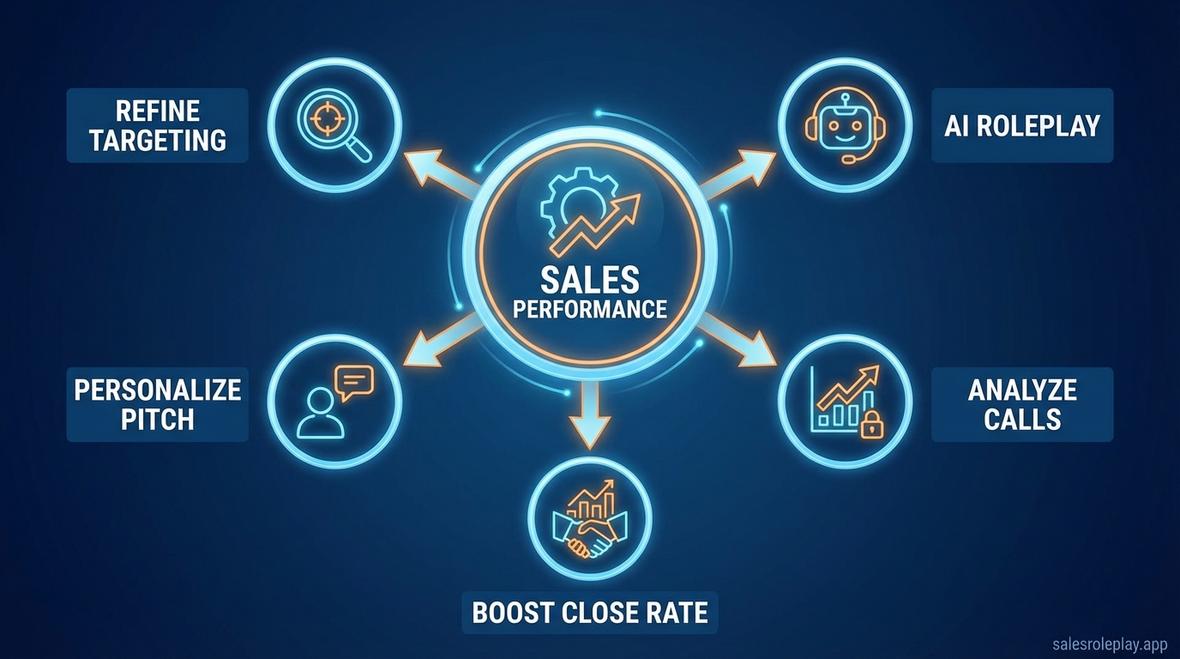
This technology provides sales leaders with actionable insights at scale. Instead of reviewing a handful of calls per week, you can analyze every conversation your team has, identifying patterns and trends that impact revenue. The image above illustrates how strategies like analyzing calls, refining targeting, and personalizing pitches all contribute to enhanced sales performance in an interconnected cycle.
Advanced analytics reveal which scripts, approaches, and techniques correlate with successful outcomes. You can then replicate these winning behaviors across your entire team through targeted coaching and training initiatives. For B2B organizations facing longer sales cycles and declining win rates, this data-driven approach transforms guesswork into strategic execution.
Tip 3: Develop Industry-Specific Training Programs
Generic sales training fails to address the unique challenges and buyer dynamics present in specialized industries. A pharmaceutical sales rep needs entirely different skills than someone selling software or industrial equipment. Research shows that post-training reinforcement boosts quota attainment by 34%, but only when that training is relevant to the actual selling environment.
Sales leaders should invest in industry-specific training programs that address the particular pain points, regulatory requirements, and decision-making processes common in their markets. For example, Healthcare sales teams need to navigate complex procurement committees and demonstrate ROI to multiple stakeholders, while Technology sales require technical fluency and the ability to articulate value in terms of business outcomes.
Creating customized training scenarios that mirror real-world situations in your industry helps reps build the specific competencies they need to succeed. This approach also reduces the learning curve for new hires, accelerating time-to-productivity and improving overall team performance.
Tip 4: Master the Art of Discovery Calls
Discovery calls are where deals are won or lost. They're your opportunity to understand prospect needs, establish credibility, and differentiate your solution from competitors. Yet many sales reps struggle with asking the right questions, actively listening, and uncovering true pain points versus surface-level symptoms.
Effective discovery call training focuses on developing questioning frameworks like SPIN Selling or the Sandler Pain Funnel. These methodologies teach reps to move beyond surface-level conversations and uncover the business impact of problems, creating urgency and justifying investment.
The key is consistent practice. Sales reps should rehearse discovery scenarios regularly, receiving feedback on their questioning technique, listening skills, and ability to control the conversation. AI-powered training platforms can simulate discovery calls with various buyer personas, allowing reps to experience different objection types, communication styles, and decision-making processes before they encounter them in real situations.
For B2B organizations with complex sales cycles, mastering discovery is essential. It's the foundation for qualification, solution design, and ultimately closing business. Sales leaders should prioritize discovery skills in their training programs and measure improvement through call analysis and conversion metrics.
Tip 5: Optimize Cold Calling with Structured Frameworks
Cold calling remains one of the most challenging yet critical skills in B2B sales. Despite technological advances, direct conversation with prospects is still the fastest way to identify opportunities, qualify leads, and advance deals. However, most sales reps struggle with cold calling due to fear of rejection, lack of structure, and insufficient practice.
The solution is implementing structured frameworks that give reps confidence and consistency. Permission-based openers, value propositions tailored to specific personas, and effective objection handling scripts transform cold calling from a dreaded activity into a predictable revenue driver.
Cold calling training programs should include daily practice sessions using realistic scenarios. Sales reps need repetition to internalize scripts, develop natural delivery, and build resilience to rejection. AI roleplay platforms excel here, providing unlimited practice opportunities without requiring manager time or peer availability.
Sales leaders should track cold calling metrics like connect rates, conversation length, and conversion to next steps. These KPIs reveal which approaches work and which need refinement. Regular coaching sessions that review actual calls and practice alternative approaches accelerate skill development and improve team-wide performance.
Tip 6: Personalize Your Sales Pitch for Every Prospect
Generic pitches fail in today's competitive environment. Buyers expect sales reps to understand their specific business challenges, industry trends, and unique circumstances. According to research from Forrester's 2026 B2B predictions, personalization is a critical factor in sales success as buyers become more sophisticated and demanding.
Personalization begins with research. Before every conversation, sales reps should understand the prospect's company, role, recent business developments, and potential pain points. This preparation allows them to craft relevant opening statements, ask informed questions, and position solutions in terms that resonate with specific buyer priorities.
Technology can support personalization at scale. CRM systems, sales intelligence platforms, and AI tools help reps quickly gather and synthesize prospect information. However, the human element remains critical. Sales reps must translate data into authentic, conversational engagement that builds trust and demonstrates genuine interest in solving customer problems.
Sales leaders should establish personalization standards and provide reps with frameworks for customizing their approach. Regular training on industry trends, competitive dynamics, and customer success stories equips teams with the knowledge needed to have relevant, value-driven conversations that differentiate your organization from competitors.
Tip 7: Improve Objection Handling Capabilities
Objections are inevitable in complex B2B sales. Whether it's pricing concerns, competitive alternatives, or timing issues, how your team responds to objections directly impacts win rates. Research indicates that 84% of buying decisions start with referrals, yet only 29% of customers provide them, suggesting significant room for improvement in building confidence through objection management.
Effective objection handling requires preparation, empathy, and technique. Sales reps need to anticipate common objections, develop thoughtful responses, and practice delivering them naturally. Objection handling scripts provide starting points, but true mastery comes from repeated practice in realistic scenarios.
AI-powered training platforms excel at objection handling practice because they can introduce objections unpredictably, forcing reps to think on their feet. This dynamic practice builds the confidence and competence needed to navigate real sales conversations without becoming defensive or resorting to discounting.
Sales leaders should catalog common objections specific to their industry and solution, then develop proven responses that address underlying concerns. Regular training sessions focused on objection handling, combined with call analysis to identify improvement opportunities, create a culture of continuous improvement that directly impacts revenue performance.
Tip 8: Accelerate Onboarding with Structured Ramp Programs
According to State of Field Sales research, 65% of field sales teams have most reps missing quota, and only 35% of teams have 70% or more of reps consistently hitting target. One major contributor to this performance gap is inadequate onboarding and ramp programs.
New sales hires typically take 6-12 months to reach full productivity, representing significant lost revenue opportunity. Structured sales onboarding programs that combine product knowledge, methodology training, and consistent skills practice can reduce this ramp time by 40% or more.
Effective onboarding should include progressive milestones with clear competency requirements at each stage. New reps should master foundational skills like discovery questioning and objection handling before advancing to complex deal management. AI-powered roleplay provides the perfect environment for skill verification, allowing managers to objectively assess readiness before putting new hires in front of real prospects.
Sales leaders should track time-to-first-deal, time-to-quota, and early retention rates as key indicators of onboarding effectiveness. Continuous refinement based on these metrics ensures your ramp program evolves to address actual performance barriers rather than theoretical training objectives.
Tip 9: Foster a Culture of Continuous Coaching
Coaching is the highest-leverage activity for sales managers, yet it's often neglected due to competing priorities. Statistics show that coaching quality improvements can deliver 6-8% performance gains, but achieving this requires consistent, structured coaching conversations focused on skill development rather than just deal reviews.
Sales leaders should establish regular coaching cadences for every team member, using objective performance data to guide conversations. Effective coaching techniques focus on specific behaviors and provide actionable feedback that reps can immediately implement.
Technology enables more effective coaching at scale. AI-powered platforms identify specific skill gaps and coaching opportunities automatically, allowing managers to focus their limited time on high-impact interventions. Call recordings, roleplay performance analytics, and deal progression data provide the evidence needed for meaningful development conversations.
Organizations that embed coaching into their culture see measurably better results. When sales reps expect regular feedback, practice opportunities, and skill development support, they're more engaged, more confident, and ultimately more successful. This cultural shift requires leadership commitment and accountability mechanisms that ensure coaching actually happens consistently.
Tip 10: Utilize Sales Performance Analytics to Drive Decisions
Modern sales organizations are awash in data, but few effectively translate that data into actionable insights. Sales performance analytics transform raw numbers into strategic decisions about resource allocation, training priorities, and process improvements.
Key metrics to track include quota attainment by rep and team, win rates by segment and deal size, sales cycle length, average deal value, and pipeline conversion rates at each stage. These indicators reveal where performance gaps exist and which interventions will deliver the greatest impact.
Advanced analytics also identify leading indicators of success. For example, discovery call quality scores may predict win rates 60-90 days in advance, allowing proactive coaching before deals are lost. Similarly, activity metrics like calls per day or meetings booked can forecast pipeline health and revenue outcomes.
Comprehensive sales metrics tracking should be accessible to both managers and reps. When everyone understands how their activities connect to outcomes, accountability increases and performance improves. Sales leaders should invest in analytics platforms that integrate with their CRM and other sales tools, providing a unified view of performance across all relevant dimensions.
Implementing These Strategies with Technology
While these 10 tips to improve your sales performance are powerful individually, their impact multiplies when implemented together through an integrated technology platform. Modern AI-powered sales training solutions like salesroleplay.app provide the infrastructure to execute these strategies at scale.
These platforms combine realistic roleplay simulations, automated call scoring, personalized coaching recommendations, and comprehensive analytics in a single system. This integration ensures consistency, reduces administrative burden on managers, and provides sales reps with continuous development opportunities that fit into their workflow rather than disrupting it.
For sales leaders in Technology, Healthcare, Financial Services, and other B2B industries, the decision to invest in AI-powered training technology is increasingly strategic. With quota attainment declining and performance gaps widening, organizations that leverage these tools gain significant competitive advantages in talent development, retention, and ultimately revenue growth.
Measuring Success and ROI
Implementing these strategies requires investment, so measuring return is essential. According to sales training research, organizations achieve a 353% ROI on sales training when properly implemented and measured.
Key success indicators include reduced ramp time for new hires, improved quota attainment across the team, higher win rates, shorter sales cycles, and increased average deal size. Sales leaders should establish baseline metrics before implementing new strategies, then track improvements over time to validate effectiveness.
Beyond quantitative metrics, qualitative feedback from sales reps provides valuable insights. Are they more confident in sales conversations? Do they feel better prepared to handle objections? Are they requesting additional training resources? These indicators reveal engagement and adoption, which ultimately drive measurable business outcomes.
Regular business reviews that connect training initiatives to revenue performance ensure continued leadership support and budget allocation. When executives see clear evidence that skill development investments directly impact the bottom line, they're more likely to sustain and expand those programs.
Frequently Asked Questions
How quickly can I expect to see results from implementing these strategies?
Most organizations see measurable improvements within 60-90 days of implementing structured training and coaching programs. Early indicators like increased call quality scores and improved activity metrics often appear within 30 days, while revenue impact typically manifests within one full sales cycle as improved skills translate to closed deals.
What's the most impactful tip for organizations with limited resources?
AI-powered roleplay training delivers the highest ROI for resource-constrained organizations because it provides scalable, consistent practice without requiring significant manager time. This single investment accelerates skill development across multiple competencies simultaneously while generating performance data that guides coaching priorities.
How do I get buy-in from my sales team for new training initiatives?
Focus on demonstrating immediate value. Pilots with top performers or volunteers create early success stories that motivate broader adoption. Emphasize how training makes their jobs easier and more successful rather than adding administrative burden. When reps see colleagues achieving better results through new approaches, adoption accelerates naturally.
Can these strategies work for inside sales and field sales teams equally?
Yes, these principles apply to both inside and field sales organizations. The specific tactics may vary slightly field sales teams might emphasize in-person presentation skills while inside teams focus more on phone and video communication but the fundamental strategies of consistent practice, data-driven coaching, and continuous improvement are universally effective.
How do I choose the right AI sales training platform?
Evaluate platforms based on scenario realism, integration with your existing tech stack, analytics depth, ease of use, and vendor support. Request demos with your actual sales scenarios and involve your team in the evaluation process. The right platform should feel intuitive, provide actionable insights, and demonstrably improve performance within the first 90 days of implementation.
Conclusion
Improving sales performance in 2026 requires a strategic combination of proven methodologies, consistent practice, data-driven coaching, and modern technology. These 10 tips to improve your sales performance provide a comprehensive framework for B2B sales leaders seeking to overcome declining win rates, accelerate ramp time, and build consistently high-performing teams. From leveraging AI-powered roleplay to implementing structured onboarding programs and utilizing advanced analytics, each strategy addresses critical performance gaps that prevent organizations from reaching their full revenue potential. By committing to continuous improvement and providing your team with the tools and training they need to succeed, you can transform sales performance and drive sustainable growth in even the most competitive markets.
Ready to Transform Your Sales Training?
See how Salesroleplay can help you transform your sales training.